

Get quote
Get Free Consultation!
We are ready to answer right now! free consultation.
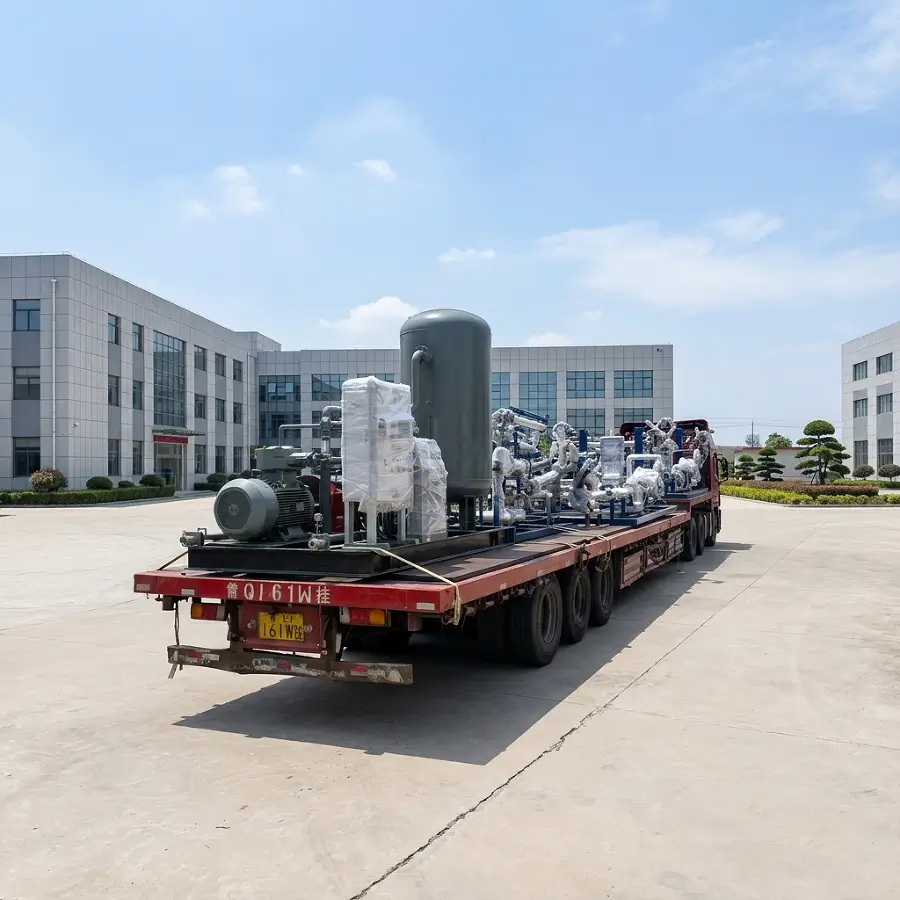
A fluid transfer equipment supplier should quote a package when the buyer’s problem is not limited to one piece of equipment. In a tank farm, loading bay or marine terminal, the product may have to move through an arm, a skid, a coupler, a platform access route and a control process before the operation is complete. Buying one part at a time can work for a direct replacement, but it can also create mismatched interfaces. The buyer may receive a loading arm that fits the pipe, while the operator still lacks a folding stair, the skid still lacks clear control logic or the tank side still needs a floating suction solution.
Yuanda Machinery’s catalog supports package thinking because it includes transfer equipment across loading arms, skids, access systems, accessories, marine terminal products and storage tank equipment. This article is for buyers who already know they need fluid transfer equipment, but are unsure whether to request a single product quote or a broader supply scope. The decision should be based on site workflow, medium risk, interface count and who will be responsible when the equipment arrives at site.
The clearest sign is an incomplete interface list. If the buyer cannot yet state the vehicle connection, platform height, control mode, valve sequence, metering expectation, tank outlet behavior or ship manifold position, a single product quote may be premature. A package quote can separate the base equipment from options and open questions. This helps the buyer see the difference between essential supply, recommended accessories and site-dependent items.
For example, a depot may ask for an AL2404 bottom loading arm. If the depot also needs vapor return, grounding or preset loading control, then a supplier should discuss bottom loading arm, control skid, accessories and site signal requirements together. A marine buyer may ask for an AM62 manual marine loading arm, but if dock access, mooring release and vapor recovery are unresolved, the supplier should suggest that marine terminal equipment be reviewed in parallel. That is not overselling; it is interface management.
Yuanda’s product range includes top loading arms, bottom loading arms, folding stairs, steel trestle platforms, safety cantilevers, sealing caps, dry disconnect valves, drain pans, swivel joints and breakaway valves. A supplier should quote these together when the operator’s physical movement is part of the loading process. A top loading arm without safe roof access is not a complete working station. A bottom loading arm without suitable connection accessories can leave the site improvising at the most important interface.
Yuanda lists top loading skid, bottom loading skid, card-based loading and unloading skid system, LNG cryogenic loading and unloading system, host computer management system, batch controller and automatic quantitative loading system. These should be discussed early if the owner cares about preset filling, management records, authorization, interlock or repeatable loading steps. Waiting until after the mechanical arm is selected may force the control system to adapt to a layout that was not designed for it.
A package quote is not always the right answer. If the buyer is replacing the same model in an existing station and the platform, piping, controls and accessories are already proven, a narrow replacement quote may be cleaner. If a distributor is buying a small stock batch for a defined customer group, the supplier can keep the scope to specific arms and matching accessories. If the site owner has already assigned the control system to another integrator, the loading arm supplier should still clarify interfaces, but should not pretend to own the full automation package.
The key is honesty about responsibility. A narrow quote should state what is excluded, such as platform, wiring, field installation, control cabinet, special coupler, vapor return, spare parts or tank equipment. A package quote should state which parts are supplied together and which conditions remain site-dependent. Good suppliers make these boundaries visible because hidden exclusions often become conflict after shipment.
| Buyer situation | Better quote style | Reason |
|---|---|---|
| Existing station, same replacement route | Narrow product quote | The interfaces are already known and proven. |
| New loading bay with access changes | Package quote | Arm, platform and operator route interact. |
| Skid with preset delivery or management | Package quote | Mechanical and control decisions affect each other. |
| Distributor stock order for known market | Grouped product quote | Stock should stay organized by use and accessory family. |
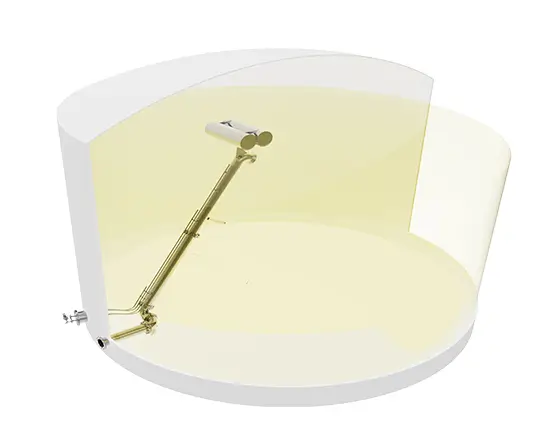
A tank farm package may include more than the loading area. Yuanda’s tank-related families include internal floating roofs, floating suction systems, rotary jet mixers and tank bottom samplers. If the buyer is improving storage and loading together, these products should be included in the early supplier discussion. A floating suction device may be relevant when cleaner upper-layer product draw-off matters. An internal floating roof may be part of a storage upgrade where vapor control and tank operating behavior affect the larger fluid handling plan.
The buyer’s request should describe the work zone instead of only naming one product. Include the medium, temperature, pressure, flow, pipe size, flange standard, tanker or vessel type, loading position, available platform height, operation frequency, control expectation and whether storage tank equipment is inside the same project. If drawings are not ready, a simple sketch and photos of the site are still better than a product name alone. The supplier can then identify which questions belong to arms, which belong to skids, which belong to access equipment and which belong to tank accessories.
The same request should also say what the buyer does not want the supplier to include. If civil work, field wiring, pump selection or local installation is handled by another team, write that clearly. If the buyer only needs equipment supply and workshop assembly, say so. If the buyer expects the supplier to support layout review before production, say that as well. Clear exclusions make a package quote easier to compare because each supplier is responding to the same responsibility boundary.
A useful request can also include internal links or page references for the supplier to follow. For example, the buyer can point to land loading arms for road tanker bays, marine loading arms for dock transfer, batch loading control systems for preset loading, and floating suction systems for tank draw-off questions. This keeps the discussion organized and gives the supplier a chance to respond by equipment family instead of mixing every item into one price note.
A contractor preparing a tender can use two columns in the request: confirmed requirements and open items. Confirmed requirements may include medium and loading route. Open items may include final platform height, control interface, number of loading lanes or whether the storage tank requires floating roof work. This lets the supplier provide a budget direction without pretending that every decision is final. It also gives the buyer a cleaner record of what must be resolved before order approval.
For purchasing teams that must compare several suppliers, this method also prevents a misleading low offer. One supplier may include only the visible arm, while another includes the arm, access stair, platform steelwork and control skid interface. Without a scope table, those two prices look comparable even though they answer different jobs. The buyer should ask each supplier to separate base equipment, recommended accessories, site-dependent items and exclusions. That creates a commercial comparison that reflects the real loading station.
A package quote should make later maintenance easier, not harder. If the owner has a local maintenance team, the supplier should identify which items are likely to require routine inspection: swivel joints, seals, couplers, parking parts, stair movement points, valve access and skid instruments. If the owner relies on a contractor, the handoff file should make those parts easy to find. A package that arrives with unclear component names may be cheaper on paper but more difficult to maintain after the first operating season.
This is where accessories should be treated seriously. A loading arm swivel joint, sealing cap, dry disconnect valve, breakaway valve or drain pan may be a small line item, but it can affect how cleanly and safely the station operates. The supplier should tie each accessory to the arm route and medium. If the buyer cannot explain why an accessory is included, it should be clarified before order approval.
The buyer should ask how the package will physically arrive. Some components may be assembled on a skid or frame, while arms, ladders, platforms or accessories may be shipped in sections for protection and handling. This affects unloading, storage and installation planning at the destination. If the buyer expects a plug-in assembly but the cargo arrives as several marked components, the site team may lose time simply understanding what belongs together.
A clear supplier package should therefore show assembled units, loose accessories, field-installed parts and documents in separate lines. For a multi-lane loading station, each lane should be identifiable. For a marine terminal, each arm and dock accessory should be marked so the installation team does not mix a gangway, hose crane, mooring hook or arm accessory into the wrong work area. The supplier’s packing plan is part of the product experience, not an afterthought.
For international shipments, this clarity is especially useful because customs brokers, warehouse teams and installers may all touch the cargo before the engineer sees it. A package that is marked by equipment family and lane number reduces handling questions and protects the project schedule.
It also protects the supplier relationship. When every crate and accessory has a clear purpose, later questions become technical questions instead of disputes about missing or misunderstood scope.
Even when asking for a package, the buyer should keep equipment families visible. A clear quote can show land loading arm, skid-mounted system, folding stair, platform trestle, loading arm accessories and storage tank equipment as separate lines inside one supply scope. This helps internal reviewers compare function and cost. It also lets the buyer decide whether to order everything together or phase the project. Yuanda’s catalog structure is helpful because it already separates the major equipment families by use.
The best reason to buy a package is not convenience alone. It is a cleaner installation and easier later service. When the same supplier understands the arm, skid, access route and accessories, drawings and spare part discussions are easier to coordinate. When an operator reports a problem, the owner can describe the working station instead of trying to decide which supplier owns the issue. This matters in loading areas where mechanical movement, sealing, control and human access are all present in the same shift.
Use a narrow quote for direct replacements and clearly defined stock orders. Use a package quote when a new or modified transfer point has several open interfaces. For the next step in the same topic cluster, compare the fluid loading equipment supplier guide, the fluid transfer equipment manufacturer guide and Yuanda’s project page. Together they help the buyer move from product naming into a supply scope that can actually work on site.
