

Get quote
Get Free Consultation!
We are ready to answer right now! free consultation.
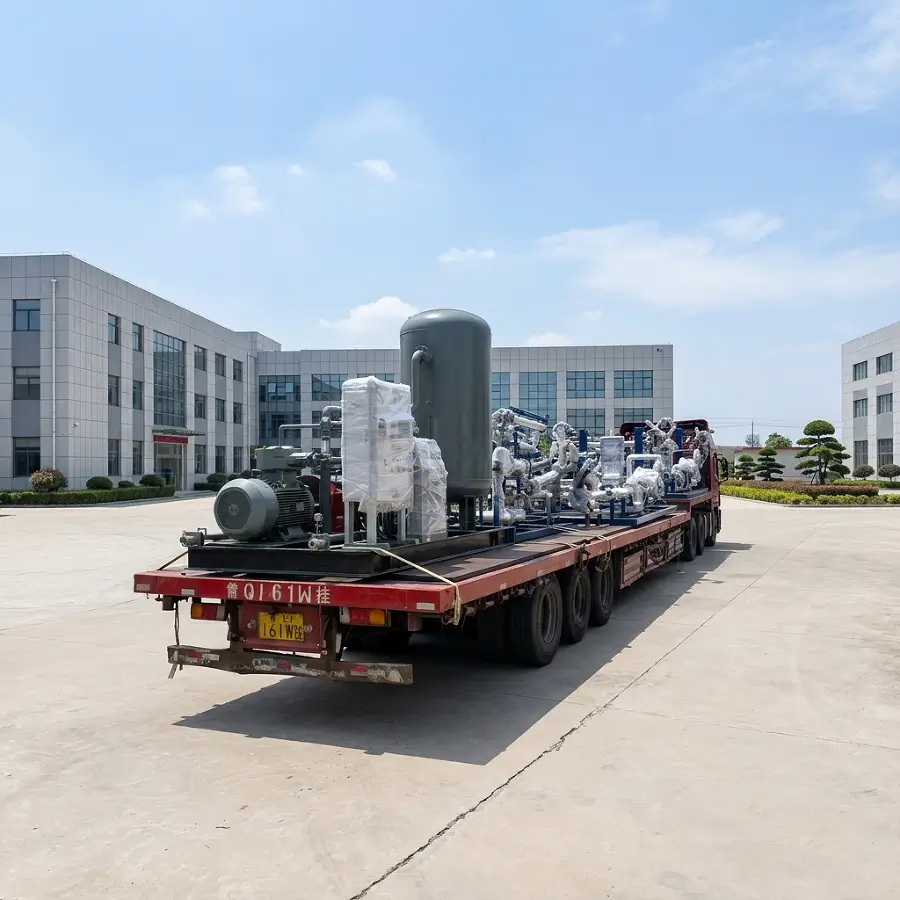
A global buyer looking for a China loading arm manufacturer needs more than a product photo and a price. The real question is whether the manufacturer can match a loading arm to the medium, temperature, vehicle or ship connection, control requirement and export delivery path. Yuanda Machinery’s public pages show a focused product range that includes land loading arms, marine loading arms, LPG, LNG, liquid ammonia and liquid chlorine loading arms, skid-mounted systems, platforms and terminal accessories. That range gives overseas buyers a useful starting point for factory evaluation.
A China-based supplier can be attractive for project cost and manufacturing coverage, but the buyer should not approve the order only because the catalog looks complete. The stronger review asks how the manufacturer handles special media, how it documents site assumptions, how it packages equipment for international handling, and whether the same team can discuss access, control and accessory details. Those checks are especially important when the buyer is a contractor or distributor who will be responsible for installation quality in another country.

A manufacturer with only one arm style may be suitable for a narrow replacement order, but project buyers usually need more choices. Road tanker, railcar, marine dock, LNG, LPG, toxic chemical and heated product service all create different working conditions. Yuanda’s published product center separates land loading arms, marine loading arms, gas and cryogenic arms, skid-mounted loading systems, folding stairs, platforms and accessories. That separation helps the buyer ask targeted questions instead of comparing every product under one broad label.
The buyer should ask the manufacturer to explain where each family belongs. AL1512, AL1401, AL1402, AL1403 and AL1412 routes are not the same purchase decision as AL2404, AL2503 or AL2543 bottom loading options. AM62 manual marine loading arm is not the same operational route as AM63H or AM64H electro-hydraulic marine equipment. A manufacturer that can explain these differences is more useful than one that simply sends a long list of model names.
Land loading arms normally start with truck or rail geometry, rack height, top or bottom connection and operator access. Marine loading arms start with dock arrangement, ship manifold movement, parking position and emergency planning. A buyer evaluating a China loading arm manufacturer should therefore review land loading arms and marine loading arms as different engineering discussions, even when both products are supplied by the same factory.
Yuanda lists LNG loading arms, LPG loading arms, liquid ammonia loading arms and liquid chlorine loading arms. These products deserve stricter questioning because low temperature, toxic media or liquefied gas service changes the buyer’s risk profile. The buyer should ask what operating data the manufacturer needs before confirming the arm family, what material or sealing assumptions are being made, and whether the site needs gas return, emergency release or additional control coordination. If a manufacturer treats these services like ordinary ambient transfer, the buyer should slow the purchase process down.
Yuanda’s about page states that the company was founded in 2005 and is focused on fluid storage, loading and unloading equipment and integrated control systems for petroleum, chemical, LNG, marine and storage-terminal applications. It also presents a 50,000 square-meter industrial site, 18,000 square meters of production workshops, ISO9001 organization and inspection-related qualifications. These facts are useful for a buyer, but they should still be connected to the specific equipment being ordered.
An overseas distributor ordering standard land loading arms may need workshop photos, product markings, packing information and spare part identification. A contractor buying a complete loading island may need drawings, skid boundary notes, lane labeling and inspection records. A marine terminal buyer may need more detail around control logic, dock movement and emergency release interface. The same factory evidence should be interpreted according to the actual order, not used as a generic reassurance.

If a purchase includes several equipment families, the buyer should focus inspection attention on the product that carries the highest site risk. In a simple replacement order, that may be the arm and its swivel or seal route. In a skid-mounted system, it may be the meter, valve, batch controller and management interface. In a marine package, it may be the hydraulic operation and emergency release arrangement. This is a better approach than asking for a general factory video that does not show the equipment being purchased.
For a first-time overseas buyer, the inspection conversation should be tied to the quotation line items. If the order is for AL2404 bottom loading arms, the buyer should ask how the bottom loading connection and accessories are checked before packing. If the order is for AM63H marine loading arms, the buyer should ask how hydraulic operation and dock-side interface assumptions are documented. If the order is for a skid-mounted loading system, the buyer should ask how the control cabinet, instruments and mechanical route are identified before shipment.
A distributor may not need a full factory acceptance process for every standard replacement, but it should still request evidence that protects resale. Product labels, photos before packing, accessory lists and drawings linked to the order number can prevent later confusion. When the distributor sells to a refinery, tank farm or chemical plant, those documents become part of its credibility with the end user.
| Buyer situation | What to ask the manufacturer | Useful Yuanda evidence |
|---|---|---|
| Distributor stocking road tanker arms | How are model families, accessories and spare parts labeled? | Land loading arms and loading arm accessories |
| Contractor building a loading bay | How do arm reach, platform access and skid control fit the site drawing? | Projects page and skid-mounted systems |
| Marine terminal upgrade | Which arm operation mode and dock accessories fit the berth? | Marine loading arms and marine terminal equipment |
| Cryogenic transfer project | What low-temperature assumptions and site data are needed before approval? | LNG and cryogenic loading arm product families |
International delivery adds a second layer of risk. The loading arm may be technically correct, but the buyer still needs a practical file for customs, inland transport, storage, installation and later maintenance. The manufacturer should identify which parts ship assembled, which parts ship loose, which accessories belong to each lane, and which documents the installer should read first. For arms that are partly disassembled for safe transport, crate labels and assembly references matter as much as the packing list.
The buyer should also ask for drawings and responsibility notes that can travel with the shipment. If the site must prepare support steel, flange faces, bolts, gaskets, lifting equipment or electrical wiring, those items should be written before the shipment leaves the factory. Otherwise, the installation team may discover missing boundaries after the cargo arrives, when communication is slower and the project schedule is already under pressure.
Accessories are easy to underestimate in export orders. A sealing cap, drain pan, dry disconnect valve, breakaway valve or swivel part may be physically small, but it can decide whether the loading lane operates cleanly. The buyer should ask the China loading arm manufacturer to mark accessory packages by lane or arm family. This is particularly useful when the same shipment includes loading arm accessories, folding stairs, platform trestles and skid equipment.
The same shipment may pass through a port, a forwarder’s warehouse, a local contractor’s storage area and finally the project site. If the accessory crate is not marked clearly, the people handling the cargo may not know whether a part belongs to Lane 1, a vapor return arm, a bottom loading arm or a marine accessory package. Clear marking is a simple factory action that protects the buyer from expensive field sorting.
Buyers should also ask how the manufacturer handles spare parts for future orders. The best time to record seal material, swivel route, coupler type and accessory family is before the first shipment leaves the factory. When the site later asks for a replacement, the buyer should not have to rely on a photo from a maintenance phone. The original order file should already say which part belongs to which arm and service condition.
Internal links can help the buyer prepare the comparison file before speaking with the factory. Start with Yuanda’s company page for manufacturing background, the product category page for equipment families, and the loading arm manufacturer specification guide for the technical data a serious supplier should request. If the order includes broader terminal equipment, compare the fluid transfer equipment manufacturer guide as well.
A good factory review does not need to turn every purchase into a complicated engineering study. It needs to remove the assumptions that commonly damage loading arm orders: unclear medium data, uncertain vehicle geometry, missing access planning, vague accessory scope and poor packing identification. If the manufacturer can explain those points using the buyer’s site conditions, the purchase has a stronger foundation than a quote built only on pipe size and price.
The buyer should be cautious with any manufacturer that treats all questions as standard. A standard response is useful only when the site is genuinely standard. When the order includes cryogenic service, toxic media, marine movement, a new skid system or an old rack replacement, the manufacturer should ask for details before fixing the proposal. That habit is a sign that the factory understands the operating risk behind the product name.
A practical overseas review can therefore be staged. First, confirm the product family and service condition. Second, ask for the drawing or technical note that supports the selection. Third, review packing and marking before shipment. Fourth, keep the accessory and spare part information with the order. This gives the buyer a manageable process without requiring a large inspection team for every purchase.
The buyer should also keep language clear in the purchase file. Instead of writing only one loading arm, describe whether the site needs a top loading arm, bottom loading arm, marine loading arm, LNG arm, LPG arm or skid-connected loading route. Clear language reduces translation mistakes and helps the manufacturer respond with the correct product family.
For global buyers, the most useful final record is simple: approved arm family, service condition, operating route, accessory list, packing identification, buyer-prepared site items and unresolved questions. Keep that record with the order. It will help during installation, future spare part requests and the next project conversation with the same manufacturer.
This record is also useful when several departments are involved. Purchasing may compare suppliers, engineering may approve the route, logistics may receive the shipment and maintenance may later request spare parts. A clear manufacturer file lets each team work from the same arm family and service condition instead of translating the order again at every stage.
For a buyer managing several projects, those records also make supplier evaluation more objective. The question becomes whether the manufacturer reduced uncertainty, documented the equipment correctly and supported the delivery path, rather than whether the first quotation looked attractive. That is the kind of comparison a global purchasing team can defend internally.
