

Get quote
Get Free Consultation!
We are ready to answer right now! free consultation.
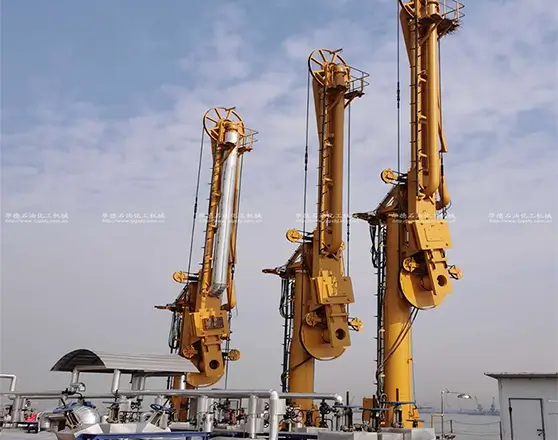
A buyer searching for a marine loading arm manufacturer is usually planning a dockside transfer point where ship movement, manifold height, operating mode and emergency planning matter as much as pipe size. The first review should confirm the vessel range, medium, loading or unloading direction, dock structure, parking area and whether the project needs manual, hydraulic or emergency release equipment. Yuanda Machinery’s marine loading arm range includes AM62, AM64, AM63M, AM62H, AM63H, AM64H and AM63HE routes for buyers to compare.
Marine loading arms should not be selected like ordinary land loading arms. A vessel can move with tide, draft, wind and berth conditions. The arm must work within a safe envelope and return to a parked position without interfering with dock operation. A manufacturer that asks only for diameter and flow rate is missing important project information. A stronger manufacturer asks for ship manifold data, movement range, medium conditions and terminal equipment interfaces.
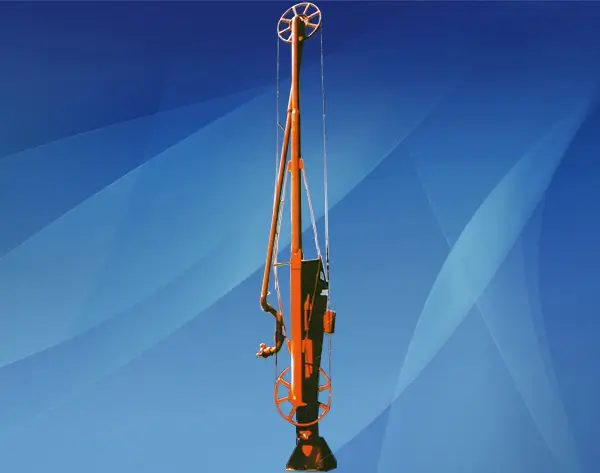
The berth envelope defines whether the arm can work safely. The manufacturer should ask for vessel size range, manifold height, expected movement, dock elevation, pipe route, parking direction and available maintenance space. If the buyer is upgrading an existing dock, the manufacturer should also ask what cannot be changed. Old pipe routes, limited dock width or existing gangway positions may affect the arm selection more than the buyer expects.
A good marine loading arm drawing should show more than the connected position. It should help the buyer understand normal operating range, parking position, maintenance access and emergency movement assumptions. The buyer should review that drawing with operations and terminal safety staff before approving production because they will be responsible for the arm during vessel transfer.
Manual marine loading arms such as AM62 and AM64 may be suitable where operation is simpler, vessel movement is manageable and the terminal team can handle the arm safely. The buyer should still ask how the arm is balanced, how operators connect and disconnect, and how the arm parks after transfer. Manual does not mean informal. It means the human operating sequence must be clear and comfortable.
Hydraulic marine loading arms such as AM62H and AM63H introduce control, power and maintenance questions. The manufacturer should ask where controls are located, how operators see the arm during movement, and how maintenance teams reach hydraulic, swivel and seal points. A hydraulic arm can improve operation, but it also requires clearer documentation and site preparation than a simple manual route.
Marine transfer projects often include more than the arm. Yuanda’s marine terminal equipment includes marine gangways, quick release mooring hooks, hose cranes and dock vapor recovery ship-shore safety devices. The buyer should ask whether these items affect the same dock envelope as the marine arm. A gangway or hose crane placed without arm review can create movement conflicts on a busy berth.
Emergency release planning should be addressed before the buyer chooses the final arm family. If the medium, vessel movement or terminal procedure requires emergency release, the manufacturer should explain how that requirement affects the arm, control logic and operating file. The buyer should not treat emergency release as a late accessory because it can change how the transfer point is reviewed.
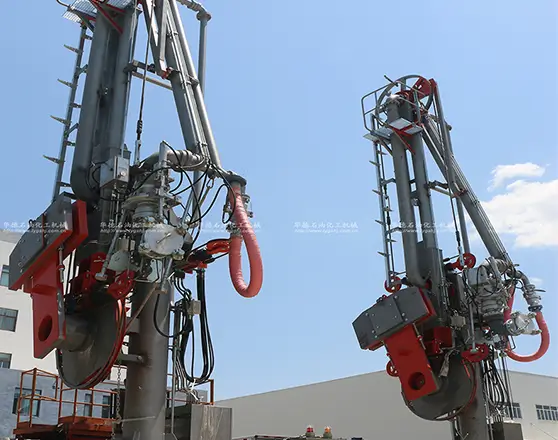
An emergency release marine loading arm should be discussed with the terminal’s operating response, not only as a product feature. The buyer should ask what conditions trigger emergency disconnection, how the operator confirms the system state, and what must be inspected after an event. The manufacturer can support this discussion by documenting the arm family, control boundary and site-prepared responsibilities clearly.
| Marine project question | Manufacturer should verify | Why it matters |
|---|---|---|
| What vessels use the berth? | Manifold height, movement range and connection envelope. | Arm selection follows real ship conditions |
| Manual or hydraulic operation? | Operator sequence, control location and maintenance access. | Avoids difficult daily movement |
| Is emergency release needed? | Arm family, control boundary and terminal procedure. | Keeps safety planning inside the equipment decision |
| Which dock accessories share the berth? | Gangway, hose crane, mooring hook and vapor recovery positions. | Prevents equipment conflicts on the dock |
A marine loading arm project should also consider how the berth is used between transfers. The arm may be parked for long periods, and the dock may still need space for gangways, hoses, cranes, maintenance equipment or vehicle access. A manufacturer should ask what else happens on the berth so the parked arm does not become an obstruction when no vessel is connected.
The buyer should also ask how the marine arm behaves during small vessel movements that are normal for the berth. Vessel movement is not a rare event; it is part of dock operation. The manufacturer should explain the allowed working envelope and the conditions that require stopping transfer. This helps the terminal team write operating rules that match the equipment.
For chemical or petroleum marine transfer, the medium should drive seal, drain and emergency planning. A buyer should not approve a marine arm only from berth geometry. The product determines how carefully the terminal should manage disconnection, drainage, vapor or safety response. The manufacturer should ask for medium conditions before treating the marine arm as a standard dock component.
When hydraulic operation is selected, the buyer should ask who will maintain the hydraulic system and where service points are located. A hydraulic marine arm can make operation easier, but only if the terminal has a clear maintenance route and understands the control boundary. The manufacturer should document these points so the site does not depend on informal training alone.
A marine terminal contractor may need lifting plans, foundation or support information, dock piping interface details and electrical or hydraulic preparation notes. The manufacturer should separate factory supply from local site work before shipment. If those boundaries are unclear, dock installation can stall while equipment is already on site and vessel schedules are approaching.
For multi-arm berths, package marking is critical. Arms, accessories and control-related items should be marked by berth or arm number. A crate that only shows a product name may be difficult to sort when several similar marine components arrive together. Clear marking protects the installation team and gives future maintenance staff a better reference.
Marine loading arms can be large, heavy and tied to dock-side construction schedules. The manufacturer should clarify what ships assembled, what ships loose, which components need local lifting equipment, and what the dock contractor must prepare. If the delivery file does not name these responsibilities, the arm may arrive before the site is ready or the contractor may misunderstand what belongs to the factory scope.
The buyer should ask for crate marking and document references that match the berth or arm number used on the site. This matters when a project includes several arms, gangways or dock accessories. Clear marking helps the contractor store parts correctly, plan lifting, and keep accessories tied to the correct berth. It also helps the future maintenance team identify spare parts without relying on memory.
Spare parts for marine loading arms should not be treated as loose generic items. The seal route, swivel family, hydraulic service items, emergency release components and accessories should be tied to the approved arm and berth condition. When the terminal later asks for service support, the manufacturer should be able to connect the request to the original vessel range, medium and arm family.
Buyers comparing dockside options can read the loading arm manufacturer specification guide and Yuanda’s marine terminal equipment range. If the project also includes loading skids or wider transfer scope, the fluid transfer equipment supplier guide helps decide where the marine arm fits inside the broader terminal package.
Marine projects leave little room for vague assumptions because dock work, vessel schedules and safety procedures are all connected. The manufacturer should help the buyer confirm vessel envelope, medium, operation mode, emergency release expectation, dock accessory interfaces, delivery form and site-prepared work before production. If any of those items remain open, the quotation should be treated as a technical discussion rather than a final purchase file.
The best final record is a berth-level file: vessel range, manifold data, marine arm family, control route, emergency planning notes, dock accessories, packing marks, lifting requirements and maintenance references. That record gives the buyer a practical foundation for installation, operation and later service. It also makes future berth upgrades easier because the next decision starts from a documented transfer point instead of a forgotten purchase order.
Marine loading arm buyers should also decide how operating responsibility will be handed over after installation. The manufacturer may supply the arm, but the terminal team operates it during live vessel transfer. The handover file should therefore explain normal connection, parked position, inspection points, control boundaries and any emergency release notes in language the terminal team can use.
If a berth handles more than one product or vessel type, the manufacturer should help the buyer identify the limits of the selected arm. A marine arm that works for one vessel range may not automatically suit a future berth change. Recording the original vessel envelope and medium conditions protects the buyer from extending the equipment beyond its reviewed operating case.
For distributors or project contractors, marine loading arms also require careful scope language. The offer should state whether gangways, mooring hooks, hose cranes, vapor recovery devices, hydraulic equipment or local installation support are included or excluded. Clear boundaries make the offer easier to compare and reduce disputes when dock work begins.
A manufacturer that can connect arm selection, berth movement, dock accessories, packing and maintenance records gives the buyer a more reliable project path. The purchase is not only a marine arm; it is a transfer point that has to work with vessels, operators and dock contractors over time.
The buyer should also ask how future berth changes will be reviewed. A new vessel range, new medium or added dock accessory may require a fresh arm envelope check rather than a simple repeat order.
Marine loading arms also need clear spare part records because service items can be tied to the arm family, control route and berth condition. A manufacturer that records those relationships makes future maintenance communication easier.
For terminal owners, the strongest approval file is one that operations, maintenance, engineering and purchasing can all understand without rebuilding the project history.
That file should stay with the berth after commissioning. When the terminal later reviews a new vessel, a new product route or a replacement component, the team can compare the request with the original vessel envelope, medium and arm family. This prevents the marine loading arm from being reused outside the conditions that were actually reviewed.
A good manufacturer will support that discipline because it protects both sides. The buyer gets a clearer dockside transfer system, and the supplier receives better information for service, spare parts, operator training and future berth upgrades.
That clarity matters during every vessel call.
