

Get quote
Get Free Consultation!
We are ready to answer right now! free consultation.
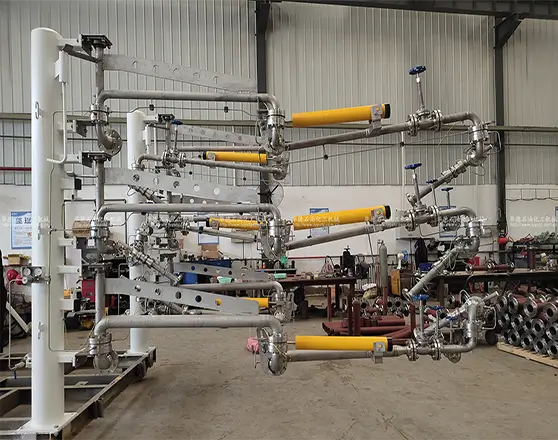
A buyer searching for an LNG loading arm manufacturer is dealing with a cryogenic transfer project, not a normal ambient loading point. The manufacturer should understand low-temperature service, loading or unloading direction, connection route, safety boundary, site preparation and whether the project includes a skid-mounted cryogenic loading system. Yuanda Machinery lists Three-Pipe Cryogenic Loading and Unloading Arm for LNG and LNG cryogenic loading arms for ethylene and LNG unloading, which gives buyers real product names to use in technical discussions.
LNG transfer should be reviewed with more caution because temperature, movement, material behavior and site procedure all matter. A buyer should not approve an LNG arm from a general loading arm checklist. The first questions should be whether the transfer is land or marine, whether the service is loading, unloading or both, what connection and control expectations apply, and which site teams will install and operate the equipment.
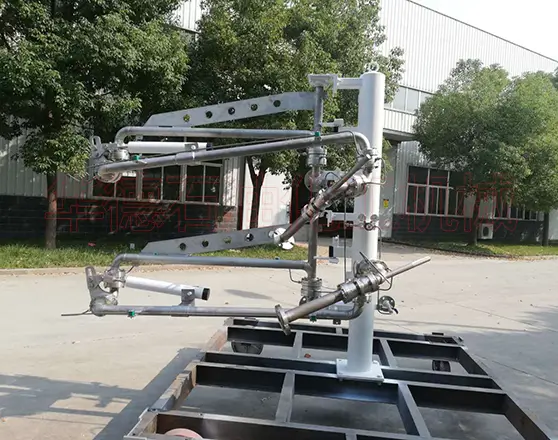
Cryogenic service should shape the entire discussion. The manufacturer should ask for medium, temperature range, pressure, flow requirement, loading direction, connection standard, operating frequency and available site drawings. It should also ask whether the arm is part of a larger LNG skid or terminal package. If these details are missing, the buyer should not treat the quotation as final because low-temperature service leaves little room for vague assumptions.
The buyer should also ask what information the manufacturer needs from the site before production. Support structure, flange preparation, lifting access, operating space and local installation capability can all affect the project. An LNG loading arm manufacturer should identify buyer-prepared work in writing so the equipment does not arrive before the site is ready to receive it.
A three-pipe cryogenic loading and unloading arm for LNG should be reviewed with the actual transfer route. The buyer should clarify whether loading, unloading or both directions are expected and how the related lines are handled at the site. The manufacturer should explain the arm family and the boundary between factory supply and site piping, without turning the discussion into a loose product name.
An LNG cryogenic loading arm used for ethylene and LNG unloading should not be handled like a normal chemical loading arm. The buyer should ask how low-temperature service affects material, movement, operation and maintenance expectations. If the supplier response treats the project like ordinary ambient loading, the buyer should slow the review and ask for a clearer cryogenic service explanation.
Yuanda’s Skid-Mounted Cryogenic Loading and Unloading System for LNG is important when the project needs more than a loose arm. A skid-supported LNG transfer point may include valves, instruments, control logic, loading sequence and site management boundaries. The manufacturer should ask whether the LNG arm is supplied alone or as part of a skid-connected package. This affects documentation, packing and installation.
For engineering contractors, the interface between the arm and skid should be clear before the purchase order. Which parts are assembled, which parts are field-installed, which control signals or operating sequences are included, and which site items belong to the buyer? If these boundaries are vague, the contractor may have to solve control and installation details after equipment arrives.
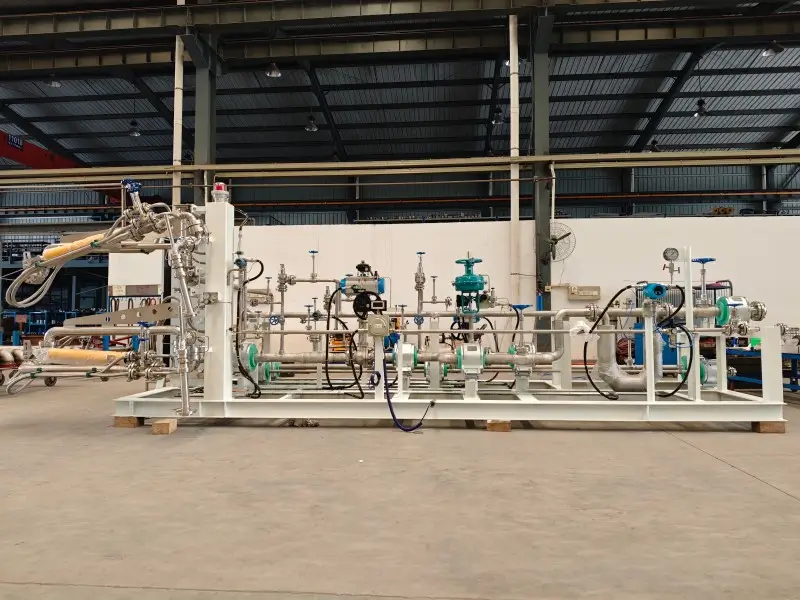
A cryogenic skid package should show how the transfer route works. The buyer should understand what the arm does, what the skid does, what the operator controls, and what the site prepares. A list of valves and instruments may be useful, but it does not replace an operating boundary. The manufacturer should make that boundary clear for installation and future service.
| LNG project question | Manufacturer should verify | Buyer risk reduced |
|---|---|---|
| Cryogenic service data | Medium, temperature, pressure, flow and connection. | Avoids ambient-service assumptions |
| Transfer direction | Loading, unloading or both directions. | Correct arm and piping boundary |
| Skid interface | Control, instruments, valve sequence and site scope. | Cleaner system handoff |
| Shipment and installation | Assembly state, lifting, local work and packing marks. | Fewer field delays |
LNG equipment may pass through several hands before installation: factory packing, logistics, customs, local storage, lifting contractor and terminal team. The manufacturer should mark packages by equipment family, transfer route and drawing reference. Loose components, accessories and skid-related items should not be mixed in a way that requires field guessing. Cryogenic service already demands attention; unclear packing should not add risk.
Maintenance records should also be prepared from the first order. The buyer should know which service items belong to the LNG arm, which belong to the skid package and which are site-prepared. Future replacement discussions should start from the approved cryogenic route, not from a photo or incomplete part name. This is especially important when a facility handles several low-temperature or gas-related services.
The service file should identify buyer-prepared work such as support, flange preparation, lifting, local installation, control wiring or site procedure items. The manufacturer should not leave those items hidden inside assumptions. A buyer who knows the site responsibility before shipment can prepare installation more reliably and reduce commissioning delays.
Buyers comparing broader project scope can review the fluid transfer equipment supplier guide and Yuanda’s LNG loading arm product range. If the project includes general loading equipment as well, the loading arm manufacturer specification guide can help organize the technical data request.
A good LNG loading arm manufacturer does not need to promise what the website does not prove. It should instead make the buyer’s assumptions visible: cryogenic service data, transfer route, arm family, skid boundary, packing method, site work and future service references. When those assumptions are visible, the buyer can approve the order with a better understanding of what is included and what still requires site coordination.
Before approving an LNG loading arm order, the buyer should ask the manufacturer to list open questions. If medium data, control boundary, installation route or site preparation is incomplete, the quotation should remain in technical review. That discipline protects the project from treating a cryogenic transfer point like a normal loading rack.
For repeat LNG or cryogenic projects, keep the approved route, packing file and maintenance record together. The next project can then reuse only the parts of the decision that truly match the new site.
A buyer should also ask how the LNG loading arm manufacturer distinguishes confirmed facts from assumptions. Medium and temperature may be fixed, while the final support arrangement or local installation sequence may still be open. The order file should mark those differences clearly. This prevents teams from treating an early assumption as a factory commitment or from leaving a buyer responsibility unnoticed.
For a terminal project, cryogenic equipment often involves several disciplines at once. Mechanical, piping, civil, electrical and operations teams may all touch the final result. The manufacturer should provide equipment-side information in a form that those teams can use: arm family, transfer route, skid boundary, packing marks and site preparation items. A long product list without interface notes is not enough for this kind of project.
The buyer should also ask whether the LNG arm is being selected for a specific site or for distributor inventory. A project-specific arm can be reviewed against detailed drawings. Inventory planning is riskier because cryogenic service should not be generalized too far. A distributor should keep LNG arm inquiries tied to actual project data before committing to a final product route.
Shipment marking deserves more attention on cryogenic equipment because accessories and skid items may not be obvious to every handler. The manufacturer should mark packages by route, assembly and drawing reference. If local teams receive several crates, they should be able to identify what belongs to the LNG arm and what belongs to the skid or site connection.
Maintenance planning should begin with the first order, not after the first shutdown. The approved LNG route should record service items, accessory boundaries and supplier references. This helps the buyer avoid confusing LNG-related parts with other loading arm components at the same facility.
A strong manufacturer will also say when information is not sufficient. If the buyer cannot confirm transfer direction, site support, control boundary or installation responsibility, the manufacturer should keep the quote open for technical review. That honesty is more useful than a quick answer that hides missing data.
The final LNG loading arm decision should be readable by both project engineers and purchasing staff. It should explain why the arm family fits the cryogenic transfer route, which products or skids are included, what the buyer prepares, and how future service will be handled.
The manufacturer should also explain how the LNG arm will be identified after delivery. Cryogenic equipment can be installed among other loading systems, so the product record should clearly name the LNG service route. This helps the maintenance team avoid confusing a cryogenic component with ambient loading arm parts stored elsewhere at the site.
If the LNG arm is part of a project with several suppliers, the buyer should ask for interface notes. The arm manufacturer may supply the arm, while another party handles piping, controls or civil work. The order should identify where the factory scope ends and where the project team begins. That boundary is especially important when low-temperature operation depends on correct site preparation.
For global procurement teams, a clear LNG manufacturer file also helps internal approval. Decision makers may not all understand cryogenic loading equipment, but they can review whether the manufacturer requested service data, documented site responsibilities and identified the skid or system boundary. That gives the purchase a stronger technical explanation.
The buyer should avoid treating the first quote as a fixed design if key inputs are still missing. Instead, it can use the quote as a structured question list. Once the site answers those questions, the manufacturer can refine the equipment route and the buyer can approve with fewer hidden assumptions.
For an LNG project with both truck transfer and skid-mounted equipment, the manufacturer should identify which information belongs to the arm and which belongs to the system route. The arm may solve the physical connection, while the skid route may define valves, instruments and control boundaries. The buyer should not let those two scopes blur inside one general description.
The project file should also say how the LNG equipment will be stored before installation. Cryogenic arms and skid components may wait for civil or piping work to finish. If the manufacturer provides clear marks, handling notes and component references, the site team is less likely to confuse loose parts or expose the equipment to unnecessary handling.
A procurement manager comparing LNG loading arm manufacturers should reward careful limits. A manufacturer that says which site data is still missing is not slowing the project; it is protecting it. For low-temperature transfer, a transparent technical limit is more useful than a confident quotation built on incomplete drawings.
If the LNG project is tendered through a contractor, the manufacturer should make its questions easy to pass back to the owner. Medium data, interface drawings and site responsibilities are not paperwork decoration; they are the information that lets the cryogenic arm move from a product quote to a reviewed transfer route.
