

Get quote
Get Free Consultation!
We are ready to answer right now! free consultation.
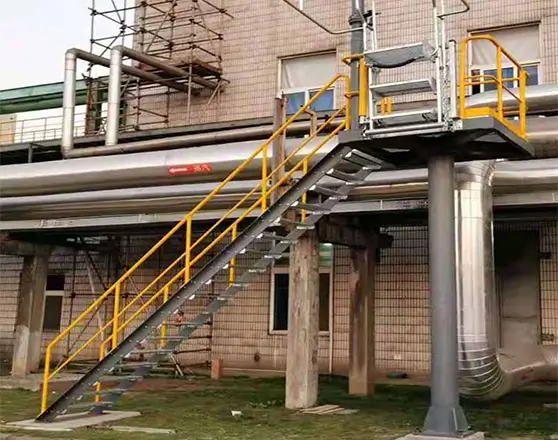
A loading platform supplier should help buyers turn a loading bay access problem into a clear supply package. The supplier needs to know how operators reach the vehicle, which loading arms are used, whether folding stairs are needed, and what local site work remains outside the package. Yuanda Machinery lists platform trestles and steel trestle platforms under platform and trestle products, with folding stairs and loading arm systems on the product category page.
The buyer should begin with the route, not the platform name. Does the platform support top loading, bottom loading inspection, rail loading, a skid-mounted system, or maintenance access around a tank farm loading point? A supplier that understands the route can organize the package more clearly than one that only quotes steel dimensions.
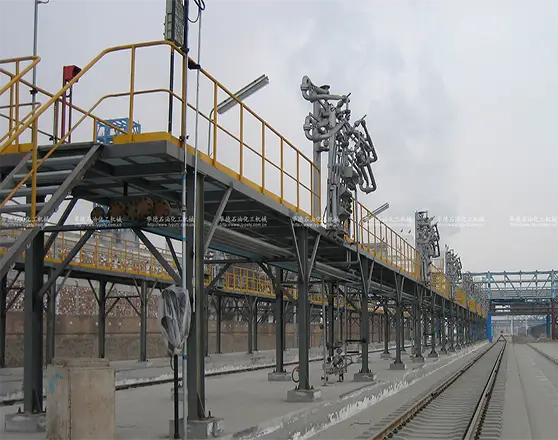
The supplier should explain which parts are included: platform sections, trestle structure, handrails, grating, stair interface, package marks and documentation. Civil foundations, installation labor, local supports or site modifications may be separate. Buyers should know this before shipment so site preparation is not delayed by scope confusion.
This boundary is especially important for contractors. A contractor may be responsible for civil work while the supplier provides platform assemblies. If both sides use different assumptions, installation can stall. The supplier should write the boundary in practical language, not only in commercial terms.
If the platform uses a pneumatic folding stair, side-mounted folding stair, top-mounted folding stair or widened stair, the supplier should confirm the interface before delivery. The stair location can affect platform opening, handrail arrangement and operator movement. Treating the stair as a later accessory can create field modifications.
If the platform supports a top loading arm such as AL1512 or AL1402, the supplier should know where the arm parks and where the operator stands. The platform should not block the loading arm movement route. Buyers can compare access planning with Yuanda’s land loading arms when reviewing platform supply.
A platform package can include several sections that look similar. The supplier should label assemblies by lane, elevation, section or route. If folding stairs, loading arms or trestle parts ship in the same project period, package marks become more important. Clear labels save time on site and reduce the risk of mixing sections.
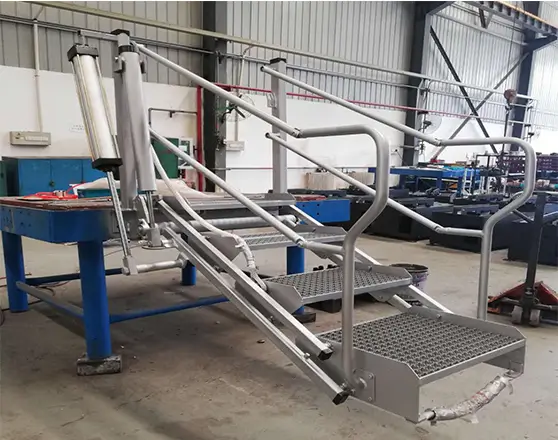
The supplier should also provide a practical drawing or section list. The drawing does not need to replace detailed engineering, but it should help the receiving team and installation team match parts to the loading bay. A package list that says only platform parts is not enough for a multi-lane project.
After installation, maintenance teams need to inspect grating, handrails, stairs and support points. The supplier can help by recording platform section names and stair interfaces. Future replacement or repair questions become easier when the owner can identify the exact platform section.
| Supplier question | Buyer evidence | Why it matters |
|---|---|---|
| What route does the platform support? | Top loading, rail loading, skid or maintenance access. | Matches real operation |
| What is included? | Steel sections, stair interface, handrails and documents. | Clarifies supply scope |
| What is local work? | Foundation, installation and site modifications. | Prevents schedule gaps |
| How will parts be marked? | Lane, section or route labels. | Supports field installation |
A platform that looks adequate in width may still be difficult to use if the operator route is not considered. The supplier should ask where people stand, where they turn, how they reach the vehicle and whether the loading arm or folding stair changes the route. These questions keep the platform discussion grounded in daily operation.
For existing loading bays, the supplier should ask what problems the buyer wants to solve. Is the old platform too narrow, too low, hard to inspect, poorly aligned with the loading arm, or missing a proper stair interface? The answer affects the supply package. A replacement platform should not repeat the old access problem with new steel.
If the buyer cannot provide full drawings, the supplier should identify assumptions about existing structures and route clearances. It should not present a retrofit as fully confirmed until critical dimensions are checked. This protects the buyer from field changes after fabrication.
The supplier should use the same route names in the quotation, drawing, package list and crate labels. If the platform is called Loading Bay 1 in one document and South Platform in another, installation teams may waste time reconciling records. Consistent route names are especially important when several platform sections and folding stairs ship together.
The supplier should also explain how the platform package will be staged if installation is delayed. Industrial sites may receive steel sections before civil work is finished. Package marks should let the buyer store sections without losing the relationship between parts and routes. This is a practical part of supply quality.
After installation, the owner may need to discuss handrail sections, grating, stair interfaces or platform supports. The supplier can make future service easier by naming sections in the handover file. A replacement request that names a section and route is much stronger than one that starts from a photo of steelwork.
During construction, temporary access may differ from final operation. The supplier should ask whether the platform is reviewed for permanent loading work, installation access, or both. The final equipment record should not assume a temporary route will become the operating route unless the buyer confirms it.
A supplier can also help project contractors separate platform supply from site installation. If the contractor installs the platform, the supplier should still provide section references and package marks. If the supplier provides installation support, the scope should be written clearly before shipment.
For multi-lane loading bays, the supplier should ask whether each lane uses the same platform arrangement. Sometimes one lane has a different loading arm, stair route or vehicle position. The supply file should not force different lanes into one generic description.
The final supply record should make the platform easy to receive, install, inspect and discuss later. That is the standard industrial buyers should expect from a serious supplier.
The supplier should also ask how the platform will be handed over to the owner. A contractor may install it, but the owner will operate and maintain it. The handover file should therefore be written for the owner, not only for the installation crew. It should name the platform route, stair interface, section labels and local work boundary.
For projects that include loading arms and skids, the supplier should keep platform documents close to the mechanical equipment documents. If the arm route changes, the platform may be affected. If the platform section changes, the arm working envelope may need review. The file should make those relationships visible.
A supplier should also be clear when a requested platform is outside the current evidence. If vehicle position, platform height or local supports are not confirmed, the supplier should mark them as pending. This is not a weakness; it is responsible project communication.
The buyer can then decide whether to provide more site data, hold the order, or approve a preliminary stage. That decision is much safer when assumptions are visible.
A good supplier will leave the buyer with a package that can be tracked from quotation to crate to installation to maintenance. That traceability is what makes later service less frustrating.
The supplier should also ask whether the buyer needs platform sections delivered in a certain order. Some sites install one lane at a time, while others store all sections before installation begins. Delivery sequence and package marks should match the site plan where possible.
If the platform connects to folding stairs, the supplier should include the stair interface in the same route record. This helps the owner understand which stair belongs to which section and prevents later confusion when a stair needs adjustment or replacement.
For projects with strict site windows, the supplier’s documentation can reduce installation time. Clear labels, section references and local-work boundaries help contractors prepare tools, lifting plans and inspection points before the truck arrives.
The supplier should also help the buyer record any accepted assumptions. If the platform height, vehicle stopping point or stair interface is confirmed later, the file should be updated before fabrication. This keeps the final package aligned with site reality rather than early inquiry notes.
That discipline keeps delivery records consistent and usable.
A strong supplier connects platform supply with operator route, loading arms, folding stairs, trestle sections, local work boundary and future maintenance records. Buyers can compare Yuanda’s platform and trestle products, project delivery examples and the fluid loading equipment supplier guide when preparing a loading bay package.
Before approving the order, the buyer should check whether a field installer and future maintenance person can understand the same platform file. If the answer is yes, the supplier has made the project easier to execute. If not, the buyer should clarify route, sections and supply boundary before shipment.
That extra clarity often costs little during procurement and saves much more when steel sections arrive at a busy industrial site.
