

Get quote
Get Free Consultation!
We are ready to answer right now! free consultation.
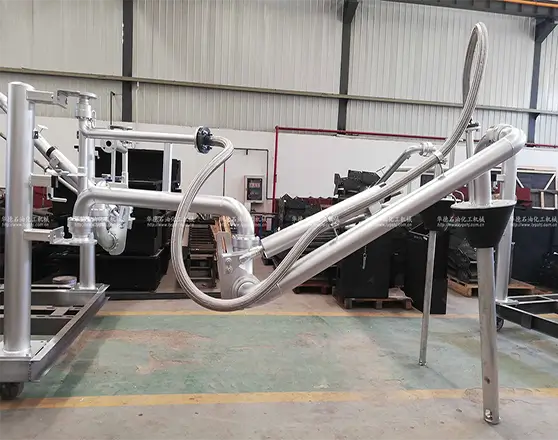
A sealed top loading arm manufacturer should first understand why the buyer needs a more contained top loading route. The discussion should cover the AL1412 sealed top loading arm, tank or vehicle interface, platform access, seal boundary, accessory package and handover records. Yuanda Machinery lists sealed top loading equipment inside its land loading arm range, alongside ordinary top loading arms, accessories and access structures.
The buyer’s first decision is not only whether the arm is sealed. It is whether the whole loading route can support the sealed connection. A sealed arm can still fail the project purpose if the platform position is wrong, if the operator cannot reach the connection safely, or if the seal boundary is described differently in quotation, drawing and packing list.
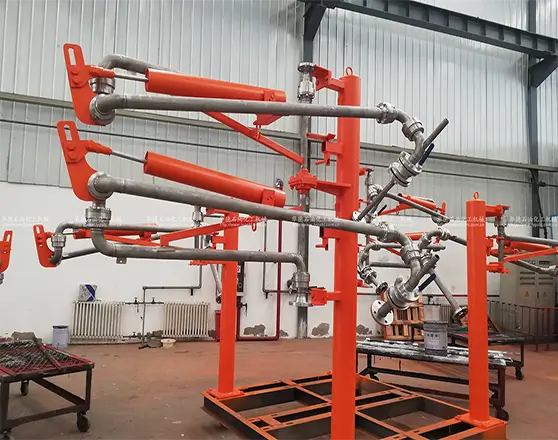
The AL1412 sealed top loading arm gives the buyer a specific product family to discuss, but the manufacturer still needs route evidence. The buyer should provide the loading position, vehicle or tank opening, platform height, parked position and expected operating sequence. Without that route evidence, the manufacturer can only discuss a general arm style.
A contractor building a new loading bay may focus on the arm model too early. The better sequence is route first, seal boundary second, accessories third. This makes the approval file easier for operators, installers and maintenance staff to use after the equipment arrives.
The record should identify where the sealed arm connects. If several top loading points exist on one platform, the package mark should name the lane or route. Similar top loading arms can be confused during receiving, especially when ordinary and sealed routes are shipped together.
A sealed top loading arm needs practical access. The manufacturer should ask whether the buyer uses a fixed platform, platform trestle, folding stair or other access route. Buyers can review this together with Yuanda’s platform and trestle products and folding stair category so the arm is not separated from operator movement.
The seal boundary should explain what part of the route belongs to the sealed arm package and what remains outside the manufacturer’s supply. It should be clear whether caps, rings, local fittings, valves or platform items are included. A buyer should not need to guess from a drawing or a product nickname.
For a retrofit route, the manufacturer should ask what problem the existing top loading connection created. If the old route caused splash, poor containment, awkward access or unclear accessory handling, the replacement should be reviewed against that problem. A direct copy of the old arm may not solve the real issue.
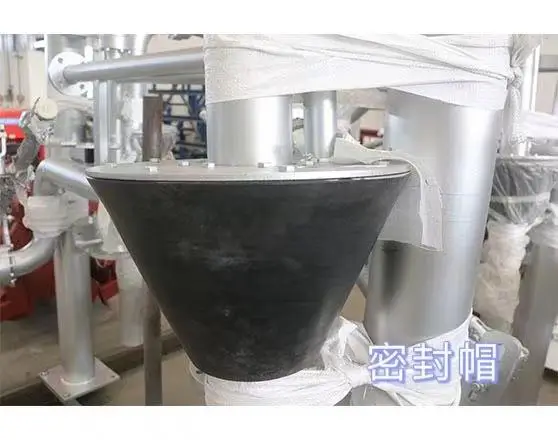
Sealing caps and sealing rings are small compared with the arm, but they can decide whether the sealed route remains understandable in service. The manufacturer should mark these items by route and model when they ship loose. A future spare request should not depend only on a photo taken after installation.
If the order includes AL1402, AL1512 or AL1412 arms, the labels should separate ordinary top loading routes from sealed routes. The buyer’s warehouse team may not know every technical difference. Route names and model names on crates help prevent installation mistakes.
| Route question | Buyer evidence | Manufacturer decision |
|---|---|---|
| Why sealed top loading? | Containment need, site route and medium notes. | Confirm whether AL1412 is the right family. |
| Where does the arm connect? | Lane, opening position and platform route. | Define operating envelope. |
| What is included? | Sealing cap, ring, accessory and local boundary. | Clarify supply scope. |
| How will it be identified? | Route name and package mark. | Support receiving and service. |
Accessories should be part of the first route review. Loading arm swivel joints, sealing rings, sealing caps, dry disconnect valves, drain pans or local fittings may affect how the operator completes a loading cycle. If accessories are added late, the final route may look correct on paper but be inconvenient on site.
A distributor stocking top loading products should separate sealed arm requests from ordinary arm requests. The buyer may use similar words for both, but the supply file is different. Sealed top loading requires clearer route identity, accessory marks and maintenance language.
A swivel joint request is stronger when it names the arm route and service position. Yuanda’s loading arm accessories can be reviewed with the sealed route so the buyer knows which parts belong to the arm package and which are separate maintenance items.
If the buyer asks about dry disconnect valves or drain pans, the manufacturer should connect the question to the route. Are they part of this sealed top loading lane, a separate chemical route or a wider skid package? Accessory scope should not float away from the arm record.
The final file should name the model, route, connection point, seal boundary, accessory scope, package marks and any open data that remained unresolved before approval. This is especially important when several loading arms share one platform. Maintenance staff may need the file years later to order a part or review a replacement.
The manufacturer should avoid unsupported claims when the buyer has not confirmed medium, local piping, platform dimensions or accessory responsibility. A useful file separates confirmed route data from pending questions. That discipline protects the buyer better than confident but vague wording.
For replacement work, old drawings, route labels and accessory records are more useful than a single photo. A photo may show shape, but it may not show why the arm was sealed or where the boundary was defined. The manufacturer should ask for old records before confirming a replacement.
A buyer should be able to hand the file to operations, purchasing and maintenance and receive the same understanding of the arm route. The file should show how the AL1412 sealed top loading arm works with platform access, sealing cap, sealing ring and nearby loading equipment. Buyers can compare wider project context through Yuanda’s loading arm manufacturer guide and fluid loading equipment supplier guide.
Before approving the order, the buyer should ask one simple operational question: can the receiving team identify the sealed route without asking the original salesperson? If the answer is yes, the manufacturer has turned a specialized arm into a clear project asset. If the answer is no, route names, package marks and accessory boundaries need more work.
A sealed arm purchase is strongest when the manufacturer treats containment, access and maintenance records as one decision. That keeps the sealed top loading route understandable long after the first shipment has been installed.
The buyer should also check whether future spare-part language is stable. A request for a cap, ring or swivel should point back to the same route name used in the approval file. Stable language reduces confusion when staff change or when a distributor supports the end user.
For multi-lane projects, the manufacturer should help keep ordinary, heat-traced, lined and sealed arms separated in the documentation. That separation makes the site easier to operate and gives the owner a cleaner basis for later replacement decisions.
A second practical review is storage before installation. Sealed arms and loose sealing accessories may arrive before the platform is ready. The manufacturer should help the buyer keep the sealed arm, cap, ring and any route-specific accessory together through package marks and packing lists. If the warehouse separates these items, the installer may not see the problem until the lane is being assembled.
An engineering contractor may also need to hand the file to the final owner. The contractor cares about installation, while the owner cares about daily operation and replacement. The manufacturer should write the route description so both groups can understand it. That means naming the loading lane, the top access route, the sealed connection point and the accessory boundary in plain project language.
For procurement teams comparing suppliers, this documentation habit is a useful signal. A manufacturer that asks about manhole position, access equipment and accessory marks is reviewing the actual job. A manufacturer that only repeats the product name may still supply equipment, but the buyer receives less help with receiving, installation and later service.
The final sealed route file should also show which items should be checked during arrival inspection. The buyer can compare crate labels, arm model, accessory list and route name before moving equipment to the site. This arrival check is simple, but it prevents a sealed arm package from being treated like ordinary top loading hardware.
If the sealed top loading arm is part of a larger fluid transfer project, the same route language should appear in the loading arm file, platform file and accessory file. Consistent wording keeps the project readable when different departments review the same equipment.
The buyer should also ask how the manufacturer describes future changes. If the loading platform moves, the medium changes or the sealing accessories are replaced, the original route may need another review. Writing that dependency into the file helps the owner know when a repeat order is no longer a simple repeat.
