

Get quote
Get Free Consultation!
We are ready to answer right now! free consultation.
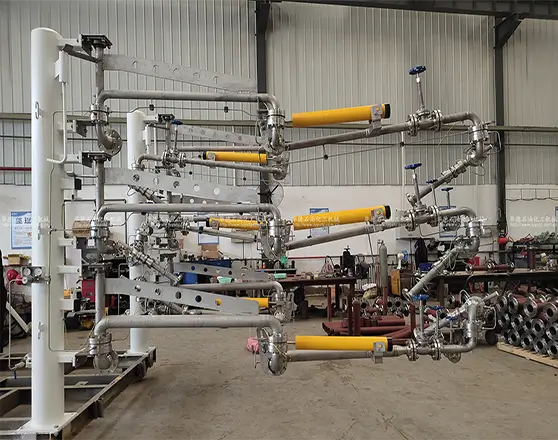
A buyer evaluating a cryogenic loading arm manufacturer should start with the low-temperature service, not the arm shape. Cryogenic transfer changes material expectations, movement, site preparation, packing and future service. Yuanda Machinery lists Three-Pipe Cryogenic Loading and Unloading Arm for LNG, LNG cryogenic loading arms for ethylene and LNG unloading, and a skid-mounted cryogenic loading and unloading system for LNG. Those products give buyers a real base for technical review.
Cryogenic projects often involve more interfaces than a normal loading bay. The buyer may need an arm, skid, control boundary, low-temperature service file, lifting plan and site-prepared support. A manufacturer should ask for medium, temperature, pressure, flow, connection standard, transfer direction, drawings and operating frequency before confirming a route.
If a manufacturer treats the project like an ambient chemical or petroleum loading arm, the buyer should slow the review. Low-temperature service should be visible in the questions, product selection and handover documents. The strongest proposal explains what is known, what remains open and which site work belongs to the buyer.
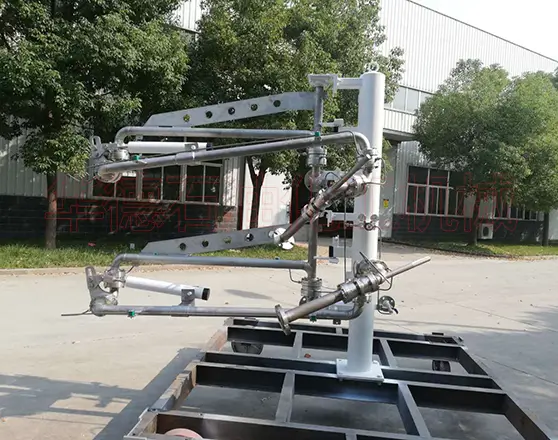
Geometry still matters, but it should follow service conditions. The buyer should define medium, temperature range, pressure, flow and connection. The manufacturer should then connect those facts with arm family, transfer direction and site layout. If the route is for LNG unloading, the review will differ from a general top loading station or an ambient chemical bay.
The buyer should also ask which assumptions are preliminary. A cryogenic loading arm quote may be useful early in a project, but it should not become final while key service data or site drawings are missing. A careful manufacturer will mark uncertain items instead of hiding them behind a polished quotation.
The transfer direction affects route design and documentation. An arm used for unloading may have different site interface questions from a loading route, and a mixed direction route needs even clearer boundaries. The manufacturer should ask which operation the buyer expects and how the arm connects with the terminal system.
Ethylene and LNG unloading should not borrow assumptions from ambient service. The buyer should ask how low temperature affects handling, movement, service records and site preparation. If the manufacturer cannot explain what information it needs for cryogenic service, the buyer should not treat the offer as ready for approval.
Yuanda’s skid-mounted cryogenic loading and unloading system for LNG is important when the arm is part of a wider transfer package. A skid-connected project may involve valves, instruments, control sequence, route identification and site integration. The manufacturer should state whether the arm is supplied alone or as part of a system-connected package.
A contractor should ask where the factory scope ends. Does the manufacturer supply the arm only, or does it also provide skid-mounted equipment, control-related components or route-level documentation? Which items are assembled and which are installed locally? If these questions remain vague, commissioning can become a negotiation instead of a planned handover.
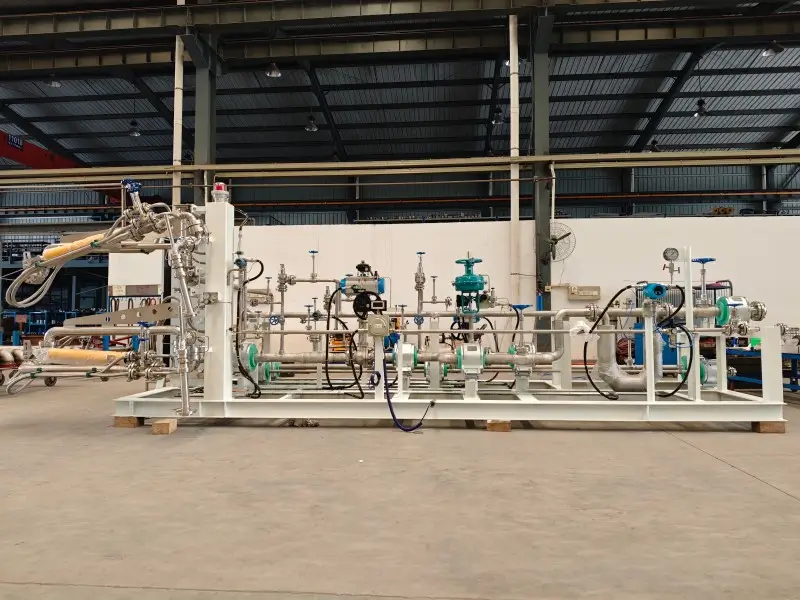
The buyer does not need every technical detail in the sales discussion, but it does need a clear route boundary. The file should identify what the skid does, what the arm does, what the site prepares, and how operators understand the transfer point. A loose component list cannot replace that route explanation.
| Cryogenic decision | Manufacturer should ask | Why it affects approval |
|---|---|---|
| Service data | Medium, temperature, pressure, flow and connection. | Avoids ambient-service mistakes |
| Transfer direction | Loading, unloading or both. | Defines route and arm family |
| Skid relationship | Control, valves, instruments and local interfaces. | Clarifies system scope |
| Site preparation | Support, lifting, piping, wiring and installation boundary. | Reduces field delay |
Cryogenic equipment may travel through long logistics chains. Package marks should identify arm family, transfer route, drawing reference and skid relationship. Loose accessories should not be packed in a way that forces the site team to guess. Clear marks are especially useful when several similar low-temperature components arrive together.
Storage before installation also matters. If civil or piping work is not ready, the equipment may wait at site. The manufacturer should provide handling and identification notes so the buyer can protect components and keep accessories with the correct route. This is not a performance claim; it is practical delivery management.
A service file should connect the cryogenic arm, medium, route, skid boundary, accessory package and order record. Future maintenance should not depend on someone remembering which arm family was installed. When service parts are tied to the original route, the buyer can communicate with the manufacturer more accurately.
Buyers can compare Yuanda’s LNG loading arm range with the LNG loading arm manufacturer guide and the broader fluid transfer equipment supplier guide. If the project also includes ambient loading, the loading arm manufacturer specification guide can help separate ordinary and cryogenic assumptions.
The strongest manufacturer is not the one that forces a quick model selection. It is the one that explains which information is needed before the arm can be approved. Medium data, transfer direction, support, skid boundary and installation responsibility should be visible in the proposal.
For procurement teams, that clarity makes the order easier to defend internally. Purchasing can compare scope, engineering can review interfaces, operations can understand workflow, and maintenance can see how service records will be kept. A low-temperature transfer point needs that shared understanding.
Before approving a cryogenic loading arm manufacturer, the buyer should ask whether the proposal can survive a project handoff. If a new engineer reads it next month, will they know the medium, route, skid relationship, buyer responsibilities and open assumptions? If not, the file needs more work before production.
A project that starts with careful boundaries usually finishes with fewer surprises. Cryogenic transfer is demanding enough; the purchase file should not add uncertainty through vague scope, unclear packing or missing service records.
A cryogenic loading arm manufacturer should also ask whether the buyer is working from a final design or an early concept. At concept stage, the quotation may be useful for budget and route comparison, but it should not hide the fact that drawings, support details and operating assumptions still need confirmation. The proposal should make that stage clear.
If a contractor manages the project, the manufacturer should make its information easy to hand to other disciplines. Civil teams need support and lifting information. Piping teams need connection and boundary notes. Control teams need to know whether skid-related signals or instruments are inside the supply. Operations needs to understand how the transfer point will be used.
For LNG or ethylene service, the buyer should ask whether the arm, skid and local system are being reviewed together or separately. Separate review is acceptable when the boundary is written. Trouble starts when each supplier assumes another party will handle the interface. The manufacturer should state its interface limits plainly.
Receiving teams also need practical identification. Cryogenic arms and skid parts may not be familiar to every handler at the destination. Package marks by route, drawing and component family help the site keep the delivery organized. This is especially helpful when installation is scheduled after several shipments arrive.
The manufacturer should avoid promising site performance that depends on information it has not received. If the buyer has not confirmed support, temperature condition, connection standard or control boundary, the manufacturer should say so. Careful limits are part of professional cryogenic supply, not a weakness.
A buyer comparing manufacturers should ask each one to describe the same route in plain language. The answer should include medium, temperature, direction, arm family, skid relationship, site work and future service record. If one answer is only a product list, it is harder to use during project approval.
For future maintenance, the low-temperature service file should stay with the equipment record. It should not be separated from the commercial order after delivery. When a service team later asks for support, the original cryogenic route, assumptions and component references help the manufacturer respond more accurately.
If the project later adds another cryogenic loading point, the buyer should not copy the first route without review. The same arm family may still be suitable, but support, access, connection and skid relationship can change. The manufacturer should help distinguish repeatable product choices from site-specific assumptions.
The final decision should be based on documented fit. The arm should fit the service, the skid boundary should fit the system, the packing plan should fit delivery, and the service record should fit future maintenance. When all four are visible, the buyer has a stronger cryogenic loading arm order.
The buyer should also decide how much operating explanation is needed in the supplier file. Some projects are handled by experienced terminal teams, while others pass through contractors, logistics teams and local installers who may not know the equipment. A clear explanation of route, parked condition and site boundary can reduce confusion for everyone outside the original technical meeting.
If the cryogenic arm is delivered with skid-mounted equipment, the manufacturer should identify which pieces are connected by design and which are only shipped together. This matters when the site unpacks the cargo. Parts that belong to the same transfer route should be marked as related, while unrelated loose items should not be mistaken for the arm package.
For a buyer comparing domestic and overseas suppliers, documentation clarity can be as important as equipment range. A cross-border cryogenic order passes through language, logistics and installation boundaries. Route-based drawings, packing marks and service references help the buyer keep the project organized after the sales conversation ends.
The manufacturer should also explain whether site photos are enough or whether formal drawings are needed. Photos can help early communication, but support, connection and control boundaries usually need drawings before final approval. Buyers should not let a photo-based quote become a production order without checking those limits.
A low-temperature transfer project should not be written as if every detail is standard. Even when the same LNG arm family is used, each site can have different support, access, piping and operating assumptions. A manufacturer that records those differences helps the buyer avoid copying a route that only worked at another site.
Before approval, the buyer should ask what information the manufacturer would need if a service issue appears two years later. If the answer points back to route, medium, drawing, arm family, skid boundary and accessory record, the current order is being documented in a way that supports future maintenance.
That is the practical standard for a cryogenic loading arm manufacturer: not only the ability to supply a low-temperature arm, but the ability to make the buyer’s technical assumptions visible enough for installation and future service.
The buyer should also ask how revisions will be handled before production. Cryogenic projects often change after piping, civil or control teams review the layout. A manufacturer that tracks revisions by route and drawing helps the buyer avoid mixing old assumptions with the final approved transfer point.
If the order includes training or operating notes, those notes should match the supplied equipment boundary. They should not imply that the manufacturer controls site procedures, but they should help operators understand movement, parked condition, inspection points and the relationship between arm and skid.
