

Get quote
Get Free Consultation!
We are ready to answer right now! free consultation.
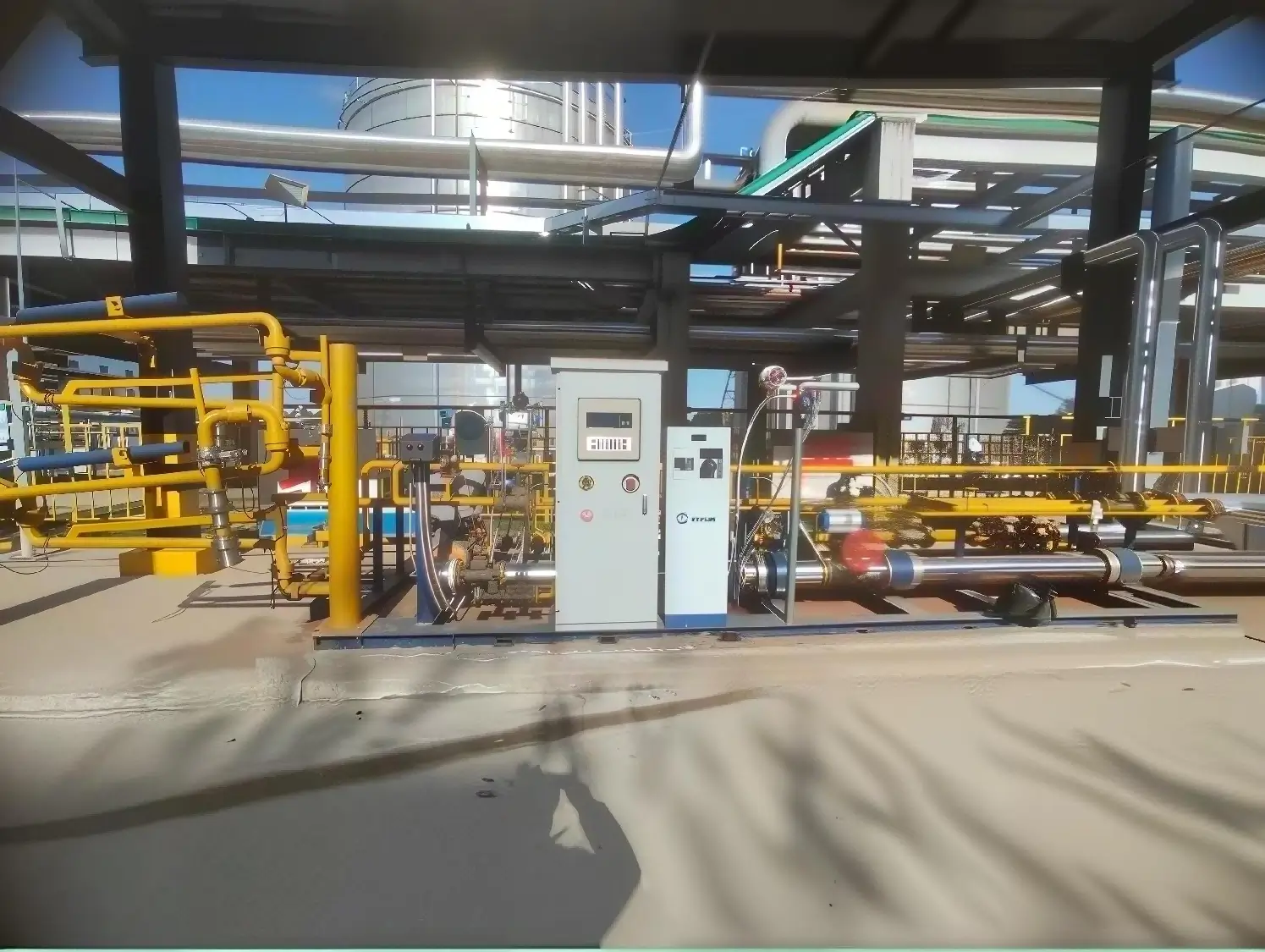
A buyer looking for a fluid loading equipment manufacturer is usually not buying a single loose component. The real decision is whether one supplier can understand the medium, the loading position, the tanker or ship connection, the control method and the safety access around the operator. For petroleum depots, chemical plants, LNG transfer points, marine docks and storage tank farms, the first questions should be practical: is the transfer point road, rail or marine; is the medium ambient, heated, toxic, liquefied gas or cryogenic; and does the project need only an arm, or a wider package with metering skid, access platform, floating roof or terminal accessory? Yuanda Machinery’s published product range gives buyers a clear place to start because it includes land loading arms, marine loading arms, batch loading control systems, access equipment and storage tank solutions in one catalog.
The manufacturer choice matters most when the site layout is not standard. A simple top loading arm for a road tanker can become a poor purchase if the manhole position, platform height, vapor return expectation and operator reach are not checked together. The same is true for marine service: a dockside transfer arm cannot be judged only by pipe diameter because the buyer also has to think about ship movement, manifold elevation, emergency release options and maintenance access. This guide uses Yuanda’s public product families and project pages as the factual boundary, then turns those products into a buyer-side evaluation method.
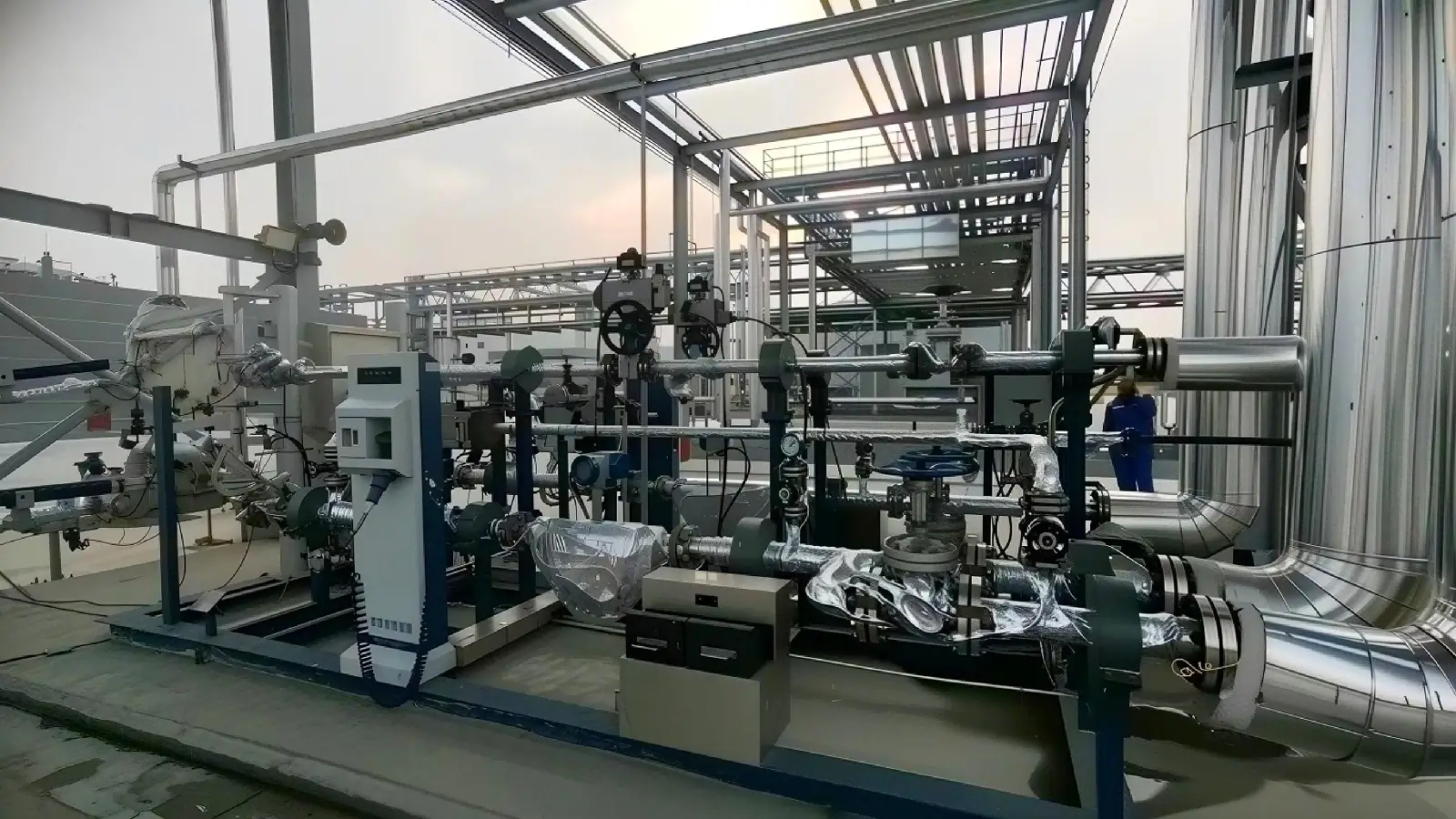
Many purchase failures begin when the buyer treats the loading arm as an isolated pipe assembly. A road loading point may need an AL1512 top loading and unloading arm or an AL2404 bottom loading arm, but the same bay may also need folding stairs, platform trestle, breakaway valve, sealing cap, drain pan and a batch controller. A manufacturer that handles these adjacent pieces can help the buyer reduce interface risk because the arm reach, parking position, operator access and control sequence are discussed together.
For an engineering contractor, this is useful during early layout review. The contractor may only have a pipe rack route, a tanker loading lane and a general medium list. Instead of asking for a price on a named product too early, the better first step is to define the loading envelope. The manufacturer should ask for medium, temperature, pressure, flow rate, pipe size, flange standard, loading height, operation frequency and whether the terminal expects manual, pneumatic, hydraulic or quantitative control. Those details decide whether a land loading arm, a skid-mounted package or a mixed access solution is the practical route.
Yuanda’s land loading arm range includes AL1512, AL1401, AL1402, AL1403, AL1412, AL1513, AL2404, AL2503 and AL2543 styles on the product page. The names alone are not enough for a purchase decision. A buyer should match the model family to the vehicle connection, whether top or bottom loading is used, whether the system is sealed, whether the medium needs heat tracing or lining, and whether pneumatic or fully automatic movement is expected. For a distributor preparing a mixed order, separating top loading arms from bottom loading arms prevents later confusion in accessories and spare parts.
Yuanda lists AM62 manual marine loading arm, AM64 manual double-pipe marine loading arm, AM63M manual marine loading arm, AM62H electro-hydraulic control marine arm, AM63H hydraulic marine loading arm and AM63HE emergency release marine loading arm. A marine buyer should not compare these only by appearance. Manual arms may be suitable for simpler dock operation, while electro-hydraulic control and emergency release options belong in discussions where vessel movement, hazardous media or faster disconnection planning is important. The project delivery page is useful here because it shows skid, rail loading and transfer project evidence instead of only product images.
The strongest supplier review starts before a quotation table. Buyers should send the manufacturer a media list, operating temperature, normal and maximum pressure, expected flow, pipe and flange requirements, loading position, available platform height and any local safety expectation. For LNG, ethylene, LPG, liquid ammonia or liquid chlorine service, the buyer should also clarify whether the site needs cryogenic design, gas return, sealing method, emergency release or special material review. If this information is missing, the quotation may look fast but later create a technical clarification loop.
| Buyer question | Why it matters | Yuanda product area to review |
|---|---|---|
| Is the tanker loaded from the top or bottom? | The arm geometry, coupler, parking position and operator access change. | Land Loading Arms |
| Is the transfer point a dock or ship manifold? | Ship movement and emergency release planning become part of the arm decision. | Marine Loading Arms |
| Does the bay need metering or preset delivery? | A loose arm may not answer control, data and batch delivery needs. | Batch Loading Control Systems |
| Does the operator need safe roof access? | Folding stairs, platforms and trestles may be part of the same purchase. | Folding Stairs |
When a project needs mechanical transfer and electronic control together, the manufacturer discussion moves beyond arms. Yuanda’s site describes top loading skids, bottom loading skids, card-based loading and unloading skid systems, LNG cryogenic loading and unloading skids, host computer management systems, batch controllers and automatic quantitative loading systems. For a terminal owner, that means the purchase file should include not only flow and pipe data, but also communication expectation, operator workflow, loading card or management logic, grounding or interlock requirement and available installation space.
A contractor replacing an older loading bay may face a different issue: the civil structure already exists, but the client wants higher delivery accuracy and more organized loading records. In that case, the manufacturer should review whether a skid can be installed without forcing unnecessary civil reconstruction. A compact skid-mounted route can sometimes simplify site work, but it should not be selected blindly if the existing piping, pump capacity or vehicle queue arrangement cannot support the intended flow and loading rhythm.
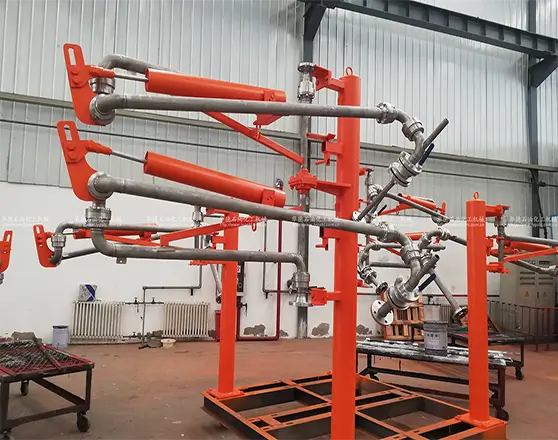
A serious buyer should ask for evidence that fits the equipment. For a loading arm, useful evidence includes drawings, material and sealing discussion, rotation and balance review, surface treatment expectations and inspection before shipment. For skid systems, the buyer should ask how the frame, piping, control cabinet, instrument mounting and factory assembly are checked. For access equipment, the discussion should include step width, handrails, platform position and how the equipment parks when it is not in use. The point is not to collect paperwork for its own sake; the point is to make sure the equipment can be installed and operated without surprises.
Yuanda’s about page states that the company has focused on fluid storage, loading and unloading equipment and integrated control systems since 2005, with a 50,000 square-meter industrial site, production workshop area and office and R&D center. The same page lists land loading arms, marine loading arms, internal floating roofs, quantitative loading and unloading skids, ship-to-ship bunkering systems, quick release hooks, boarding gangways and emergency release devices. Those are useful manufacturer signals because they show the business is not limited to a single accessory.
Fluid loading projects often connect to storage tanks. Yuanda’s product families include internal floating roofs, floating suction systems, rotary jet mixers and tank bottom samplers. A tank farm buyer may begin with loading arms, but the real project can include tank emission control, cleaner draw-off from upper liquid layers or blending inside the storage tank. Keeping these products in the same discussion helps the buyer avoid approving a loading bay that works mechanically but does not match the upstream or downstream storage behavior.
For example, an aviation fuel storage site may care about drawing cleaner product from near the surface rather than from a lower tank zone where water or sediment is more likely to settle. A petrochemical tank farm may need internal floating roof options to reduce vapor space and improve storage control. These are different engineering questions, but both affect the credibility of the loading equipment supplier because the loading point is only one part of the fluid movement chain.
When a purchase includes several equipment types, the buyer should not apply the same review depth to every item. A sealing ring or drain pan is important, but it does not carry the same site consequence as a cryogenic loading arm, a marine arm with emergency release, or a skid that controls delivery. The manufacturer should help the buyer decide which drawings, checks and shipment marks deserve the most attention. For a low-temperature arm, the discussion may focus on thermal movement, rotation and connection protection. For a skid, it may focus on frame layout, valve access, instrument position and how the control cabinet is protected during transport.
This matters for international buyers because the people who receive the equipment may not be the same people who approved the purchase. A clean packing list, clear component marking and practical installation notes can prevent the field team from confusing similar arms or accessories. If several lanes use different models, ask the manufacturer to label the package by bay, medium or drawing reference. That small step is easy in the workshop and expensive to correct after the cargo reaches a busy terminal site.
The practical route is to start with the operating scene, then narrow the product family. For road and rail tanker work, begin with land loading arms and decide top, bottom, sealed, heat-traced, pneumatic or cryogenic. For marine transfer, begin with marine loading arms and decide manual, electro-hydraulic, double-pipe or emergency release. For projects that need accurate delivery and management functions, review batch loading control systems. For operator access, review folding stairs, steel trestle platforms and safety cantilevers. For tank farm packages, add internal floating roofs and floating suction devices to the same early conversation.
A purchasing team can turn this route into a simple approval sequence. First, freeze the medium and loading route. Second, ask the manufacturer which product family is the base route and which items are optional. Third, request the drawings or product references that show the connection and movement. Fourth, confirm which spare parts, accessories and packing marks will be supplied. This sequence is practical for global buyers because it lets engineering, purchasing and site operation review the same facts instead of exchanging separate messages that use different product names.
If a buyer has limited time, the first meeting should end with one clear responsibility map: what the manufacturer supplies, what the buyer prepares, what the installer checks on site and which questions must be answered before production. That map is often more valuable than a fast quotation because it prevents the project from moving forward on assumptions.
A buyer who follows that route is less likely to overbuy one impressive component while missing a smaller detail that controls installation success. If your team is preparing a tender, build the request around the medium, transfer point, control level, access method and storage interface. Then compare manufacturer responses by how well they answer those details, not by how many generic product names they list. The strongest manufacturer response will connect loading arm structure, skid control, access equipment and tank accessories into one workable transfer plan.
