

Get quote
Get Free Consultation!
We are ready to answer right now! free consultation.
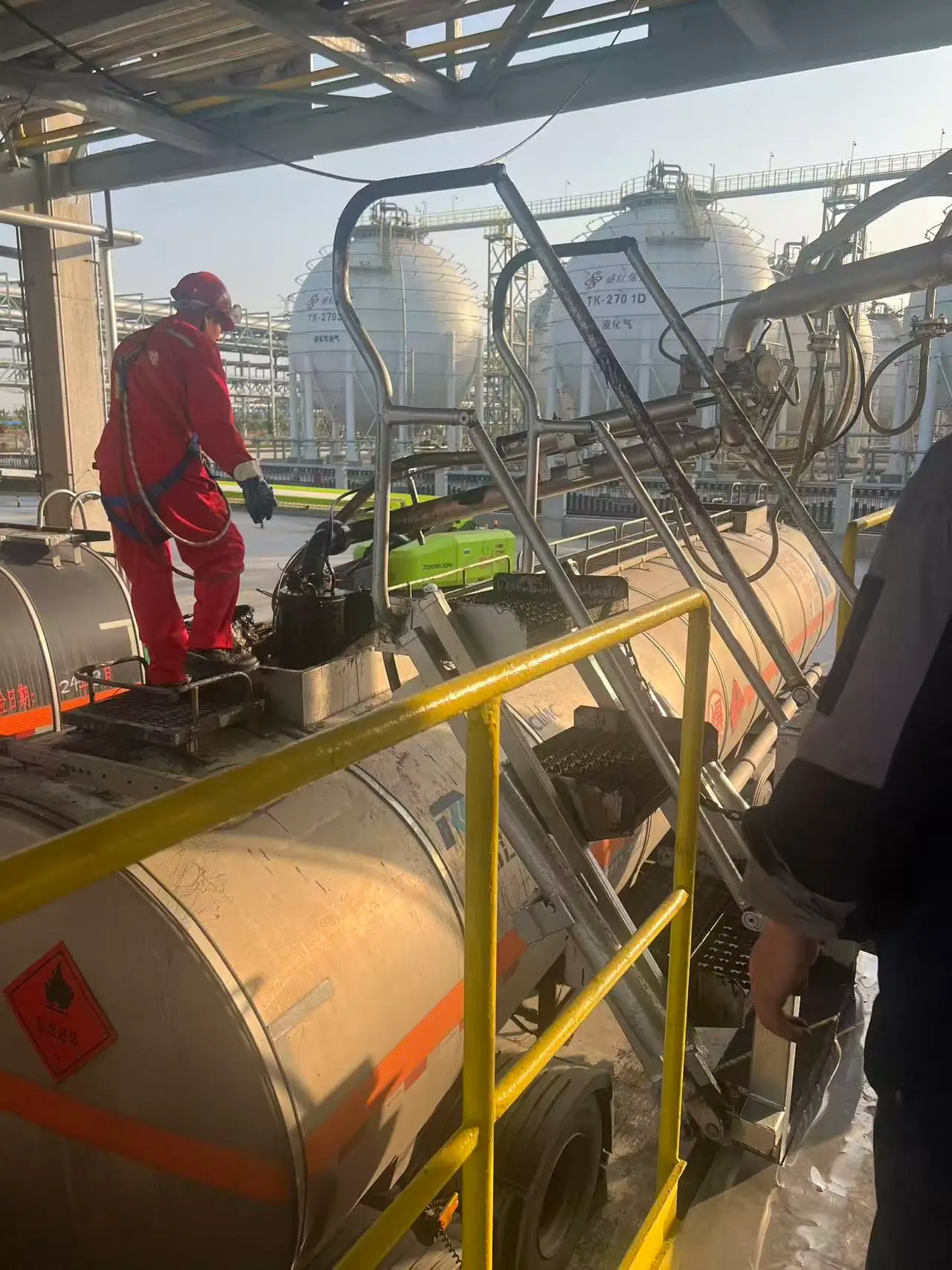
A buyer searching for a land loading arm manufacturer is usually planning a truck or rail loading bay where reach, safety access and medium behavior must work together. The first decision is not the model name. It is whether the bay needs top loading, bottom loading, sealed loading, heated or lined service, vapor return, pneumatic operation or a larger skid-mounted control package. Yuanda Machinery’s land loading arm range gives buyers a practical set of named product families to compare before a drawing is approved.
Land loading is often treated as a familiar product, but the site details change quickly. A petroleum depot may care about fast tanker turnover and clean bottom loading. A chemical plant may care more about material compatibility and sealed handling. A rail loading point may need longer reach and more careful spotting. The manufacturer should connect those site conditions to the arm, platform, accessory and control decisions instead of quoting one common model for every bay.
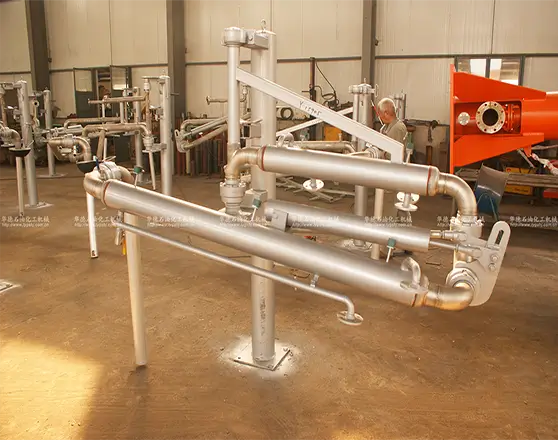
The loading bay drawing should show where the truck or railcar stops, where the connection sits, how the arm reaches the vehicle, and how it returns to the parked position. These points decide whether a fixed reach arm is enough or whether the buyer needs a more flexible configuration. If the manufacturer does not ask for spotting data, the buyer should provide it anyway. A loading arm that is correct on paper can still be awkward if the vehicle must be repositioned too often or the operator must fight the arm during connection.
Yuanda’s land loading arms include top loading and unloading arms such as AL1512, AL1401, AL1402, AL1403, AL1412 and AL1513, plus bottom loading families such as AL2404, AL2503 and AL2543. These names should be tied to connection route. An AL1412 sealed top loading arm belongs in a different conversation from an AL2503 bottom loading arm. A manufacturer that explains the route difference helps the buyer avoid comparing products that solve different field problems.
A truck loading bay may look simple because road tankers arrive at a predictable lane. In reality, tanker height, adapter position, manhole location and driver spotting all affect operation. The manufacturer should check whether the arm can reach normal and slightly varied positions, whether the parked arm keeps the lane clear, and whether the operator has enough space on the platform or ground level. This is especially important when a buyer is replacing old equipment without rebuilding the rack.
Rail loading can create a different problem because railcars may not stop with the same precision as a truck in a short lane. The manufacturer should ask about car type, connection height, platform access and whether the arm must handle loading, unloading or both. If the rail bay handles several products, the buyer should separate routes by medium so that spare parts and operating documents do not become mixed across service conditions.
Top loading and bottom loading are not only layout preferences. They also affect vapor control, operator exposure, compartment access and cleaning. Top loading may be practical for open manhole service or certain rail operations, especially when paired with safe access equipment. Bottom loading may be preferred where sealed connection, lower operator exposure or multi-compartment road tanker loading is important. The manufacturer should explain when each route is suitable and when it creates avoidable difficulty.
For heated or viscous products, the manufacturer should discuss heat tracing or jacketed routes before confirming the model. For corrosive chemicals, lining and material selection may matter more than reach. For liquefied gas or cryogenic service, the buyer should move into the relevant LPG, LNG, ammonia or chlorine loading arm discussion instead of treating the order as ordinary land loading. These boundaries keep the article and the purchase file grounded in real operating conditions.
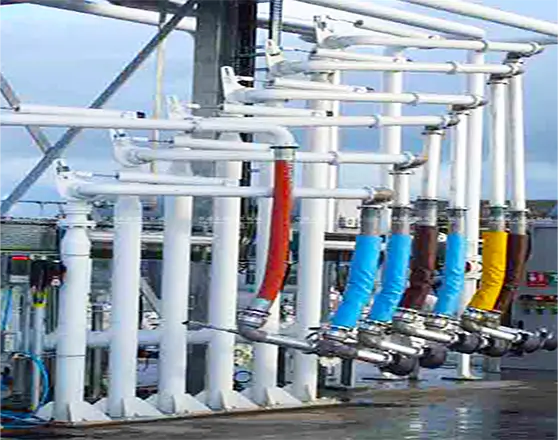
A bottom loading arm decision should include the coupler path, adapter height and whether several products or compartments are loaded nearby. The buyer should ask the manufacturer to show how the arm moves during connection and disconnection, not only how it looks in the parked position. If several arms are installed in one bay, arm spacing, crossover and operator movement become part of the same review. General industry practice often discusses bottom loading envelopes, but the manufacturer’s drawing must fit the actual site.
| Bay condition | Manufacturer decision | Product family to review |
|---|---|---|
| Open top loading with platform access | Confirm manhole reach, drop pipe route and safe operator position. | AL1512, AL1401, AL1402, AL1403 |
| Sealed top loading or vapor-sensitive medium | Review sealing route, vapor return and parking clearance. | AL1412 sealed top loading arm |
| Road tanker bottom loading | Check coupler height, adapter movement and lane spacing. | AL2404, AL2503, AL2543 |
| Loading bay with control requirement | Add metering, batch controller or management interface discussion. | Batch Loading Control Systems |
A land loading arm manufacturer should not ignore how the operator reaches the arm. Yuanda’s site includes folding stairs and platforms and trestles alongside loading arms because the bay is a working station, not a loose component. If the loading route requires the operator to work above a tanker, the buyer should review folding stair type, platform width, handrail arrangement and arm parking position together.
A contractor may already have a civil drawing before the arm is selected. That can be useful, but it can also lock in a poor operating position. The manufacturer should be willing to point out when platform height, lane width or parking area will make the chosen arm difficult to use. This kind of pushback is useful because changing a drawing before fabrication is far cheaper than modifying a loading rack after the equipment arrives.
A folding stair can solve height access, but it can also conflict with arm movement if the layout is not reviewed. The buyer should ask whether the stair, platform and arm can all move through their normal operating range without blocking each other. This matters in compact depots where space is limited. It also matters for distributors selling complete loading bay packages because a mismatched access product can damage confidence even when the arm itself was manufactured correctly.
In a truck bay, the stair may need to land on different tanker heights while the arm reaches the manhole or bottom connection. In a rail bay, platform access may be more fixed, so the arm has to work around the available approach. The manufacturer should review these movements as a sequence: vehicle stops, access equipment moves, arm connects, loading occurs, arm drains or disconnects, and equipment returns to a parked condition. A drawing that only shows the connected position is not enough for a working bay.
The buyer should also ask how the access equipment affects maintenance. If a swivel joint or seal point can only be reached by removing another component, the maintenance team will lose time later. A manufacturer that thinks about inspection access during the layout stage helps the owner avoid a bay that operates well on day one but becomes difficult after routine service begins.
For a broader decision file, compare the loading arm manufacturer guide with Yuanda’s project delivery page. The project page shows loading skids, rail loading systems and loading gantry shipment context, which helps buyers think beyond a single arm and review how the manufacturer handles equipment packages for real terminal work.
Maintenance planning begins before the order is placed. The buyer should know which seals, swivel joints, couplers, drain parts and parking components belong to each arm family. The manufacturer should identify routine inspection points and help the buyer avoid mixing parts between top loading, bottom loading, heated, lined or special media routes. This is especially useful for terminal operators with several depots because the same maintenance team may support different arm families.
A maintenance-friendly order also records what should not be standardized. A seal route for a heated arm may not belong in the same spare part bin as an ambient petroleum arm. A bottom loading coupler part should not be confused with a top loading accessory simply because both are stored near the loading rack. The manufacturer should help the buyer name these differences clearly in the order file.
For project contractors, this record becomes part of the handover to the owner. It should explain which arm family was selected, why the rack uses top or bottom loading, what access equipment was paired with the arm, and which site items must be checked before operation. A handover file written in this way is more useful than a bundle of drawings with no operating logic.
A rail loading project may also need a different spare strategy from a truck bay. The rail arm may operate less often but face a wider reach requirement, while the truck lane may cycle many times per day and wear routine sealing parts faster. The manufacturer should help the buyer separate those maintenance expectations instead of treating every land arm as the same service item.
For chemical service, the record should also preserve material assumptions. If the order uses lining, heat tracing or a special seal route, the future maintenance team should know why that choice was made. Otherwise, a later replacement request may be handled like a normal petroleum loading arm, which can create avoidable compatibility risk.
The buyer should ask the manufacturer to keep drawings, order notes and accessory lists aligned with the product names used on the site. If an operator calls the equipment by a local lane name and the factory file uses only a model code, future communication can become slow. A simple cross-reference between lane, model and medium is enough to make later service easier.
Before approving a land loading arm order, ask the manufacturer to confirm the connection route, model family, medium assumptions, access equipment, accessory list, shipping form and site responsibilities. If any of those items remain unclear, the buyer should treat the quote as an early discussion rather than a final purchase file. That discipline gives the project a better chance of becoming a loading bay that operators can use every day without unnecessary adjustment.
The final review should include people who will actually live with the bay. Purchasing can compare price, but operations can see whether the arm path is comfortable, maintenance can see whether service points are reachable, and engineering can see whether the support and connection assumptions are realistic. A manufacturer that welcomes those questions usually gives the buyer a stronger technical result.
If those teams disagree, the manufacturer should help translate the disagreement into equipment choices. Operations may prefer a wider movement range, maintenance may prefer clearer access to swivel joints, and engineering may prefer a simpler support structure. The approved arm should balance those needs instead of satisfying only the purchase request. That balance is where an experienced land loading arm manufacturer earns its place in the project and helps the bay stay usable during daily loading work.
The same review also helps the buyer explain the decision to operators before the new rack is commissioned.
