

Get quote
Get Free Consultation!
We are ready to answer right now! free consultation.
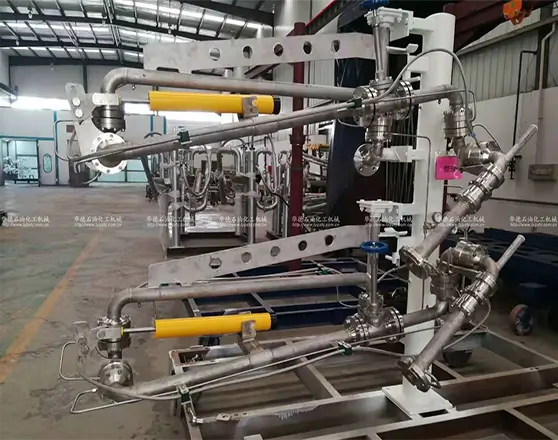
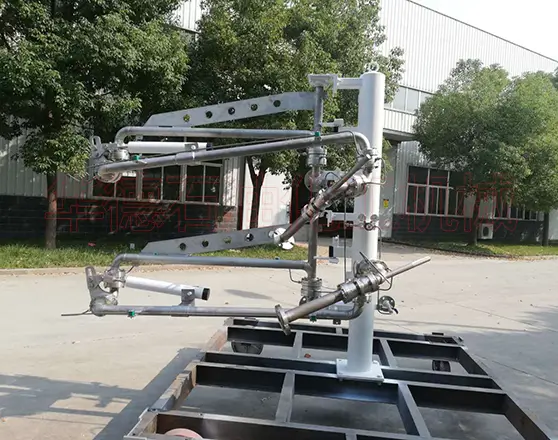
A buyer working with an LNG loading arm supplier should treat the order as a cryogenic transfer project from the first conversation. LNG service changes the questions around material behavior, transfer route, support, packing, control and site preparation. Yuanda Machinery lists cryogenic LNG loading arms and a skid-mounted cryogenic loading and unloading system for LNG, so buyers can discuss both loose arms and system-connected routes with real product references.
The supplier should ask whether the buyer needs loading, unloading or both, whether the arm is used for LNG or related cryogenic service, and whether the transfer point is connected to a skid or wider terminal package. The buyer should be cautious if the supplier treats LNG like ordinary land loading. Cryogenic transfer requires a more careful exchange of site information before the quote is treated as final.
The buyer should provide medium, temperature, pressure, flow, connection standard, loading direction, operating frequency and available drawings. The supplier should use that information to define the arm route and remaining open questions. If the buyer cannot provide some data yet, the supplier should say which assumptions are preliminary. This keeps the purchase process honest and prevents a temporary quote from becoming a final technical decision.
For a contractor, the supplier’s question list is useful during design coordination. It shows what information must come from piping, civil, electrical and operations teams before the LNG arm can be approved. If the supplier only asks for price-related information, the contractor may miss important site preparation items until the equipment is ready to ship.
An LNG unloading arm can arrive before the site is fully ready if responsibilities are not written down. The supplier should identify what the buyer prepares: support, flange condition, lifting route, local installation, control wiring or operating procedures. A clear responsibility split protects the buyer because cryogenic equipment should not wait on site while basic preparation questions are still unresolved.
A buyer with experience in petroleum or chemical loading may be tempted to reuse familiar arm selection habits. LNG service should be handled separately. Low-temperature behavior, connection method, insulation or protection expectations and site operation can all change the review. The supplier should explain what information is different from an ambient loading arm order so the buyer does not transfer the wrong assumptions into the cryogenic project.
Yuanda’s skid-mounted cryogenic loading and unloading system for LNG means some buyers should review more than a loose arm. If the project needs control sequence, instruments, valves, management interface or a skid-mounted package, the supplier should identify how the arm and skid relate. The buyer should ask what ships assembled, what ships loose, and what the site must connect locally.
A supplier package should make the future operator’s workflow understandable. Which part of the operation belongs to the arm, which belongs to the skid, and which belongs to the site system? If the answer is not documented, the installer and operator may have to interpret the equipment during commissioning. That is the wrong time to discover an unclear boundary.
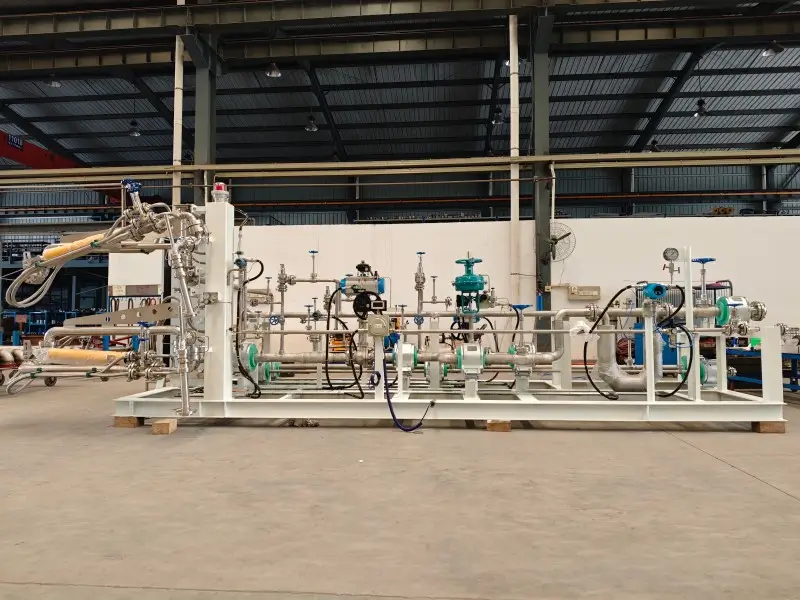
A route-based quote explains how the LNG arm, skid, valves, instruments, control points and site connections work together. A loose component list may be cheaper to prepare, but it leaves the buyer to assemble the operating logic. The supplier should describe the transfer route in a way that engineering, procurement and operations can all understand.
| Supplier question | Why it matters | Buyer action |
|---|---|---|
| Is the service loading, unloading or both? | The arm route and site boundary can change. | Confirm operating direction before model approval |
| Is a skid package included? | Control, valve and instrument interfaces may be part of the scope. | Ask for route-level documentation |
| What site work is local? | Support, lifting, wiring and installation may remain with buyer. | Write responsibilities before shipment |
| How are parts marked? | Cryogenic systems may include loose accessories and skid items. | Require package marks by route and drawing |
Packing and handover are important because LNG equipment may travel through several logistics stages. The supplier should mark packages by arm family, transfer route, skid interface and drawing number. If loose items are included, they should be easy to match with the correct assembly. A buyer should not accept unclear packing for a cryogenic transfer order simply because the equipment itself is specialized.
The supplier should also create a future service record. Seals, swivel-related items, support components, skid-related service points and accessories should be tied to the approved LNG route. If the buyer later needs a replacement, the supplier can identify the part from the record instead of asking the site to send uncertain photos during maintenance.
Purchasing may focus on scope and cost, engineering may focus on interfaces, and operations may focus on workflow. The supplier’s file should serve all three groups. It should identify the arm family, cryogenic service, skid interface, packing marks, site-prepared work and open technical questions. When all teams read the same scope, approval and installation become more reliable.
Buyers can compare the loading arm manufacturer specification guide and the fluid transfer equipment supplier package guide before finalizing an LNG supplier conversation. Yuanda’s LNG loading arm category and batch loading control systems are the most relevant product areas for this article’s decision path.
The buyer should be able to explain why the selected LNG arm fits the transfer route, what the supplier provides, what the site prepares, how the package ships, and how future service will be handled. If the buyer cannot explain those points, the order is not ready for final approval. A supplier that helps answer them is doing useful technical work, not only selling a product.
Before approving the order, ask the supplier to list all remaining assumptions. LNG transfer should not move forward on unclear medium data, connection route, skid interface or site preparation. Written assumptions protect the buyer, the installer and the supplier when the project moves from quotation into production.
For repeat cryogenic projects, keep the route record with the order. Future projects may look similar, but each site still needs its own review before the same LNG loading arm route is repeated.
An LNG loading arm supplier should also help the buyer decide whether a request is ready for quotation or still needs engineering information. If the buyer has only a product name and no transfer route, the supplier should ask for site data before fixing a model. This protects both sides from building a cryogenic order on incomplete assumptions.
For a contractor, supplier questions can be used to organize internal drawings. Civil teams can confirm support and lifting access, piping teams can confirm connection routes, electrical teams can confirm control boundaries, and operations can confirm workflow. The supplier does not replace those teams, but it can make the equipment information easier for them to coordinate.
The supplier should also state whether any accessories, skid parts or loose components require special identification before shipment. A receiving team may not know which crate belongs to the arm or skid unless the marks are clear. Good packing identification reduces confusion during a high-pressure installation window.
A buyer comparing LNG suppliers should look at how each supplier handles uncertainty. One may quote quickly without asking about site preparation. Another may ask for transfer direction, drawings and skid interface before finalizing the offer. The second answer may take longer, but it usually gives the buyer a stronger project record.
Future service should be part of the same conversation. The supplier should explain how the buyer can later identify service items by arm family, transfer route and order record. Without that structure, maintenance teams may have to reconstruct the equipment history when a replacement is needed.
The final approval file should therefore include not only the selected product, but also the unresolved items and the buyer responsibilities. For cryogenic loading, knowing what is not yet fixed can be just as important as knowing what is included.
When the supplier keeps the LNG order specific to the real site, the buyer is less likely to confuse a specialized cryogenic route with a normal loading arm purchase.
For a buyer using an overseas supplier, the LNG order file should be clear enough for customs, logistics, site storage and installation teams to understand. The file does not need to expose every engineering detail, but it should identify the arm family, skid relationship, crate marks and route reference. That makes the handover stronger when the cargo travels through several parties.
If the buyer expects later expansion, the supplier should separate repeatable product choices from one-site decisions. The same LNG loading arm family may be suitable for another transfer point, but support, piping approach, control boundary and operator access still need their own review. A responsible supplier will not sell expansion as a simple copy unless the site data supports it.
The supplier should also help the buyer prepare a receiving check. The site team should know which assembly belongs to the LNG arm, which items belong to the skid, and which accessories should be inspected before installation. This reduces confusion during a narrow project window when late questions can delay commissioning.
A practical LNG supplier decision ends when the buyer can explain the route in plain language: what is transferred, how the cryogenic arm connects, where the skid or control scope begins, what the site prepares, and how the equipment will be identified later. If that explanation is still difficult, the order needs another technical pass.
The supplier should also separate commercial scope from technical scope. A commercial offer may list the arm and skid, but the technical scope should explain service data, connection route, packing identification and site responsibilities. The buyer needs both views because procurement, engineering and operations each read the order differently.
For maintenance, the supplier should recommend how the buyer stores the LNG arm record. It should stay with the equipment file and include arm family, skid interface, service route, approved assumptions and spare part references. This helps the buyer avoid restarting the technical discussion every time a future service item is needed.
If the buyer plans multiple LNG loading points, each should still be reviewed on its own site data. The same product family may repeat, but support, routing, access and control boundaries can change. A responsible supplier will help distinguish repeatable equipment choices from site-specific assumptions.
The final LNG supplier decision should therefore reward clarity. The best offer is not only the one that names a cryogenic arm; it is the one that explains how that arm fits the transfer route and what must happen before it can operate safely on site.
If the buyer is comparing a loose LNG arm with a skid-connected package, the supplier should describe what changes in installation and operation. A loose arm may leave more site integration work, while a skid route may place more of the transfer logic inside the supplied package. The buyer needs that distinction before comparing prices.
