

Get quote
Get Free Consultation!
We are ready to answer right now! free consultation.
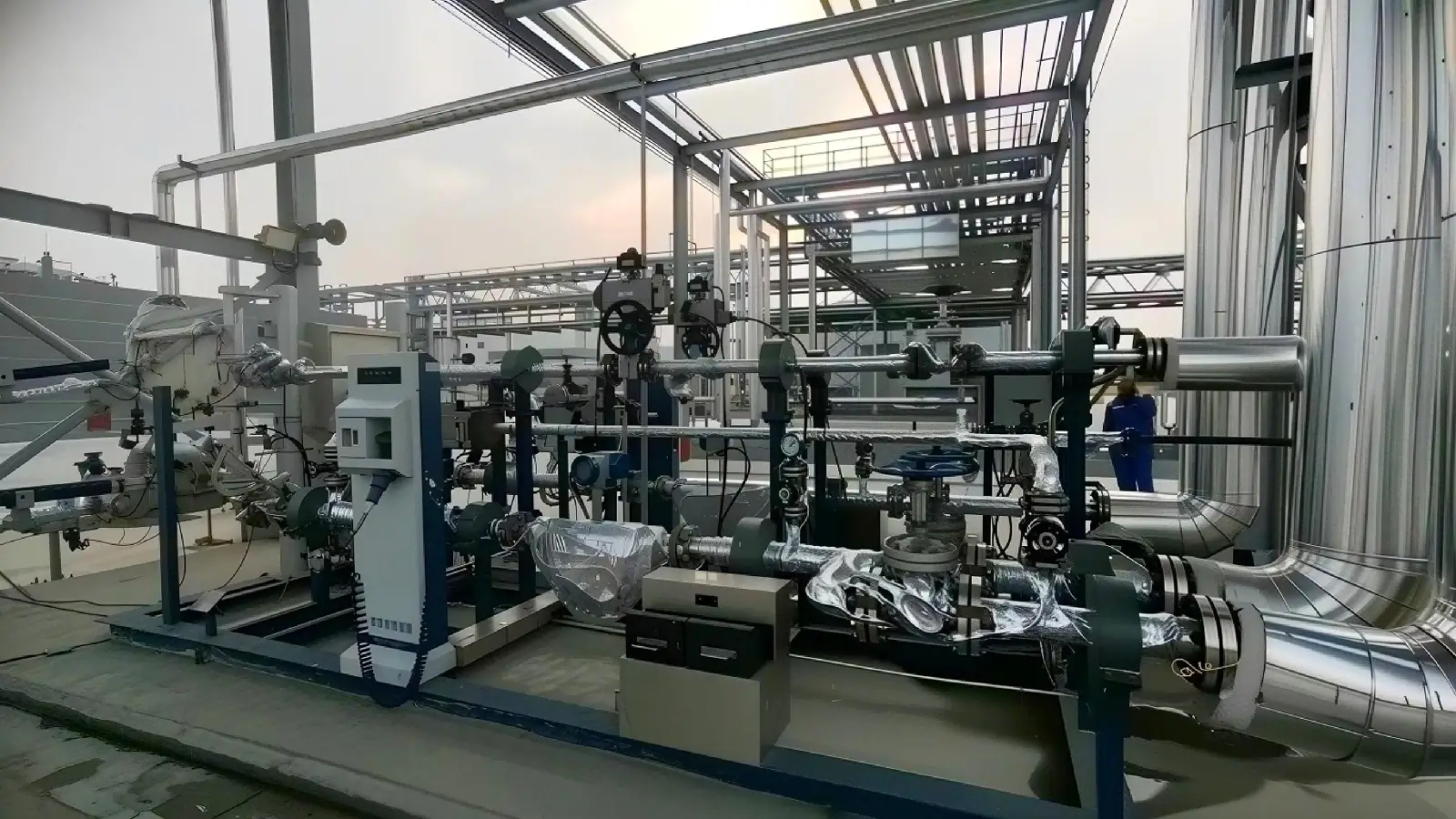
A fluid loading equipment supplier is most valuable when the buyer does not yet have every detail locked. Terminal projects often begin with a simple request for a loading arm, then expand into a safer access platform, a batch loading skid, a marine gangway, a floating suction device or an internal floating roof. That is normal in industrial procurement because the transfer point is connected to piping, vehicles, tanks, operators and site controls. A supplier who can only quote one product may still be useful for a spare part order, but a supplier for a live project should help the buyer organize the scope before the purchase document becomes fixed.
Yuanda Machinery’s website presents a broad product path for this type of buyer. The fluid transfer equipment catalog covers fourteen product families and seventy-seven product items, including land loading arms, LPG loading arms, liquid ammonia arms, liquid chlorine arms, LNG loading arms, aluminum arms, marine loading arms, skid-mounted control systems, folding stairs, platforms, accessories, marine terminal equipment, floating suction systems and internal floating roofs. This breadth gives buyers a useful framework when project drawings are still changing.
During early procurement, buyers often mix fixed requirements and assumptions in the same message. The fixed requirement may be the medium, such as diesel, gasoline, LPG, liquid ammonia or LNG. The assumption may be the arm type, such as top loading, bottom loading or a particular model family. A careful supplier should not treat those assumptions as final. The supplier should confirm the vehicle or vessel connection, working temperature, flow rate, pressure, platform height, operation frequency, pipe size and whether the owner needs manual, pneumatic, hydraulic or quantitative loading control.
An engineering contractor may be under pressure to issue a budget quickly. In that situation, the supplier can provide a safer first answer by grouping the quotation into likely zones: mechanical arm, connection accessories, access equipment, skid or controller and optional tank equipment. This keeps the buyer from approving a low number that later grows because the loading point needed a folding stair, breakaway valve, vapor return path or control interface that was not included in the first request.
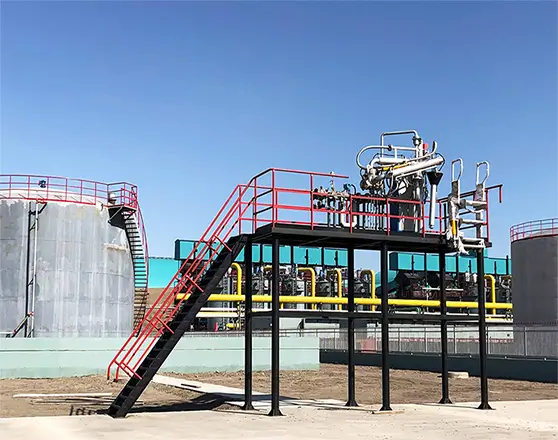
For road tanker bays, the buyer should compare AL1512, AL1401, AL1402, AL1403, AL1412, AL1513, AL2404, AL2503 and AL2543 style products by function, not by name alone. Top loading arms suit one site geometry, bottom loading arms suit another, and sealed or heat-traced designs answer different media and environmental needs. If the tanker roof must be accessed, folding stairs and platform trestles belong in the same supplier conversation, otherwise the operator may have a transfer arm but no safe working route.
When the buyer needs preset delivery, card operation, host-computer management or integrated control, the project is no longer just a mechanical loading arm purchase. Yuanda’s skid-related family includes top loading skids, bottom loading skids, card-based loading and unloading skid systems, LNG cryogenic loading and unloading systems, host computer management systems, batch controllers and automatic quantitative loading systems. A supplier should ask how the owner wants operators to start, stop, record and manage loading. That question often changes the equipment route more than pipe diameter does.
A responsible supplier does not need to force one model into every situation. A buyer with a chemical plant may need a lined or sealed loading arm because the medium is corrosive or volatile. A fuel depot may need top and bottom loading options for different lanes. A marine dock may need a manual arm for lower frequency service or an electro-hydraulic marine arm when vessel connection work is heavier. A storage tank project may need internal floating roof options before the loading bay is even finalized. The supplier’s job is to help the buyer see those branching routes before money is spent.
| Project signal | What the supplier should clarify | Likely Yuanda range |
|---|---|---|
| Changing civil layout | Platform height, tanker position, parking and operator reach | Land loading arms plus platforms |
| Need for records and preset filling | Batch controller, management interface and skid footprint | batch loading control systems |
| Dock transfer | Manual or hydraulic operation, double-pipe need and emergency release expectation | marine loading arms |
| Storage tank connection | Tank emission control, upper liquid draw-off or tank accessory scope | internal floating roofs |
Yuanda’s marine terminal equipment family includes dock vapor recovery ship-shore safety device, marine gangway, tower-type marine gangway, column-type marine gangway, rotary marine gangway, quick release mooring hook and hose crane. These products are not substitutes for a marine loading arm. They answer different parts of the dock workflow: ship access, mooring release, hose handling and safety connection. A supplier who can talk about these adjacent products can help the buyer avoid a narrow arm purchase that leaves the terminal with unresolved dock operation issues.
A distributor has a different problem from a project contractor. The distributor may need to keep common product routes clear for fast resale while avoiding a warehouse full of mismatched arms, couplers and accessories. The supplier should help the distributor group products by use: top loading arms, bottom loading arms, LPG or ammonia arms, marine arms, folding stairs, access platforms and replacement accessories. This makes later quoting easier because the distributor can ask the end user the right first questions instead of guessing from a photo.
For example, a distributor serving fuel depots may keep attention on AL140 series top loading arms, AL2404 or AL2503 bottom loading arms, loading arm swivel joints, sealing caps, dry disconnect valves and breakaway valves. A distributor serving marine or dock operators may focus on AM62, AM64, AM63M, AM62H, AM63H, AM64H and AM63HE routes, plus marine gangways and quick release mooring hooks. The supplier should make these product families easy to separate in sales files so that accessories and after-sales support are not mixed across incompatible applications.
A repeat buyer may think a replacement order is simple, but site conditions can change over years of operation. A bay may have a new tanker fleet, a modified platform, a different transfer medium or an added control requirement. Before ordering a replacement arm or accessory, the buyer should give the supplier the old model, photos of the current installation, the current medium and any problem seen during operation. That lets the supplier decide whether to replace the same route or suggest a better-matched arm, seal, swivel joint, breakaway valve or access component.
This is especially useful for wholesalers and local service teams that sell to many small terminals. They can keep a short replacement form for end users: old product name, connection size, loading route, medium, platform height, working problem and required delivery time. The supplier’s answer will be more accurate, and the reseller will look more professional because the request is tied to the actual working station rather than a loose photo of a damaged part.
A supplier request that says “gas loading arm” is too broad. Yuanda separates LPG loading arms, liquid ammonia loading arms, liquid chlorine loading arms and LNG loading arms because each medium can change sealing, temperature, connection and safety discussion. AL1512 LPG loading arm, AL2543 LPG loading arm and LPG cylinder filling loading arm are not the same buyer problem as a three-pipe cryogenic loading and unloading arm for LNG. A chemical distributor preparing a tender should write the exact medium and expected operation route before asking the supplier to choose the arm family.
A plant maintenance buyer may also need to replace one arm while keeping old piping and platforms. In that case, the supplier should ask whether the old problem was leakage, difficult movement, poor reach, damaged connection, unstable parking or unsuitable access. The answer changes the recommendation. If the old arm moved poorly, balance and swivel condition matter. If the old arm leaked at connection, sealing and coupler route matter. If the operator could not reach the tanker safely, folding stair or platform changes may be part of the real solution.
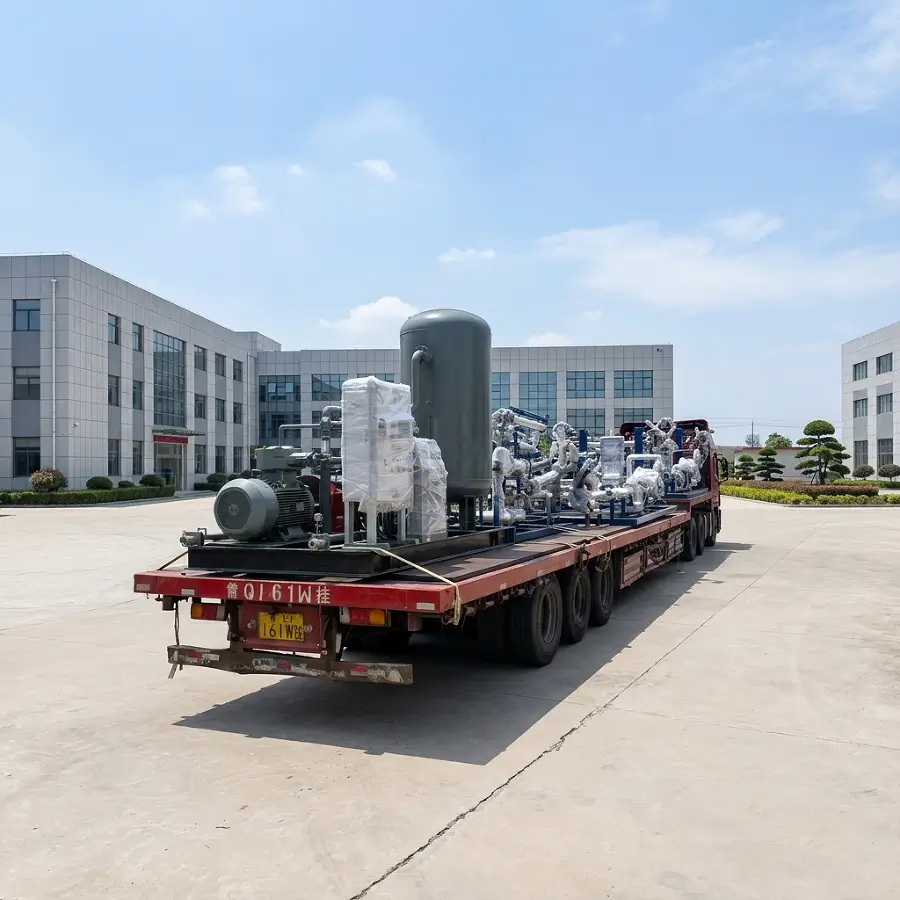
Global buyers should treat document clarity as part of supplier performance. A shipment that contains several arms, skids and accessories should have packing marks that match the buyer’s internal lane or unit names. The commercial invoice and packing list should be easy for the receiving warehouse to understand. Product photos before shipment can help the site team prepare lifting space and installation sequence. These details are not glamorous, but they reduce confusion when equipment arrives far from the manufacturer’s workshop.
If the order includes skids or control equipment, the supplier should also identify which parts are mechanical, which are electrical and which require field connection by the buyer’s local team. Yuanda’s project page shows that skid assemblies, cryogenic skids and rail loading lines are part of its project vocabulary. Buyers can use that as a reason to ask for a project-style handoff instead of only a product-style packing list.
A project manager may receive pressure from finance to lock the purchase quickly, but early supplier feedback can reveal that the scope is not ready. If the supplier asks for flow rate, loading method, site photos or control expectations, the buyer should treat those questions as useful risk signals. They show which parts of the project are still uncertain. It is better to clarify them before commercial approval than to discover them when the equipment is already in production.
This is also important when the buyer is comparing local installation contractors. The equipment supplier may not perform every field task, but the supplier can still tell the buyer what information the installer needs: lifting points, support positions, access space, piping route, cable connection, parking direction and expected maintenance clearance. That turns supplier feedback into a practical bridge between purchasing and site execution.
When those points are written before the order, the supplier’s offer becomes easier to defend inside the buyer’s own company.
The final supplier output should be more than a price line. It should help the buyer prepare a clean internal handoff file: medium, temperature, pressure, flow, product family, operation mode, required accessories, image or drawing reference, installation notes and open technical questions. For skid systems, the handoff should also include the control function, management expectation and interface assumptions. For access equipment, it should explain how the operator reaches the tanker or platform and how the equipment parks after loading.
Buyers can use Yuanda’s published structure as a working map. Start at the product range, compare it with project delivery examples, and read the manufacturer profile to understand the production background. For related reading, keep the fluid loading equipment manufacturer guide beside this supplier guide, then move into the upcoming product-specific pages for land arms, marine arms, LNG arms and skid-mounted systems. A supplier that can support this kind of organized review will save time before purchase and reduce friction after shipment.
