

Get quote
Get Free Consultation!
We are ready to answer right now! free consultation.
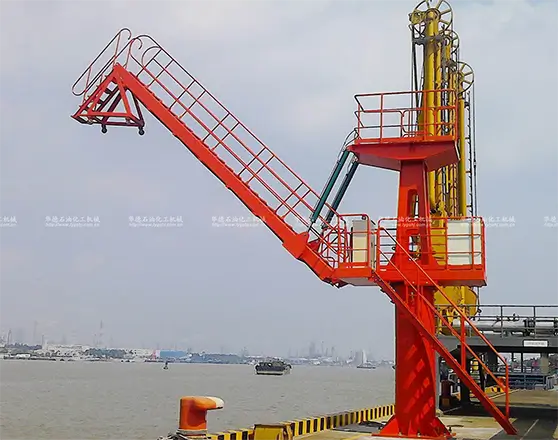
A buyer evaluating a marine gangway manufacturer is usually planning safer access between a berth structure and a vessel operating area. The gangway should be reviewed with berth layout, vessel range, access height, loading arm position and project handover needs. Yuanda Machinery includes marine gangways in its marine terminal equipment and product category pages, alongside marine loading arms, hose cranes, quick release mooring hooks and ship-shore safety devices.
The manufacturer should not begin with a single gangway name. It should first understand whether the buyer needs a tower-type marine gangway, column-type marine gangway, rotary marine gangway or another access arrangement that matches the berth. The right structure depends on the actual access path, not only the appearance of the equipment.
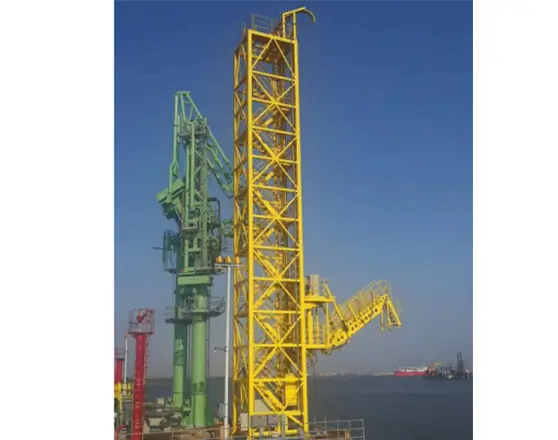
The berth layout decides how the gangway will move and how operators will access the vessel. The manufacturer should ask where the gangway starts, where it lands, what vessel height range is expected, and whether loading arms, hose cranes or other dock equipment share the same working area. If those details are missing, the gangway may be described correctly but placed poorly.
A project contractor should also explain whether the gangway is part of a new berth, a retrofit, or an access upgrade around existing transfer equipment. A new berth allows more coordination between gangway, platform and marine loading arm. A retrofit often requires careful review of existing structures, clearances and operator route.
A tower-type gangway can be useful where elevation and access path need organized support. The manufacturer should ask how operators approach the tower, how the gangway lands on the vessel side, and whether the structure interferes with loading arms or hoses. The buyer should keep these points in the access file rather than relying only on a general product drawing.
Column-type and rotary marine gangways should be reviewed with movement path and landing point. If the gangway rotates near other equipment, the manufacturer should confirm the envelope. If the vessel range is broad, the manufacturer should ask how access will be maintained across different operating positions. These are berth questions first and product questions second.
A marine gangway rarely operates alone. It may sit near marine loading arms, hose cranes, quick release mooring hooks, dock vapor recovery systems or emergency release devices. The manufacturer should ask which equipment shares the berth area and how operators move between tasks. A gangway that is safe in isolation may still be awkward if it blocks the route to a loading arm control point.
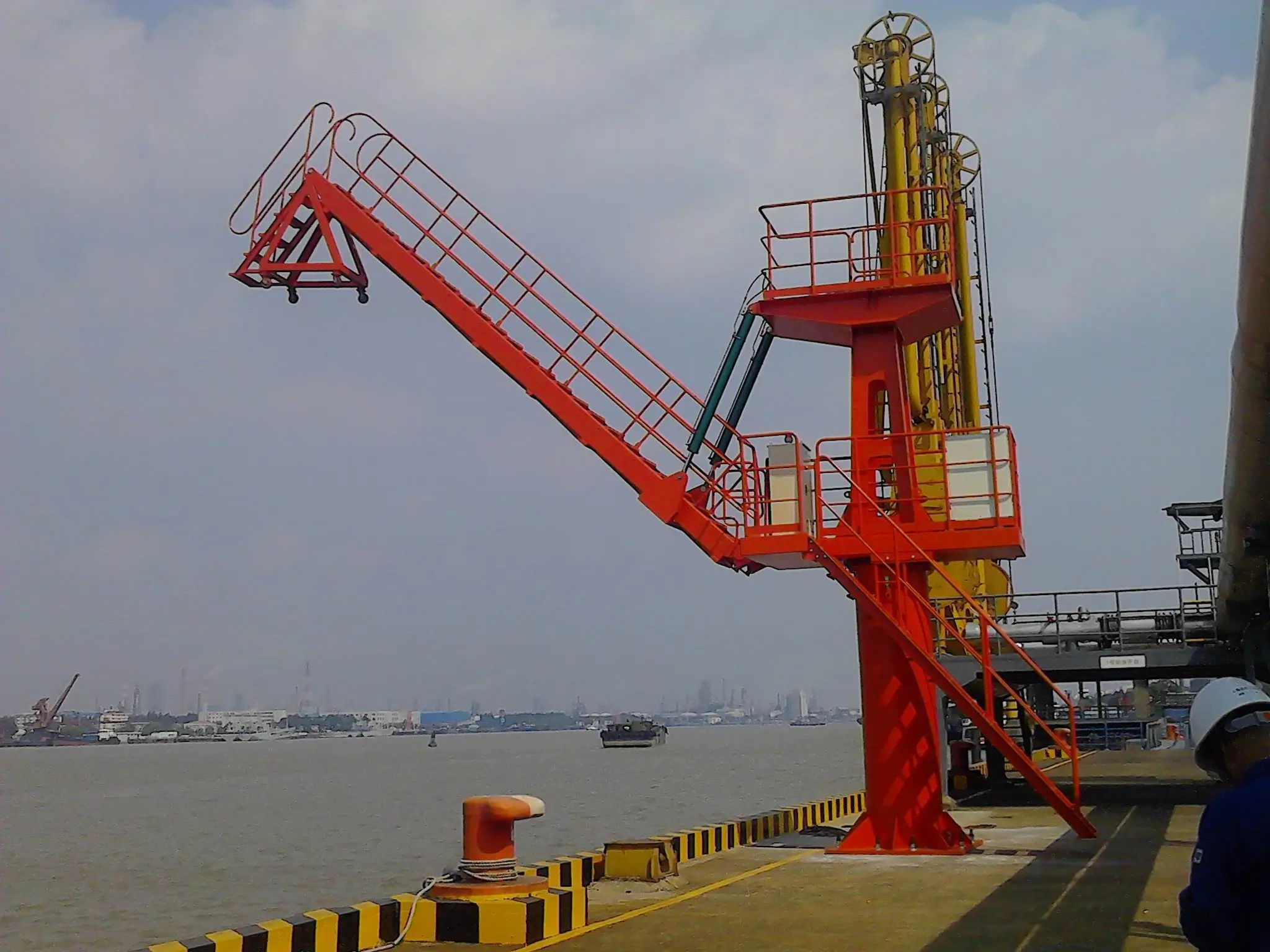
The access route should also support inspection and maintenance. If operators must inspect a hose crane or marine loading arm, the gangway and platform arrangement should not force unnecessary detours. Buyers can compare marine access needs with Yuanda’s marine loading arms and terminal equipment and marine loading arm manufacturer guide when planning the whole berth.
Quick release mooring hooks are not the same product as a gangway, but both affect berth operations. The buyer should know whether personnel routes cross mooring areas, loading arm operating zones or maintenance paths. A manufacturer that asks these questions is helping the buyer build a berth access plan rather than only selling a gangway.
| Berth access question | Manufacturer should review | Project value |
|---|---|---|
| Where does the gangway start? | Platform, tower or column approach route. | Clear operator movement |
| Where does it land? | Vessel range and landing conditions. | Better access planning |
| What equipment is nearby? | Marine arms, hose cranes and mooring hooks. | Avoids interference |
| How will it be handed over? | Drawing, route note and maintenance file. | Easier future service |
A strong project file should record the access route, structure type, movement assumptions, nearby equipment and handover boundary. It should also state what is supplied by the manufacturer and what remains part of local civil or berth work. Without this boundary, buyers may assume that surrounding platforms, supports or controls are included when they are actually separate site responsibilities.
For retrofit work, the file should mention existing restrictions. A berth may already have loading arms, pipe racks, mooring equipment and limited deck space. The manufacturer should ask for site photos and layout information, then explain which assumptions are confirmed and which still need site verification. This keeps the proposal honest and useful.
If the gangway ships in several assemblies, the package marks should match the site installation sequence. Installers should know which parts belong to tower, column, landing, handrail or moving sections. Clear packaging is important because marine projects often involve several equipment families arriving together.
A proposal is stronger when it shows the access route, not only the gangway product. The buyer should be able to see where personnel start, how they approach the equipment, where the gangway lands and what surrounding equipment must remain clear. If the route cannot be described in writing, it may not be ready for purchase approval.
For a marine terminal with loading arms, the gangway route may affect operator movement during connection, disconnection and inspection. For a berth with hose handling, the gangway may need to stay clear of hose crane work. For a retrofit, the route may be shaped by existing platforms or pipe racks. The manufacturer should describe these constraints instead of presenting the gangway as an isolated structure.
Normal access is not the only use. Maintenance teams may need to inspect moving sections, handrails, landing points or nearby equipment. The manufacturer should ask how maintenance access will be handled and whether the gangway position makes inspection practical. This avoids creating equipment that works on the first day but is difficult to maintain over time.
A gangway order can fail at handover if civil boundaries are unclear. The manufacturer should explain which supports, platforms or berth modifications are part of the buyer’s local work. If the manufacturer supplies only the gangway assembly, the buyer should know what must be prepared before installation. This boundary protects schedule and avoids disputes on site.
A manufacturer should also ask whether the gangway will be reviewed together with quick release mooring hooks, hose cranes or ship-shore safety devices. These products may be ordered from the same supplier or coordinated in the same terminal project. Even when supplied separately, their routes should not conflict.
The project file should keep structure type and route reason together. If a tower-type gangway is selected, the file should explain why the tower route suits the berth. If a rotary route is selected, the file should explain the movement envelope. This gives future teams a practical basis for maintenance and modifications.
Buyers should be cautious when a manufacturer provides only a generic picture and a price. A marine gangway is access equipment in a working berth, so the value is in the fit between structure, vessel range, operator movement and surrounding equipment. A more detailed review at the beginning usually saves confusion at installation.
The final record should be readable by operations, maintenance and purchasing. Operations needs to understand the route. Maintenance needs to identify assemblies and movement points. Purchasing needs to reorder or discuss parts later. A manufacturer that prepares one coherent file supports all three teams.
A gangway manufacturer should also help the buyer decide which drawings and site notes belong in the approval package. A general arrangement can show the overall route, while a site note can explain nearby equipment that must remain clear. If the berth has marine arms or hose cranes, the buyer should keep those references beside the gangway file so later modifications do not ignore the access route.
For terminals that handle different vessel visits, the manufacturer should ask how often the gangway route changes in practice. A route used daily by operators may need clearer operating notes than a route used only during occasional maintenance. The manufacturer should not guess the schedule, but it should ask enough questions to make the documentation match the buyer’s real use.
The buyer should also review how the gangway will be inspected after installation. If the manufacturer supplies moving sections, handrails and landing assemblies, the maintenance team should know where to look for wear or loose parts. A practical record makes inspection easier without turning the document into a long manual.
A stronger manufacturer will be comfortable saying when information is missing. If the vessel landing point, platform elevation or surrounding equipment is unclear, the proposal should mark that uncertainty. This protects the buyer from approving a marine gangway based on assumptions that may shift at the berth.
A strong manufacturer connects the gangway with berth layout, access height, landing route, nearby marine equipment and project handover. Buyers can compare Yuanda’s marine terminal equipment range, project delivery examples and the marine loading arm supplier guide when preparing a berth access request.
Before approving a marine gangway order, the buyer should ask whether the operator route is clear on paper. If a new project team can understand how personnel move from platform to vessel without guessing, the manufacturer has prepared a useful access record. If the route depends on explanation from one person, the project file still needs work.
