

Get quote
Get Free Consultation!
We are ready to answer right now! free consultation.
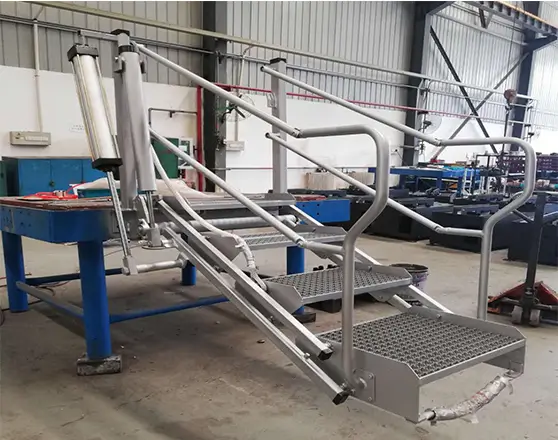
A folding stair supplier should help buyers define the access route between a loading platform and the vehicle or work area. The supplier needs to know the platform interface, vehicle approach, stair type, loading arm clearance and package boundary. Yuanda Machinery lists folding stairs together with platform and trestle products, including pneumatic, widened, side-mounted, top-mounted and SA folding stair routes.
The first question should be where the stair lands. A folding stair that lands in the wrong place can make operators avoid the intended route, interfere with a loading arm, or create field modifications after installation. A supplier that asks about the landing route before quoting is protecting the buyer from a narrow accessory decision.
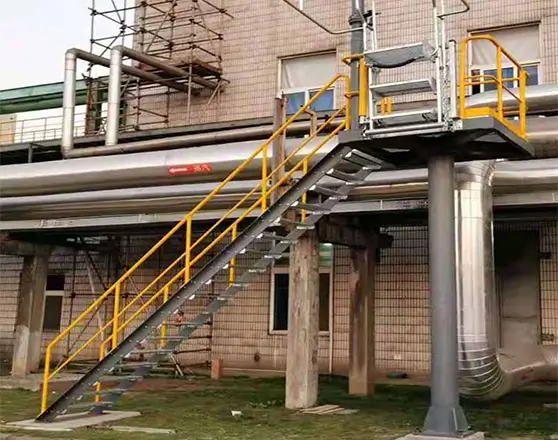
The platform interface includes mounting position, handrail opening, platform height and the operator’s standing route. The supplier should ask whether the stair connects to a steel trestle platform, a platform trestle, a top loading bay or a maintenance platform. If the platform interface is not clear, the stair type may be selected too early.
A top loading lane may need a stair that supports access to a vehicle manhole and loading arm position. A side-mounted route may fit a different platform layout. A widened stair may be useful where operators need more comfortable access. The supplier should explain these choices through the site route, not only through product names.
If a pneumatic folding stair is requested, the supplier should ask how often the stair is used and who operates it. The supplier should avoid unsupported claims, but operating frequency helps the buyer review whether the selected stair is practical for daily work. A stair used many times per shift deserves a clearer record than a rarely used maintenance route.
Vehicle stopping position affects where the stair lands. The supplier should ask how trucks or railcars align with the platform, whether vehicle height varies, and whether the loading arm or manhole position changes the route. A stair cannot be reviewed responsibly without the vehicle approach.
A folding stair may share space with AL1512 or AL1402 top loading arms, platform trestles and handrails. The supplier should ask how the arm moves and parks, where the operator stands and whether the stair blocks any part of the route. Buyers can compare access planning with Yuanda’s land loading arms and loading arm supplier guide when preparing a loading bay request.
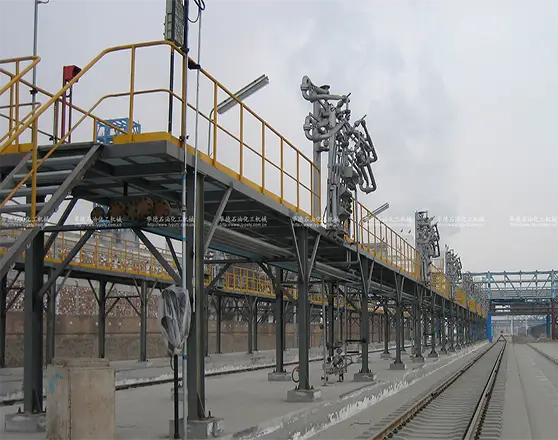
The stair package should also define what is included and what remains local work. Mounting preparation, surrounding handrails, platform modifications and installation may require separate responsibility. Clear boundaries make the supplier easier to work with and help the buyer prepare site work before delivery.
If several folding stairs ship in one project, each package should identify stair type and platform route. A pneumatic folding stair for one bay should not be confused with a side-mounted stair for another bay. Package marks help installers, warehouse staff and future maintenance teams.
| Supplier check | Buyer evidence | Why it matters |
|---|---|---|
| Platform interface | Mounting point, height and handrail opening. | Confirms stair fit |
| Vehicle approach | Stopping position and landing point. | Improves operator route |
| Nearby equipment | Loading arm, trestle and platform layout. | Avoids access conflict |
| Supply boundary | Stair package versus local site work. | Prevents handover gaps |
The supplier’s record should describe the stair type, platform route, landing point, parked position, loading arm relationship and package mark. Operators can use this to understand the intended access route. Maintenance can use it to identify the stair later. Purchasing can use it to request replacement or support without relying on a photo.
For retrofit work, the supplier should ask what problem the old access route created. If the old stair was hard to park, poorly aligned with the vehicle, too narrow for comfortable access or blocked by loading arm movement, a new stair should be reviewed against that problem. A replacement that repeats the old route may not help.
If vehicle height, platform height or landing position is not confirmed, the supplier should mark the data as pending. It can prepare a preliminary route discussion, but the final order should not pretend uncertain values are confirmed. This protects the buyer from field changes after the stair arrives.
The supplier should help the buyer record how the stair is expected to be used during a normal loading cycle. Operators may deploy the stair, access the vehicle top, position a loading arm, complete inspection and return the stair to its parked position. If this sequence is not written anywhere, future staff may use the stair differently from the intended route.
For a busy loading bay, the stair may be used repeatedly. The supplier should ask whether storage position, parking clearance and handrail opening are convenient for that frequency. For a maintenance-only route, the supplier may focus more on identification and safe occasional access. Different usage patterns should not be collapsed into one generic stair record.
Sometimes the stair is not the real problem. The platform opening may be too narrow, the vehicle position may be inconsistent or the loading arm may block the intended route. A responsible supplier should tell the buyer when the stair request depends on platform changes or route clarification before the final supply is approved.
If the buyer orders spare components later, the supplier should be able to connect the request with the original stair type and route. This is easier when the first supply file names the platform, lane, stair type and package mark. A photo alone may not show why a stair was selected or how it is used.
The supplier should also ask whether several stairs will be installed in one line. Similar-looking stairs can have different landing positions. Route labels prevent installers from placing a stair on the wrong platform and help maintenance store spare parts correctly.
For project contractors, a clean stair record helps handover to the owner. The contractor may install the stair, but the owner will operate it. The supplier’s documents should therefore be understandable after the contractor leaves site.
This record discipline is a practical way to reduce future service confusion. It keeps the folding stair connected with the real loading bay rather than treating it as a loose access accessory.
The supplier should also ask how the stair will be stored or protected before installation if the site is not ready. Folding stairs may arrive with platform sections, handrails or loading arm components. Package marks should show which stair belongs to which loading bay so the warehouse team does not separate related items.
For maintenance planning, the supplier should make the stair identity easy to repeat. If the owner later asks for service support, the route name and stair type should point back to the original file. A request that says only one folding stair is weak; a request that names the loading bay and platform route is much stronger.
When buyers compare suppliers, they should notice which supplier asks about the route and which only asks for dimensions. The route-focused supplier is more likely to prevent landing, parking and platform interface problems. That difference can matter more than a small price difference when the equipment is installed.
A final supply review should confirm platform interface, vehicle approach, stair type, package marks and local work boundary. Once those points are agreed, the folding stair is much easier to receive, install, operate and maintain.
The supplier should also help the buyer identify which information belongs in the owner’s maintenance file. Stair type, lane name, parked position, platform interface and any related loading arm clearance should be recorded together. If those points are separated across several documents, future replacement requests can become unnecessarily slow.
For a distributor, the same discipline helps stocking decisions. Pneumatic, widened, side-mounted and top-mounted stair requests should be separated by application rather than stored under one broad access equipment title. This reduces the chance of recommending a stair that fits a product category but not the buyer’s loading route.
A strong supplier connects folding stair supply with platform interface, vehicle approach, loading arm clearance, package marks and future records. Buyers can compare Yuanda’s platform and trestle products, project delivery examples and the fluid loading equipment supplier guide when planning an access package.
Before approving the order, the buyer should ask whether an operator, installer and maintenance person can understand the stair route from the same file. If yes, the supplier has made the access equipment easier to use. If not, the route needs more definition before shipment.
This final check keeps the folding stair tied to real loading work rather than treating it as a separate accessory with no route context.
A supplier that keeps route names stable from quotation to packing list also helps the owner manage several stairs across one facility. Stable names reduce confusion when warehouse staff store spares or when maintenance asks for support later.
For busy loading bays, that clarity can matter as much as the stair itself. It lets operators use the intended access route and gives future buyers a clean record for replacement decisions.
