

Get quote
Get Free Consultation!
We are ready to answer right now! free consultation.
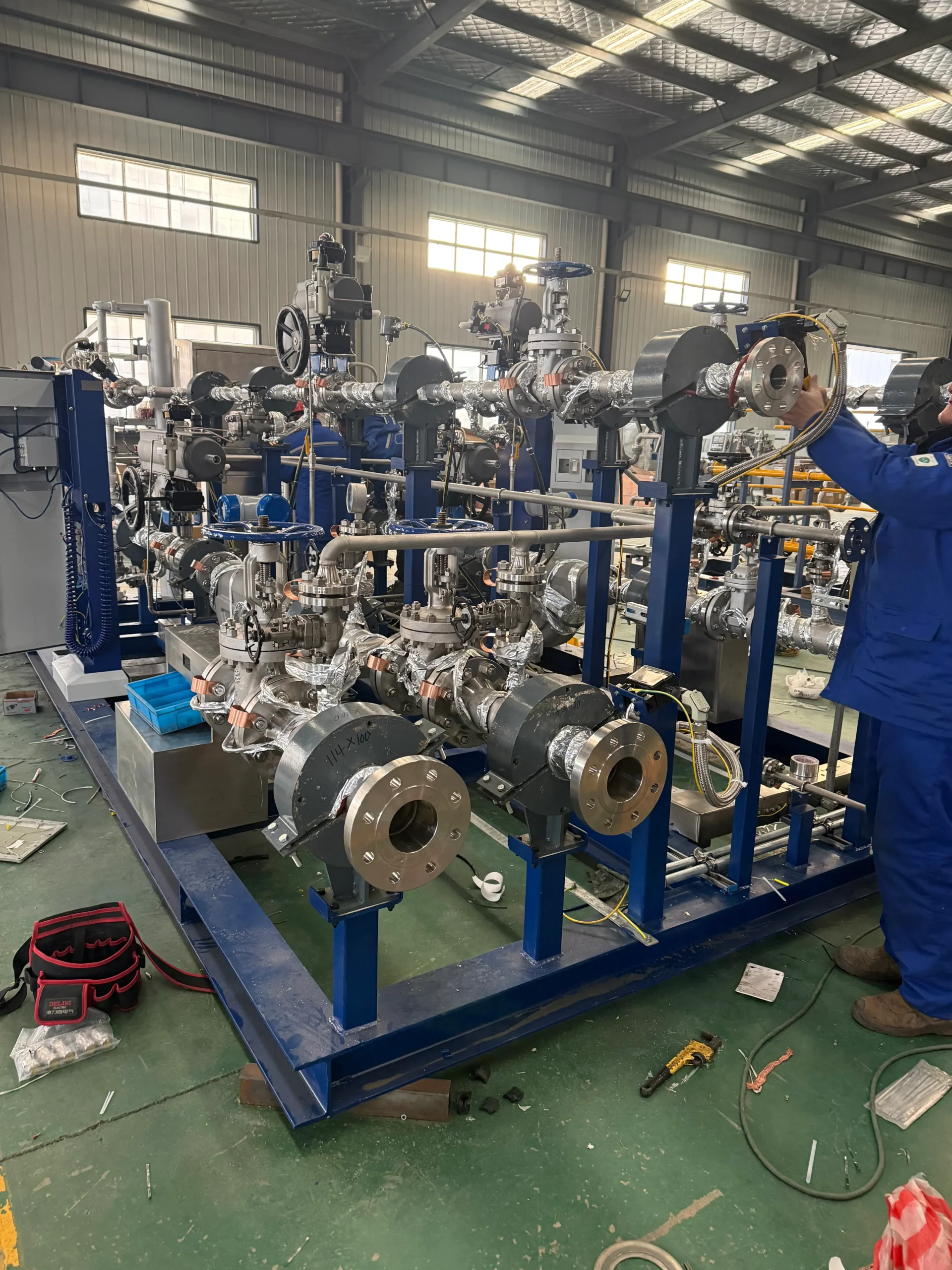
A land loading arm supplier is most valuable when the buyer has a mixed fleet problem: different tank trucks, railcars, products, connection heights and loading habits share the same terminal area. In that situation, the buyer should not start by asking for one standard arm. The first step is to separate each loading route by vehicle, medium, top or bottom connection, operator access and control expectation. Yuanda’s land loading arm product family and adjacent access, skid and accessory ranges make it possible to build that comparison without leaving the same supplier discussion.
Mixed fleet loading creates small decisions that become expensive if ignored. A tanker that parks slightly differently may push a top loading arm outside its comfortable reach. A bottom loading bay may need coupler movement that does not match every vehicle. A railcar route may need more reach than a truck route. A supplier that understands these differences can help the buyer group equipment logically instead of ordering the same arm for every lane.
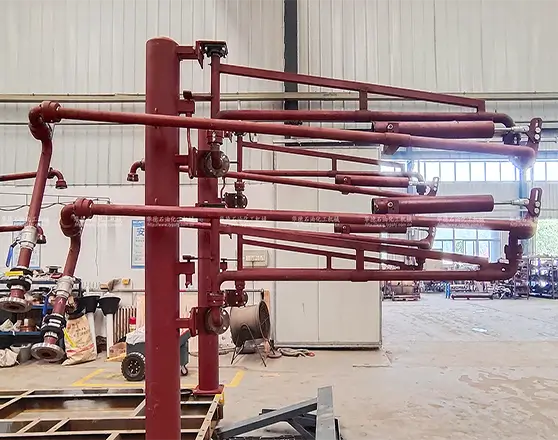
Many purchase lists begin with product names, but a mixed fleet site should begin with movement. Which vehicles arrive at each lane, where are the connection points, and how accurately can they stop? A supplier should ask whether the bay serves road tankers, railcars or both, and whether the buyer expects the same arm style to cover several vehicle types. If vehicle geometry is not grouped first, the buyer may later discover that one arm reaches one fleet well and another fleet poorly.
After the fleet is grouped, the buyer can match product and service conditions. Yuanda lists AL1512, AL1401, AL1402, AL1403, AL1412 and AL1513 top loading arms, as well as AL2404, AL2503 and AL2543 bottom loading arms. The supplier should explain which families can support the site’s most common fleet routes, then identify exceptions that need a different arm, accessory or loading method. That approach is more useful than quoting the cheapest unit that fits only the easiest lane.
A road tanker lane may look consistent on a drawing, but actual parking tolerance matters. The supplier should ask how drivers align the vehicle, whether wheel stops or lane markings are used, and whether the arm must reach more than one compartment. For top loading, the arm may need enough freedom to reach manholes without forcing the operator to work at an awkward angle. For bottom loading, the coupler should connect without dragging the arm through a stressful path.
Railcar loading can be less forgiving because car position may not be as flexible as a road tanker. The supplier should ask whether the site loads one car at a time, several positions in sequence, or a more complex rail loading line. Access timing also matters. Operators may need to move stairs, platforms or arms in a specific order. If the supplier only selects by pipe size, those timing details can appear too late during field commissioning.
The same fleet route can require different equipment when the medium changes. Petroleum products, viscous liquids, corrosive chemicals, liquefied gas and cryogenic fluids do not create the same purchase question. A supplier should ask whether the buyer needs open fill, sealed fill, vapor return, heat tracing, lining, special seals or a different product family such as LNG or LPG loading arms. This prevents a mixed fleet site from becoming a mixed-risk site.
A distributor preparing inventory should use the same logic. It may be reasonable to stock common ambient land loading arm components for repeat buyers, but special media routes should not be treated as ordinary replacement demand. The supplier can help the distributor separate routine parts from project-specific items so that the warehouse does not become full of components that look useful but cannot be safely applied to the next order.
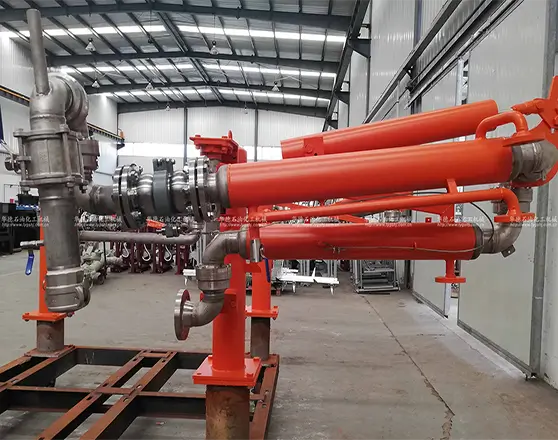
Heat-traced and lined arms are good examples of why the medium should lead the discussion. A buyer may ask for an arm because the vehicle route is known, but the product may require temperature control or corrosion resistance. The supplier should ask how the medium behaves during loading, whether it can cool or thicken in the arm, and whether the lining or heating route changes maintenance expectations. These questions are not optional details when the product itself drives the arm design.
| Mixed fleet issue | Supplier response | Buyer risk reduced |
|---|---|---|
| Several truck heights in one bay | Check top loading reach, platform height and parked position. | Operator strain and slow connection |
| Road and rail service on one site | Separate arm families and access routes before quoting. | Wrong reach or poor field movement |
| Ambient and heated products | Review heat-traced or lined options instead of one standard arm. | Product cooling, blockage or material mismatch |
| Multiple accessories in one shipment | Mark accessories by lane, arm family and medium. | Installation confusion and spare part mix-ups |
A supplier does not need to turn every arm order into a full system, but it should recognize when access or control is part of the same problem. Yuanda’s range includes folding stairs, platforms and trestles and batch loading control systems. If a loading lane needs safe operator access or preset delivery, those items should be discussed before the buyer freezes the arm layout.
For a site expansion, this coordination can save time. A buyer may plan to add two truck bays, one rail loading position and one metering skid. If each part is ordered separately, the contractor has to coordinate interfaces after delivery. If the supplier reviews the equipment together, the quotation can identify what arrives as a skid, what ships as loose arms, what needs site steel, and how accessories are divided between lanes.
When batch control enters the project, the supplier must understand more than the mechanical reach of the arm. It should ask about loading sequence, operator input, management interface, metering expectation and whether the system needs future networked operation. A buyer asking for one land loading arm may actually need a broader loading bay discussion if the project goal is accurate delivery records or easier terminal management.
A mixed fleet site can make this more complex. One lane may use a simple arm, another may require a skid-mounted loading route, and a third may need access equipment because the tanker top must still be reached. The supplier should not force every lane into the same package. It should help the buyer decide which lanes can stay simple and which lanes need a more integrated solution.
The buyer should also ask how the supplier will describe these differences in the quotation. If all lanes are written as one loose equipment list, internal reviewers may miss why one lane costs more or ships differently. A clear supplier file can group the order by lane, vehicle type, medium and accessory route. That makes purchasing approval easier and gives the installation team a cleaner starting point.
Useful internal references for this decision include the fluid loading equipment supplier guide for wider project scope and the fluid transfer equipment supplier guide for package quoting decisions. Buyers who are comparing factory capability can also read the fluid loading equipment manufacturer guide before asking a land loading arm supplier for a final offer.
Standardization is useful only when it follows real operating similarity. A buyer can standardize common ambient truck loading routes, shared swivel service items or repeated access layouts. It should not force the same arm family onto rail service, heated products, sealed chemical transfer or different vehicle geometry just to simplify purchasing. The supplier should help the buyer decide where standardization saves money and where it creates a later operating problem.
A practical way to do this is to mark each lane as standard, modified or special service. Standard lanes may share common arms and spare discussions. Modified lanes may use the same base family with different accessories or access equipment. Special service lanes should be reviewed separately because the medium, temperature or connection route changes the risk. This simple grouping helps the buyer standardize only where the site actually allows it.
For distributors, the same grouping can guide stock decisions. Keep common accessories for repeated ambient routes, but do not pre-commit special seals, lined components or heated arm details without a project file. A supplier that helps define this boundary gives the distributor a safer stocking plan and a better explanation for end users.
A project owner can use the same grouping during bid comparison. If one supplier groups all lanes into one low-cost offer and another separates standard, modified and special service lanes, the second proposal may be easier to review technically. The buyer can see why one lane needs a different accessory or arm route instead of discovering the difference after installation.
Mixed fleet loading also benefits from a clear naming rule. The buyer can name lanes by vehicle type and medium, then ask the supplier to use the same names on drawings, packing lists and accessory notes. That small habit makes the order easier for warehouse teams and installers, especially when several similar arms arrive in the same shipment.
If the buyer plans future expansion, the supplier should identify which decisions can be reused and which must be checked again. A common truck bay may repeat well. A railcar bay, heated chemical route or sealed vapor-sensitive lane should be rechecked before a repeat order because the next site may not share the same connection geometry.
Before approving the order, the buyer should have a lane-by-lane record showing vehicle type, medium, loading route, arm family, access requirement, accessory list, packaging mark and site responsibility. That record makes installation and later maintenance easier, especially on sites where several fleets and several products share the same storage terminal.
The record should also state which lanes are intended to be repeated later. If the buyer plans to expand the terminal, the supplier can help identify repeatable arm families, access layouts and spare routes. That makes the next phase easier without forcing unsuitable standardization onto special service lanes.
A good supplier will not object to this level of detail. It makes the order clearer for production, packing and after-sales support. It also gives the buyer a cleaner basis for comparing future offers from the same or another supplier.
For mixed fleet loading, that clarity protects daily operation. The operator knows which lane is standard, which lane needs a modified accessory route, and which lane should be treated as special service. The maintenance team can store spares by the same logic, instead of sorting parts only after a problem occurs.
The supplier should also tell the buyer when a lane should not be merged into a common standard. A heated chemical route, a sealed vapor-sensitive route or a railcar position with unusual reach may deserve its own review even if the surrounding truck lanes look similar. That honest separation protects the buyer from false simplicity and later site rework.
That discipline is especially useful when the terminal owner plans several expansion phases.
