

Get quote
Get Free Consultation!
We are ready to answer right now! free consultation.
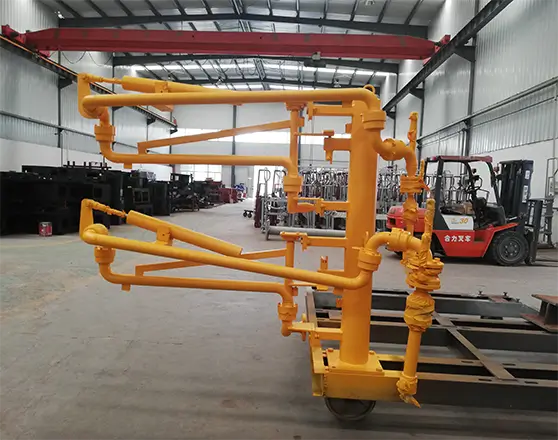
A buyer choosing a liquid ammonia loading arm manufacturer is usually trying to control a hazardous transfer route, not simply purchase another loading arm. Liquid ammonia service requires the buyer to clarify medium conditions, vehicle type, loading or unloading direction, sealing expectations, operator access and site-prepared work before a model is approved. Yuanda Machinery lists AL2543 and AL1512 liquid ammonia loading arms within its fluid transfer equipment categories, giving industrial buyers real product families for a focused technical review.
The first question should be the actual route. A plant may load road tankers, unload ammonia into storage, or operate a mixed transfer point where the arm, platform and accessories must work together. The manufacturer should ask whether the route is top loading, bottom loading, loading and unloading, or a replacement of an existing bay. If that route is unclear, the quote is only a starting conversation.
Liquid ammonia projects also involve more than geometry. The buyer should know who confirms site condition, who prepares the support, who handles local piping, and which accessories are included with the arm. A manufacturer that documents these boundaries helps the buyer avoid a dangerous habit: treating an ammonia arm like a normal petroleum or water loading point.
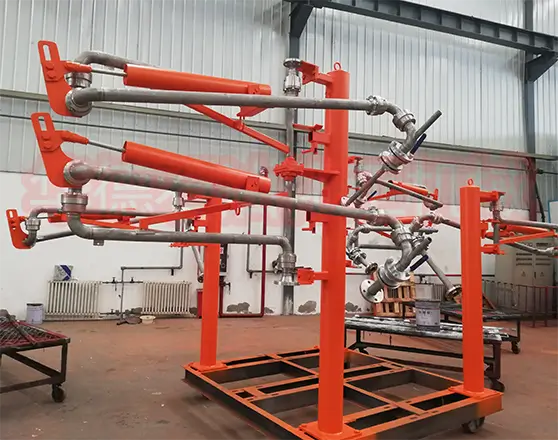
The route decides the arm family, access equipment and accessory package. For a top connection, the buyer should review platform height, manhole or connection position, operator stance and parking envelope. For bottom loading or unloading, the buyer should review adapter position, lane width, coupling direction and whether vehicle movement can pull the arm outside the planned envelope. These are practical site questions, not optional details.
Yuanda’s land loading arm range includes top and bottom loading families that help buyers compare route logic before selecting the liquid ammonia product. The manufacturer should not force every ammonia application into one familiar arm name. AL1512 and AL2543 can support different route discussions depending on the site, vehicle and connection expectation.
An AL1512 liquid ammonia loading arm should be reviewed with the operator’s access route and connection sequence. If the operator works above the vehicle, the buyer should also consider folding stairs, platforms or trestles. The manufacturer should ask whether the arm can park without blocking the access route and whether the operator can reach the connection without awkward movement.
An AL2543 liquid ammonia loading arm may appear in loading and unloading discussions where the vehicle connection route is different from a simple top arm. The buyer should confirm connection height, reach, arm parking, vehicle stop position and whether the route is used in one or both directions. A correct product name still needs the correct site geometry.
A liquid ammonia loading arm manufacturer should identify which accessories belong to the route and which remain outside the order. Breakaway valves, sealing caps, dry disconnect valves, drain pans and swivel joints are not decoration; they affect connection, disconnection, cleaning, maintenance and emergency planning. The buyer should ask each accessory question in relation to liquid ammonia service, not as a generic add-on list.
Yuanda’s loading arm accessories give buyers a practical vocabulary for this discussion. A breakaway valve is reviewed differently from a drain pan. A swivel joint should be tied to medium and movement, not selected only by pipe size. The manufacturer should explain where each included accessory appears in the route file.
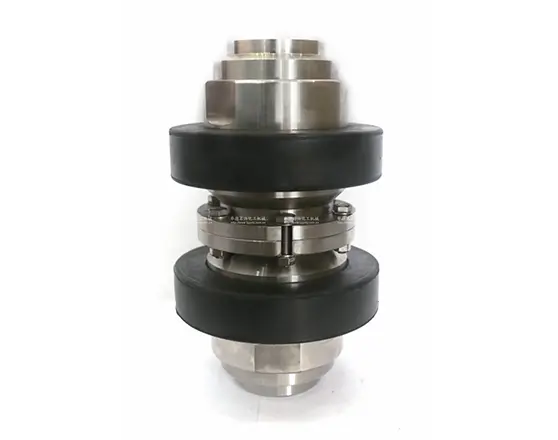
If the site requires breakaway or dry disconnect protection, the buyer should ask how those items relate to vehicle movement, operator sequence and medium handling. A manufacturer should not simply list an accessory without explaining where it fits in the transfer route. The accessory package should help the buyer understand how the arm is connected, disconnected and maintained.
| Ammonia project question | Manufacturer should verify | Buyer value |
|---|---|---|
| Top or bottom route? | Connection height, vehicle stop position and operator route. | Correct arm family and reach |
| Which access equipment is needed? | Folding stairs, platform, trestle and parked arm position. | Safer daily operation |
| Which accessories are included? | Breakaway, sealing, dry disconnect, drain and swivel boundaries. | Clearer scope |
| What is site-prepared work? | Support, local piping, lifting, installation and procedure items. | Fewer field delays |
Industrial contractors need more than a product name. They need a file that connects the liquid ammonia arm with the lane, vehicle, platform, accessories and site responsibilities. If several loading positions are delivered together, package marks should identify which components belong to each route. This prevents installers from sorting hazardous-service equipment by guesswork.
The delivery file should identify assembled items, loose accessories, lifting notes and buyer-prepared work. If the buyer is replacing old equipment, the manufacturer should ask what the old route did poorly. A replacement project can improve operator access and maintenance records, but only if the supplier reviews the old station instead of copying it blindly.
Future service is easier when the arm family, liquid ammonia route, accessory package and drawing reference are recorded together. Maintenance teams should not have to identify a seal, swivel or cap from a photo taken during a shutdown. A manufacturer that builds the service record from the first order helps the buyer keep hazardous-service parts organized.
Buyers can compare this ammonia route review with the loading arm manufacturer specification guide and the tanker loading arm manufacturer guide. If the station includes wider control or skid equipment, Yuanda’s batch loading control systems may also be part of the project conversation.
A strong manufacturer does not hide uncertainty. It asks for medium data, route, vehicle information, access layout, accessory expectation and site-prepared work before freezing the offer. If the buyer cannot confirm those points, the quotation should remain under technical review. This protects the project from a purchase that is complete on paper but incomplete at the loading bay.
For distributors, the same discipline helps resale. A distributor should avoid selling a liquid ammonia arm from a general request without clarifying the route. The manufacturer can support the distributor by asking for drawings, photos, connection details and application notes before confirming a model.
The final ammonia loading arm decision should be readable by purchasing, engineering, operations and maintenance. Purchasing should understand scope, engineering should understand interfaces, operators should understand access, and maintenance should understand future service references. That shared record is more valuable than a short quote with an attractive price and missing assumptions.
Before approval, the buyer should ask one simple question: if this arm arrives tomorrow, does the site know where it goes, how it connects, what accessories belong to it, and what local work is still required? If the answer is not clear, the manufacturer review is not finished.
A plant replacing an older ammonia route should also ask the manufacturer to review why the previous route became inconvenient. Sometimes the old arm was not the main problem; the platform was too narrow, the parked position was poor, or accessories were stored away from the connection point. If the new purchase repeats those habits, the plant receives new equipment but keeps the same daily operating trouble.
For a new project, the manufacturer should help the buyer place the liquid ammonia route within the whole loading area. Nearby lanes, drain points, access stairs and maintenance paths can change how the arm is used. A drawing that shows only the arm may satisfy a purchase file, but it does not help the operator understand the station.
If the ammonia loading point will be used by different tanker sizes, the supplier should ask which vehicles are normal and which are occasional. A route designed only for the most common tanker may be awkward when an occasional vehicle arrives. The buyer should decide whether that occasional service is inside or outside the approved operating envelope.
The manufacturer should also separate engineering information from commercial wording. A quotation may list AL1512 or AL2543, but the engineering note should explain the connection route, access boundary, included accessories and buyer-prepared work. Buyers need both documents because the purchasing team and site team read the order for different reasons.
For export procurement, packing details should be written in practical language. Large arm sections, loose accessories, support items and documentation may travel separately. Crate labels should connect each item to the ammonia route or drawing. This helps the receiving team identify the delivery before installation pressure begins.
A distributor handling liquid ammonia equipment should not remove technical questions to make the sale faster. Asking for route, vehicle, medium condition and site photos protects the distributor as well as the end user. The manufacturer can only recommend the route responsibly when the application is described in enough detail.
Service planning should be part of the first order because hazardous-service equipment often needs clear traceability later. The buyer should keep arm model, medium, route, accessory package and drawing reference together. When maintenance asks for a seal, cap, swivel or replacement accessory, the original route record becomes the safest starting point.
The final manufacturer comparison should therefore look at questions asked, not only documents received. A supplier that requests medium data, access drawings, vehicle connection information and accessory preferences is doing useful project work. A supplier that skips those questions may appear efficient, but the missing assumptions return during installation or service.
A buyer should approve the ammonia loading arm only when the route can be explained without sales language: which vehicle connects, where the operator stands, how the arm moves, where it parks, what accessories belong to it and which work remains local. That plain explanation is a strong sign that the order is ready.
If the buyer plans to connect the ammonia route with a control or preset loading system later, the manufacturer should record that possibility. The first order may only include the arm, but future controls can affect operator position, valve sequence, cable routes and documentation. A short note about future control expectations can prevent the site from installing the arm in a way that limits later upgrades.
The manufacturer should also help the buyer decide whether the route needs a separate accessory review after the first layout drawing. In many ammonia projects, the first drawing answers reach and parking, while the second discussion clarifies caps, disconnects, drainage and spare parts. Treating those accessories as part of the route keeps the order from becoming a loose collection of parts.
For buyers comparing several manufacturers, the most useful proposal is the one that can be checked against the site. It should show that the supplier understood liquid ammonia service, real vehicle connection, access route, included accessories, packing marks and buyer work. A low price without those details can create higher risk during installation.
The final route file should stay with the plant, not only with purchasing. Operators use it to understand the arm, maintenance uses it for service records, and future buyers use it when adding another loading point. That continuity is a practical reason to choose a manufacturer that writes clear documents.
The buyer should also ask the manufacturer to identify which information was supplied by the buyer and which was assumed during quotation. This keeps responsibility clear when the site later changes vehicle type, connection height or accessory expectation.
