

Get quote
Get Free Consultation!
We are ready to answer right now! free consultation.
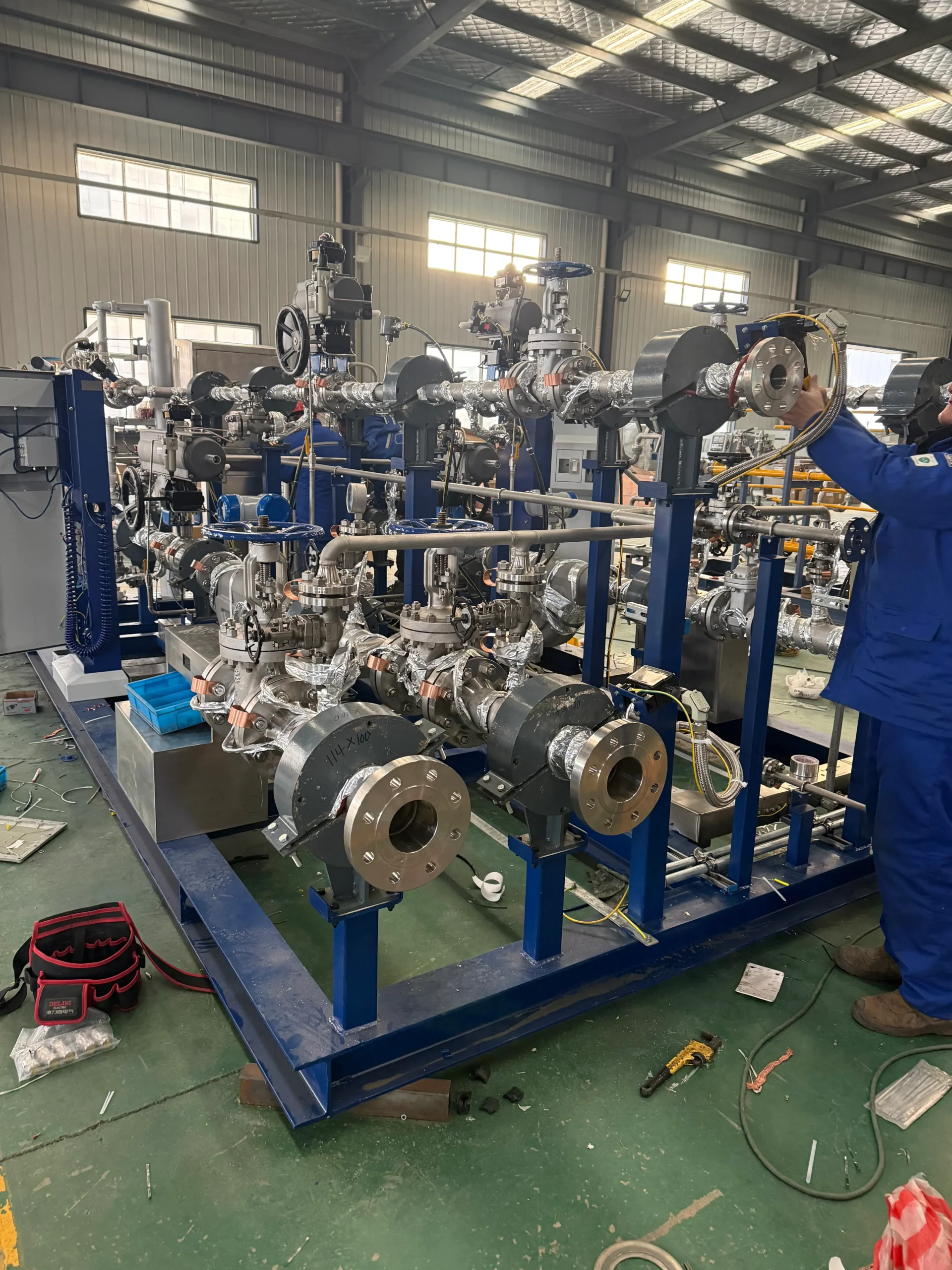
A buyer looking for a tanker loading arm manufacturer may be planning road tanker loading, railcar loading or a mixed terminal where several vehicle types share one transfer area. The first purchase question is not only whether the arm is strong enough. The buyer needs to know whether the arm matches top loading or bottom loading, whether the medium is open-fill, sealed, heated, corrosive, liquefied gas or cryogenic, and whether the loading point needs access equipment or batch control. Yuanda Machinery’s land loading arm products and project pages support that kind of practical review.
Tanker loading arms sit between moving vehicles, fixed pipework and human operators. A small mistake in reach, parking or accessory selection can slow every loading shift. For a distributor, that mistake becomes an after-sales problem. For a contractor, it becomes an installation and handover problem. For a terminal owner, it becomes a daily operating issue. A capable manufacturer should help the buyer prevent those problems before production begins.
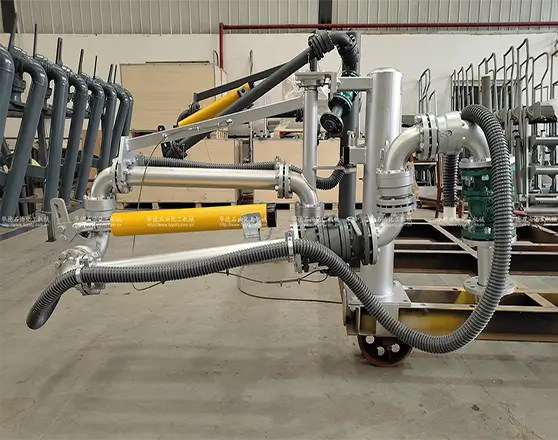
Road tankers and railcars do not create the same loading geometry. Road tankers may have more flexible parking but more variation between vehicles. Railcars may have a longer operating envelope and more fixed gantry access. A manufacturer should ask which vehicle type the buyer is loading, whether the same arm is expected to serve more than one route, and how accurately the vehicle can be positioned. If those details are skipped, the selected arm may fit the easiest case but fail the normal daily operating range.
Yuanda lists top loading families such as AL1512, AL1401, AL1402, AL1403, AL1412 and AL1513, plus bottom loading families such as AL2404, AL2503 and AL2543. A tanker loading arm manufacturer should connect these names to the vehicle and service route. AL1412 sealed top loading belongs in a different decision from AL2543 bottom loading and unloading. The buyer should ask why the selected family fits the tanker rather than accepting the model name as enough proof.
A road tanker loading arm should be reviewed with real vehicle behavior. How does the driver stop, where are the manholes or adapters, and does the arm need to reach more than one compartment? If the site uses bottom loading, the coupler path and adapter height should be checked. If the site uses top loading, the platform height and drop pipe movement should be checked. The manufacturer should not treat tanker loading as a single standard lane unless the buyer’s fleet is genuinely consistent.
Rail tanker loading often places more importance on gantry access and spotting tolerance. The manufacturer should ask how the railcar is positioned, whether the loading point handles different car types, and how the operator reaches the connection safely. If the rail line uses a metered loading system, the arm review should also include skid and control boundaries. A drawing that ignores access and control is not enough for a working rail tanker loading line.
The medium should change the equipment conversation. Petroleum products, chemicals, LPG, ammonia, chlorine and LNG have different sealing, material, temperature and operating questions. A tanker loading arm manufacturer should ask for medium, temperature, pressure, flow rate, connection standard and whether the buyer expects vapor return, sealed loading, heating, lining or special drainage. The answer may point toward a standard land loading arm, a special service arm, or a more complete skid-connected system.
A buyer replacing an old tanker loading arm should be especially careful. Copying the old arm may be fast, but it may also preserve old problems: poor access, slow connection, uncertain drainage, weak spare part records or missing control integration. The manufacturer should ask whether the buyer wants a direct replacement or a corrected loading route. That question can reveal whether a new arm should repeat the old geometry or improve the station.
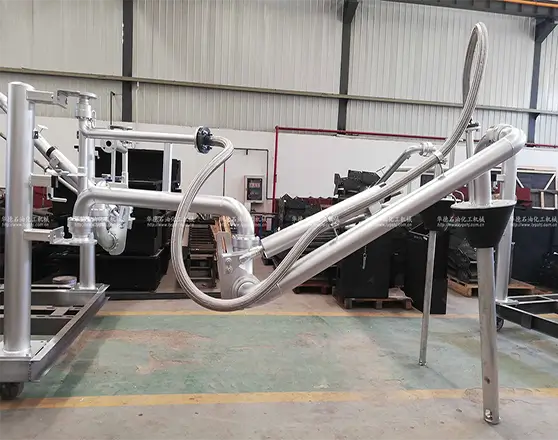
Sealed transfer is not a small accessory choice. It can affect the arm family, vapor route, coupler or drop pipe, parking position and operating procedure. If the tanker service requires sealed loading, the buyer should ask the manufacturer to explain whether top loading, bottom loading or a specific arm family is the better route. The answer should be tied to the medium and site layout rather than to a familiar model name.
| Tanker loading question | Manufacturer should clarify | Reason for buyer review |
|---|---|---|
| Road tanker or railcar? | Vehicle position, reach and access envelope. | Prevents a model chosen from the wrong geometry |
| Top loading or bottom loading? | Connection route, operator exposure and parking path. | Keeps the loading method tied to the site |
| What medium is loaded? | Sealing, material, lining, heating and drainage expectations. | Avoids treating special service as ordinary transfer |
| Is loading measured or managed? | Skid, batch controller and documentation boundary. | Shows whether the arm is part of a wider system |
A tanker loading project should also separate routine fleet variation from special project variation. Routine variation means the arm should tolerate normal differences in tanker height or railcar position. Special variation means the buyer is asking one product family to cover conditions that may need different equipment. The manufacturer should help the buyer see the difference before a low-cost common arm becomes the wrong compromise.
For road tanker fleets, the buyer should ask whether the manufacturer needs information about compartment layout. A tanker with several compartments may require the operator to reach more than one connection or repeat the loading cycle several times. If the arm route is not comfortable across the full cycle, the site may experience slower shifts even though the first connection looks acceptable during installation.
For rail tanker work, the buyer should review how the arm interacts with the loading gantry. A rail loading arm may need more reach, but reach alone is not enough. The operator must stand safely, the arm must return to park without blocking the walkway, and the maintenance team must reach service points. The manufacturer should document these points in the same file as the product selection.
If the tanker loading station handles different products in different seasons, the buyer should be careful about assuming one arm route can serve all of them. Seasonal change can affect temperature, viscosity, cleaning and drainage. A manufacturer should ask whether products are changed frequently and whether the site needs flushing, separate accessories or a different material route for specific service conditions.
A project contractor can use the manufacturer’s questions as a checklist for owner approval. If the owner has not confirmed vehicle data, medium data, access arrangement or control boundary, the contractor should avoid freezing the purchase file. A manufacturer that names missing information clearly helps the contractor protect the schedule and avoid change requests during installation.
Shipment planning should be part of the same decision. Tanker loading arms may be shipped with accessories, platform parts or skid components. The manufacturer should identify what is assembled, what is loose and what is prepared locally. If a site receives several tanker lane packages at once, marking each crate by lane and service condition is a practical way to reduce field sorting.
Tanker loading arm accessories are not afterthoughts. Swivel joints, sealing caps, dry disconnect valves, breakaway valves, drain pans and couplers can decide whether the loading point remains clean and maintainable. Yuanda’s loading arm accessories should be reviewed by arm route and medium. A breakaway valve or drain pan should not be selected only because it appears on a common accessory list; it should belong to the specific tanker loading condition.
Packaging and marking also matter because tanker loading arms may ship with loose accessories, field-installed parts and lane-specific components. If the buyer orders several arms for several tanker lanes, the manufacturer should mark crates by lane, arm family and service condition. This reduces installation confusion and gives the maintenance team a better record for later spare part requests.
The best time to organize spare part information is before the shipment leaves the manufacturer. The buyer should know which seal, swivel part, coupler component or cap belongs to each arm family. If a site later operates top loading, bottom loading and special media routes in the same terminal, this record prevents parts from being ordered by appearance alone. A manufacturer that supports this record makes after-sales work easier.
Useful internal comparisons include the truck loading arm supplier guide, the railcar loading arm supplier guide and the loading arm manufacturer specification guide. Buyers who need broader station scope should also compare Yuanda’s skid-mounted loading systems and platform equipment.
A good tanker loading arm order ends with more than a purchase price. It should leave an operating record that names the vehicle type, loading method, arm family, medium, access equipment, accessories, skid boundary, packing marks and site-prepared work. That record helps procurement compare suppliers, installers receive the equipment correctly and operators understand why the arm was selected.
Before approving the order, the buyer should ask the manufacturer to identify unresolved assumptions. If vehicle position, medium data, access clearance or control requirements are still uncertain, the quotation should be treated as preliminary. A manufacturer that is willing to name those uncertainties is often more useful than one that gives a fast price and leaves the field team to discover the gaps later.
A tanker loading arm manufacturer should also help the buyer decide what belongs in the first shipment and what should remain a future option. Some buyers need only a direct replacement arm. Others need stairs, platforms, skid control, extra accessories or a more complete loading lane package. Writing that boundary in the order prevents the site team from assuming that every nearby item is included.
For distributors, the manufacturer’s technical discipline becomes part of the distributor’s own value. A distributor can ask for vehicle data, medium data and connection information before sending a final offer to its customer. If the manufacturer supports that process with clear questions and product boundaries, the distributor is less likely to sell the wrong tanker arm into a project it cannot inspect personally.
The buyer should keep the manufacturer’s final decision notes with the loading station. If an operator later reports hard connection, leakage, poor parking or slow loading, the maintenance team can compare the complaint against the approved vehicle route and accessory list. That helps the site decide whether the problem is operation, wear, missing accessories or a specification that should be corrected in the next order.
A strong manufacturer does not remove every project risk, but it makes the remaining risks visible. That visibility gives the buyer a better basis for approval than a short quote with a model name and no explanation.
If the buyer operates several tanker stations, the manufacturer should help separate repeatable decisions from site-specific decisions. Arm family records may repeat, but vehicle parking, access and medium details still deserve review at each new site.
This is also useful during supplier comparison. A manufacturer that asks better questions may appear slower at first, but the extra review can prevent drawing changes, missing accessories and unclear installation work later.
