

Get quote
Get Free Consultation!
We are ready to answer right now! free consultation.
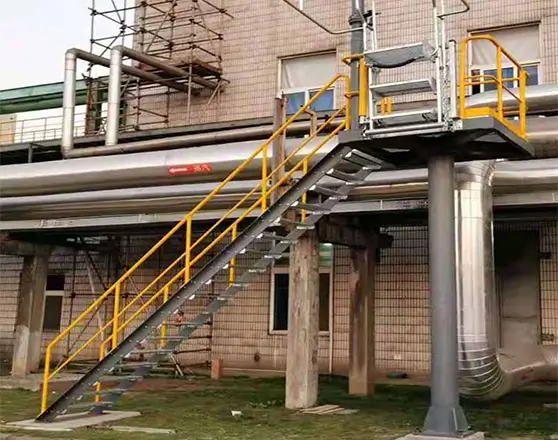
A buyer evaluating a loading platform trestle manufacturer should begin with the route the trestle needs to support. A trestle may connect loading bays, support operator movement along a pipe rack, or provide access around loading arms and folding stairs. Yuanda Machinery lists platform trestle and steel trestle platform products within its platform and trestle range.
The manufacturer should ask where the trestle starts, where it ends, what equipment it serves, and what local structures support it. A trestle is not only a length of steel. It is part of an access route, so the buyer should describe operator movement, equipment interface and site boundary before asking for fabrication.
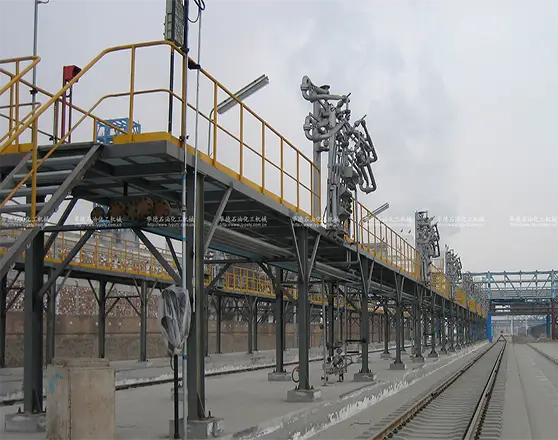
The span route decides how the trestle should be discussed. Does it cross between loading lanes, connect a platform to a pipe rack, support access to several arms, or provide maintenance access above a loading area? The manufacturer should ask these questions before quoting. A trestle that is structurally strong but poorly routed can still create operational problems.
A petroleum depot may need a trestle that supports several top loading positions. A chemical plant may need access around lined or heat-traced loading routes. A rail loading area may need long, clear access with careful section marking. These site differences should be visible in the review.
If loading arms operate near the trestle, the manufacturer should ask how the arms move and park. Supports, handrails or platform edges should not interfere with arm movement. Buyers can compare this with Yuanda’s land loading arms when reviewing access and equipment together.
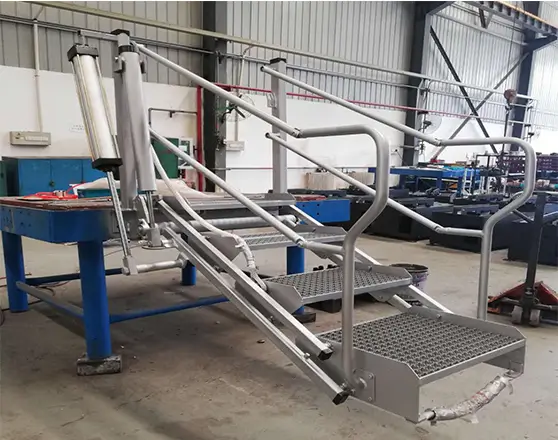
A folding stair may connect the trestle or platform to a vehicle top. Its location can affect handrail openings, operator movement and vehicle positioning. The manufacturer should ask about folding stairs before the trestle layout is fixed. Otherwise, site teams may need modifications after fabrication.
The manufacturer should explain what it supplies and what the buyer or contractor prepares locally. Trestle sections, grating, handrails, supports, stair interfaces and package marks may be included, while foundations, installation, civil work or tie-ins may be separate. Buyers should not discover these boundaries during installation.
A trestle often interacts with other project equipment. It may be supplied with platforms, loading arms, folding stairs or skids. If the project includes several equipment families, package marks and drawings should use consistent route names. This helps receiving teams and installers place each assembly correctly.
Trestle sections may look similar, especially in a long loading bay. The manufacturer should mark sections by route, lane or installation sequence. A section label helps installers avoid confusion and helps maintenance identify areas later. This is simple but valuable project discipline.
| Trestle review point | Manufacturer should confirm | Buyer value |
|---|---|---|
| Span route | Start point, end point and supported equipment. | Trestle fits actual access |
| Support scope | Supplied steel versus local civil work. | Clear project boundary |
| Access interfaces | Folding stairs, platforms and loading arms. | Avoids layout conflict |
| Section marks | Lane, route or sequence labels. | Faster installation |
The owner should be able to identify trestle sections, handrail areas, stair interfaces and support points after installation. A manufacturer that prepares useful section records makes maintenance and later modification easier. If a new loading arm is added or a stair is moved, the owner can check which trestle section is affected.
For retrofit work, the manufacturer should ask what existing structures remain. Old pipe racks, platforms, supports or vehicle routes may limit the trestle layout. If the buyer cannot provide full drawings, the manufacturer should mark assumptions and ask for site verification before fabrication.
Field dimensions can decide whether a trestle fits. A manufacturer should not treat uncertain dimensions as confirmed. It can prepare a preliminary proposal, but the final layout should depend on verified measurements, photos or drawings. This protects the buyer from costly field changes.
A trestle may pass through different operating zones: loading arm work, pipe rack access, vehicle lanes, stair landings and maintenance walkways. The manufacturer should identify these zones before finalizing sections. If every section is treated the same, the design may miss where operators actually need more space, handrail openings or access interfaces.
The buyer should describe whether the trestle supports routine operation, maintenance access or both. A trestle for daily loading may need clearer operator routes, while a maintenance trestle may need inspection access around equipment. The manufacturer should not assume the purpose from the word trestle alone.
Future projects may add a loading arm, move a folding stair or change a pipe route. If the trestle record names sections clearly, the owner can identify which part is affected. Without section records, a small modification can require a much longer site investigation.
If handrails, grating pieces, supports or stair interface parts ship loose, the manufacturer should label them by trestle section. Loose parts can be easy to misplace on a busy site. Package marks that follow the installation route make field work more orderly.
A manufacturer should also state whether anti-slip surfaces, guardrails or specific access features are included only if they are actually part of the agreed scope. The buyer should not assume features from a product image. The final file should list supplied items and local work separately.
For retrofit trestles, the manufacturer should ask about existing corrosion, old support positions, vehicle clearances and pipe rack restrictions where relevant. These questions are not extra bureaucracy; they are what keeps the trestle from being designed around incomplete site information.
The final trestle file should connect route span, section marks, support boundary, access interfaces and maintenance references. That file helps the owner manage the structure long after fabrication.
The manufacturer should also ask how the trestle connects to surrounding access equipment. If one end meets a platform and another meets a pipe rack or stair route, the connection points should be recorded. These points often become the focus of future modifications, so they should not be left vague.
For multi-bay loading areas, trestle section naming should follow the operating route. A section serving a truck loading lane should not be named only by fabrication order if the owner will maintain it by lane. Naming should help people who use the structure, not only the workshop that made it.
A manufacturer can also help the buyer separate permanent structure from temporary installation aids. If temporary access or lifting points are used during installation, they should not be mistaken for permanent operating access. The final record should show the permanent route clearly.
The buyer should check whether the trestle affects drainage, cable routing, pipe access or loading arm movement. The manufacturer may not own all of those systems, but it should ask enough questions to avoid obvious conflicts.
A well-prepared trestle order gives the buyer a structure that can be installed, inspected and modified later with less uncertainty. That is the practical value of route-based manufacturing records.
The manufacturer should also ask how operators enter and leave the trestle. A long trestle without clear entry points may force people to walk farther than necessary or cross equipment routes. Entry points should be considered with ladders, stairs, platforms and loading arm positions.
If the trestle is used near a pipe rack, maintenance access should be reviewed as well as loading access. A route that is convenient during construction may not be convenient for routine inspection. The buyer should explain whether the trestle is mainly for operation, inspection or both.
Package documents should identify which section carries which handrail, grating or support pieces. Loose accessories should not be left in an unmarked box. The manufacturer can prevent field confusion by tying small parts to the same route names used in the drawing.
The trestle record should also show where local site work begins. If civil supports, anchors or tie-ins are prepared by others, the buyer should know that before delivery. This avoids installation delays caused by missing local preparations.
A manufacturer that asks these questions is not making the process heavier. It is protecting the buyer from treating a long access structure as generic steelwork when it actually belongs to a specific loading route.
The buyer should also ask whether the trestle route affects emergency access or routine inspection paths. Even when those systems are handled locally, the trestle layout should not make them harder to use.
This keeps the trestle route practical after commissioning.
A strong manufacturer connects trestle fabrication with operator movement, loading arm clearance, folding stair interface, support boundary, package marks and future records. Buyers can compare Yuanda’s platform and trestle products, project examples and the loading arm supplier guide when planning industrial access.
Before approving a trestle order, the buyer should ask whether the route can be understood by an installer and a future maintenance team. If the span, supports, access points and boundaries are clear, the manufacturer has prepared a useful record. If not, the trestle review needs more detail before fabrication.
This approach keeps the trestle connected to real loading bay work rather than treating it as a generic steel structure.
