

Get quote
Get Free Consultation!
We are ready to answer right now! free consultation.
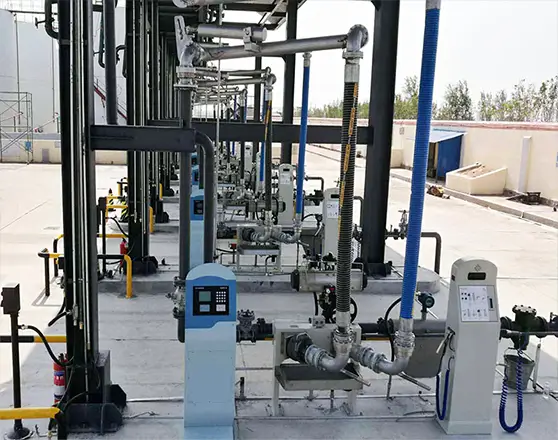
A buyer evaluating a terminal loading skid manufacturer is usually planning a truck loading lane, tank farm transfer point or depot upgrade where mechanical equipment and control boundaries must work together. The skid may connect with loading arms, batch control, valves, instruments, management systems and site piping. Yuanda Machinery’s skid-mounted loading and batch control systems include top loading skid, bottom loading skid, card-based loading and unloading skid system and automatic quantitative loading system.
Terminal skid procurement should begin with the loading route. A terminal may need top loading for certain tankers, bottom loading for sealed transfer, or a skid package that supports preset quantity and records. The manufacturer should not quote a terminal skid without knowing where the truck stops, how the product flows and what information the operator must control.
A terminal loading skid also lives between factory assembly and field installation. The buyer should know what arrives assembled, what ships loose, what local piping connects to the skid and which electrical or control tasks remain site work. A skid should reduce field uncertainty, not hide it.
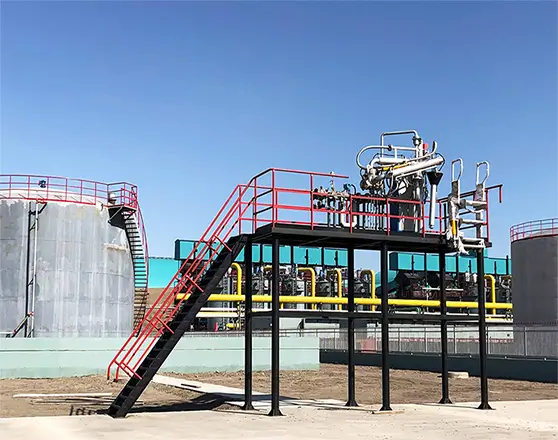
The truck route and tank farm interface decide the skid layout. The manufacturer should ask where the tanker stops, whether loading is top or bottom, which storage tank or product line feeds the skid, how flow is measured and what control point the operator uses. These questions help the buyer avoid a skid that fits a drawing but not the terminal.
If the skid is installed at an existing terminal, the manufacturer should ask for site photos, drawings, available space, pipe approach and vehicle movement. Existing terminals often have fixed civil conditions. A skid proposal that ignores those conditions can create difficult field changes.
A bottom loading terminal skid should be reviewed with adapter height, lane width, coupler movement and the sealed transfer route. The buyer should ask how the skid connects with bottom loading arms, how the operator reaches the connection and how accessories are stored. The skid should support daily loading, not only hold equipment.
A top loading terminal skid may need to work with platforms, stairs and top loading arms. The manufacturer should ask where the operator stands, where the arm parks and whether the skid interferes with the access path. If access equipment is planned separately, the skid layout should still consider it.
Terminal skids often connect with batch controller, host computer management system or automatic quantitative loading system. The buyer should ask whether the skid includes these controls or only prepares for them. Preset loading affects operator position, valve route, meter location, cabinet placement and record output.
A manufacturer should avoid separating the control discussion from the skid layout. A controller that is hard to reach, a cabinet placed away from the operator’s view or unclear instrument wiring can create daily problems. The skid proposal should show how mechanical and control decisions fit one terminal route.

Automatic quantitative loading should be described as a workflow. The buyer should know where loading is authorized, how quantity is preset, what field devices are included, how loading stops and what record is available. If the workflow is not documented, the site may receive a skid without a clear operating method.
| Terminal skid question | Manufacturer should verify | Why it matters |
|---|---|---|
| Truck route | Top or bottom loading, vehicle stop and arm connection. | Skid fits lane operation |
| Tank farm interface | Product line, local piping and site responsibility. | Cleaner field tie-in |
| Control boundary | Batch controller, instruments, cabinet and records. | Clearer commissioning |
| Delivery state | Assembled parts, loose items and route labels. | Faster installation |
If a terminal installs several skids or lanes, the manufacturer should mark packages by lane, route and drawing. Similar instruments, valves and accessories can be confused when cargo arrives together. Clear labels help the receiving team verify the shipment and help installers connect the correct skid to the correct product line.
The delivery file should also state site-prepared work: foundation, anchor bolts, pipe tie-ins, electrical power, control wiring, lifting and local installation. The manufacturer may not supply those items, but it should identify the boundary so the buyer can prepare the terminal before the skid arrives.
A service record should connect each skid with the loading arm route, batch control equipment, product line and drawing reference. If a valve, controller, arm component or accessory later needs service, the buyer can trace it through the skid record. This is valuable for terminals with several similar loading lanes.
For related planning, buyers can compare Yuanda’s skid-mounted systems with the petroleum loading arm supplier guide and fluid transfer equipment supplier guide. If the skid uses bottom loading arms, the bottom loading arm manufacturer guide helps define vehicle geometry.
A good terminal skid manufacturer reduces field uncertainty by making route, scope, control, delivery and site work visible. The buyer should be able to explain what the skid does, how it connects to the truck and tank farm, what the control system includes and what remains local.
For a contractor, the skid file should support planning before cargo arrives. Lifting, installation, piping, wiring and commissioning teams should each see their boundary. If those teams must discover boundaries on site, the skid has not done its job as a packaged loading solution.
Before approval, the buyer should ask whether the manufacturer has enough data for production. Missing vehicle position, tank farm interface, control expectation or foundation information should be named clearly. A terminal skid order is strongest when unresolved inputs are visible rather than hidden.
The final manufacturer choice should favor clarity in the full terminal route. The skid should not be judged only by equipment list. It should be judged by how well it helps the terminal load products, record quantities, connect to site systems and maintain equipment after commissioning.
A terminal loading skid manufacturer should also ask how the terminal names its lanes, tanks and products. Naming may look like a small administrative issue, but it affects drawings, packing marks, controller labels, operator screens and future service requests. If the skid drawing says one name, the control cabinet says another and the site team uses a third, maintenance becomes unnecessarily difficult. The manufacturer should help keep route names consistent across mechanical and control documents.
For tank farm projects, the skid should be reviewed with upstream and downstream boundaries. The buyer should know which pipe connections are site-prepared, whether strainers, valves or instruments are inside the skid, how product lines are identified and which terminal systems remain outside the manufacturer scope. A skid can only make installation easier when those tie-in points are clear. If the manufacturer only lists equipment mounted on the skid, the contractor may still face unclear site interfaces.
If the terminal will load several products through different skids, the buyer should ask whether common parts and route-specific parts are marked differently. A shared controller family or valve type may be used across lanes, while gaskets, accessories or settings belong to a specific product route. The service record should make that distinction. Otherwise, future maintenance teams may assume that similar-looking components are interchangeable when the product route says otherwise.
A manufacturer should also explain how the skid order can support later expansion. The first phase may include one lane, while a future phase adds another skid, more control points or a host management connection. The proposal should identify which assumptions belong only to the first phase and which choices are intended to be repeated. That helps the buyer expand the terminal without copying details that were only suitable for the original lane.
The buyer’s final review should bring together purchasing, engineering, operations and maintenance. Purchasing confirms scope, engineering checks interfaces, operations checks workflow and maintenance checks service access. If the manufacturer’s skid file answers all four groups, the project has a stronger chance of moving from shipment to commissioning without avoidable confusion. That practical handover is the real reason to choose a terminal loading skid manufacturer carefully.
A terminal skid manufacturer should also identify which skid items can be checked before shipment. The buyer can ask for confirmation of assembled frame, mounted instruments, cabinet labels, visible valve arrangement, route tags and loose accessory lists. These checks do not replace commissioning, but they help the buyer catch mismatches early. When the skid travels overseas or to a remote terminal, early verification becomes even more valuable because correcting small problems after arrival can take much longer.
If the skid will be installed during a short terminal shutdown, the manufacturer should prepare documents for fast field handover. Lifting points, loose items, pipe tie-ins, power or wiring boundaries and route labels should be easy to find. A terminal team working under schedule pressure does not have time to interpret vague drawings. The skid package should make the planned installation sequence visible enough for the contractor to prepare.
For buyers comparing manufacturers, the strongest proposal is usually the one that names the hard questions. Vehicle route, product line, control boundary, site work, factory assembly and future service should all be addressed. A proposal that only lists skid components may be cheaper to prepare, but it leaves the buyer to solve the real terminal integration questions later.
The final terminal loading skid record should stay with the loading lane after commissioning. Operators use it to understand workflow, maintenance uses it for component identification, and purchasing uses it when the next lane is added. That continuing usefulness is a sign that the manufacturer treated the skid as a terminal system rather than a shipment of mounted parts.
The manufacturer should also help the buyer plan how spare parts will be named. A terminal skid may contain valves, instruments, controller items, loading arm interfaces and accessories. If future service requests use only generic part names, mistakes become more likely. Route-based records make later communication cleaner.
For a terminal owner, that record is useful when operations expand. The next skid can be compared against the first lane, while differences in product line, vehicle route or control expectation are still reviewed instead of copied blindly.
A buyer should approve the terminal loading skid only when the manufacturer has made the working route visible from tank farm connection to truck loading point. If the route cannot be explained simply, the skid file still needs work.
The manufacturer should also keep exclusions visible. If local pipe supports, electrical work, foundations or commissioning services are outside the order, the buyer needs to know before the skid ships. Clear exclusions are part of a usable scope, not a weakness in the offer.
When the skid record explains both included and local work, the terminal team can plan installation with fewer surprises and keep the lane record useful for later expansion.
That record also helps distributors and contractors explain the skid route to owners before the shipment reaches the terminal.
It also keeps future service requests tied to the correct lane.
That matters.
