

Get quote
Get Free Consultation!
We are ready to answer right now! free consultation.
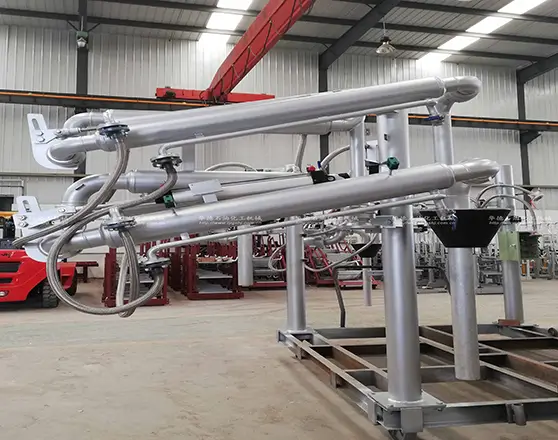
A pneumatic loading arm manufacturer should be evaluated by how well it understands movement, not only by whether it offers a pneumatic arm. Yuanda Machinery lists a fully pneumatic automatic loading arm within its land loading arm products. The buyer should connect that arm with operator sequence, air supply boundary, access route, parked position and future service records.
Pneumatic movement can be useful where the loading route needs easier positioning or repeatable operation. It does not remove the need for route planning. The manufacturer still needs to know how the arm approaches the vehicle, where the operator stands, how nearby platforms or skids affect clearance, and what local air or control work remains outside the supply scope.
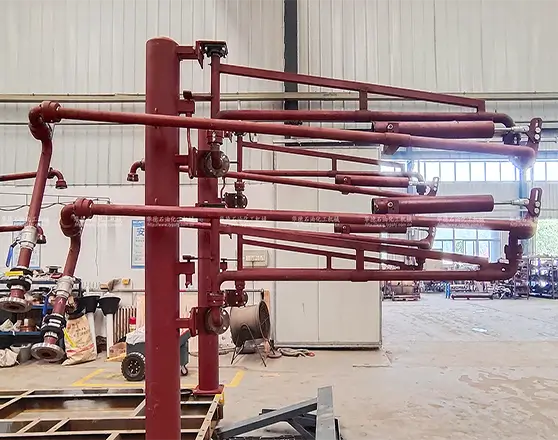
The motion cycle describes how the arm moves from parked position to connection and back again. The manufacturer should ask whether the route is top loading, bottom loading, single arm, multi-arm or part of an integrated skid package. This cycle tells the buyer more than a short product name.
A terminal buyer replacing manual equipment may expect easier operation, but the route must still fit the platform, vehicle approach and connection height. If the pneumatic arm is installed into a cramped lane, the movement benefit can be reduced by poor layout. The manufacturer should identify those conflicts before approval.
The parked position should be visible in the approval file. It affects pedestrian route, vehicle clearance and nearby arms. A buyer should ask the manufacturer to show where the fully pneumatic automatic loading arm rests when the lane is idle, not only how it connects during loading.
Top loading and bottom loading arms move differently. A top route may depend on platform access and folding stairs, while a bottom route may depend on couplers and lane clearance. The manufacturer should select pneumatic operation around the route instead of applying the same explanation to every arm.
The buyer should know what belongs to the arm package and what belongs to local site preparation. Pneumatic equipment may depend on air supply, control interfaces or site utilities that require separate planning. The manufacturer should not imply that every local item is included unless it is written in the confirmed scope.
For a project contractor, this boundary affects installation schedule. If local air preparation is missing, the arm can arrive correctly but still wait for site work. Clear boundary language helps the buyer coordinate manufacturer supply with local work before shipment.
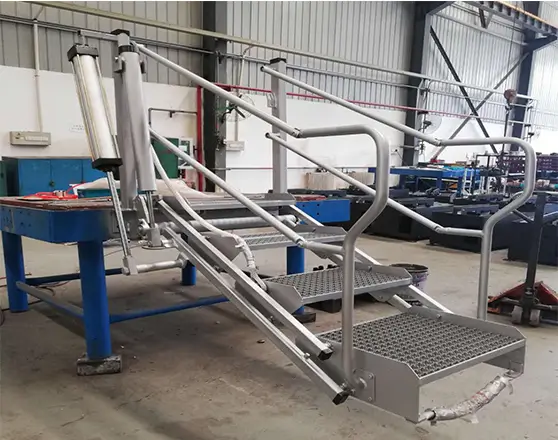
When a pneumatic arm shares space with a folding stair, the manufacturer should ask how operators deploy the stair and position the arm. Access equipment can influence the sequence. Yuanda’s folding stair products should be reviewed with top loading routes where operator movement is part of the job.
If a pneumatic arm is installed near a loading skid or batch control system, clearance should be reviewed early. Buyers can compare the route with Yuanda’s skid-mounted loading systems and batch loading control system guide when the arm is part of a larger station.
| Pneumatic route item | What the buyer should confirm | Why it changes the order |
|---|---|---|
| Motion cycle | Parked, approach, connection and return positions. | Defines operating envelope. |
| Local boundary | Air supply and site integration responsibility. | Prevents installation gaps. |
| Operator access | Platform, stair and standing route. | Supports practical movement. |
| Adjacent equipment | Skids, other arms and vehicle lane space. | Avoids clearance conflict. |
The manufacturer should ask what the buyer expects the operator to do during a loading cycle. Will the operator position the arm from a platform? Is the arm connected after batch settings are prepared? Does the lane include a management system or controller? These questions do not require unsupported technical promises; they keep the arm connected with real operation.
The buyer should also ask how the arm is identified in the maintenance file. Pneumatic movement may involve different service checks from an ordinary arm. The file should connect model, route, motion boundary, accessories and site interfaces in one place.
A future operator should understand the intended sequence from the handover file. If the file only lists the arm name, it is incomplete. It should describe parked position, access route, connection point and return movement so daily users understand the route.
If any accessories ship loose, route marks become important. A multi-lane site may receive similar parts for several arms. Package labels should make it clear which parts belong with the pneumatic arm and which belong with ordinary loading arms.
If the buyer has not confirmed air preparation, platform dimensions, vehicle position or local control responsibility, the manufacturer should show those points as open. This avoids turning early sales discussion into a false final record. It also helps the buyer see what information is still needed before fabrication.
For replacement work, the manufacturer should ask whether the old arm was hard to move, poorly positioned, or simply worn. A pneumatic replacement may help one problem but not another. If the old lane layout is the real issue, the buyer may need platform or route changes in addition to the arm.
The file should say why the pneumatic arm was selected. Easier movement, route standardization, multi-arm coordination or integration with a loading system are different reasons. Recording the reason helps maintenance and purchasing understand the decision later.
A strong manufacturer connects pneumatic loading arm supply with motion cycle, local boundary, platform access, nearby equipment and service records. Buyers can review Yuanda’s loading arm supplier guide, fluid transfer equipment categories and project examples when preparing a pneumatic route request.
The final approval should answer practical questions: where does the arm park, how does it move, who prepares local utilities, which accessories belong to the route and how will the lane be identified after installation? If these answers are in the file, the buyer is much closer to a maintainable purchase.
A pneumatic loading arm should not be treated as a symbol of automation by itself. Its value appears when the route, operator movement and supply boundary are clear enough for daily use.
For distributors, that clarity also improves after-sales support. A distributor can help the end user only when the arm route, movement sequence and local boundary are visible in the records. Otherwise every service question becomes a new investigation.
When a manufacturer asks about movement before quoting, it is usually protecting the buyer from a poor fit. That is the kind of review industrial loading bay projects need.
The buyer should also ask how the pneumatic route will be checked during commissioning. The file should describe the intended parked position, connection position and return position so site teams can compare installed movement with the approved route. This does not require unsupported performance promises; it simply gives the owner a way to confirm that the route matches the project plan.
A maintenance team will also need different information from purchasing. Purchasing may focus on model name and package scope, while maintenance needs to know which movement parts, local air boundary and loose accessories belong to the lane. A good manufacturer writes the file so both teams can use it without translating technical shorthand.
If the pneumatic arm is supplied with ordinary arms in the same shipment, crate marks should identify the pneumatic route clearly. The receiving team may not understand the difference from outside appearance. Route labels, arm model names and accessory lists prevent the wrong arm from being staged at the wrong loading bay.
A distributor stocking arm options should not describe pneumatic equipment as a universal upgrade. It is more useful to ask whether the buyer needs easier positioning, repeatable movement or a route that must coordinate with other equipment. The answer decides whether a pneumatic loading arm is the right conversation or whether a standard top or bottom loading arm is enough.
The manufacturer should also help the buyer decide which future changes require another route review. A new vehicle type, moved platform, added skid or changed local air supply may affect the original assumptions. Recording those dependencies gives the owner a cleaner path when the loading bay changes later.
For a busy terminal, the arm may be moved many times each day. In that setting, operator sequence, access clearance and return position deserve more attention than a low-use standby route. The manufacturer should ask about that frequency because it changes what the buyer needs from the handover file.
The buyer should also review how emergency or maintenance access is preserved around the pneumatic route. The manufacturer does not need to design unrelated site systems, but it should ask whether the arm blocks common walking paths, service panels or adjacent equipment when parked. That small layout question can prevent a route that works during loading but creates daily inconvenience around the bay.
If the pneumatic arm is part of a staged project, the supplier should mark which information is final for the current phase and which depends on later site work. Staged projects often change platform details or utility preparation. Keeping phase boundaries visible helps the buyer avoid ordering the same arm for a route that has changed.
